
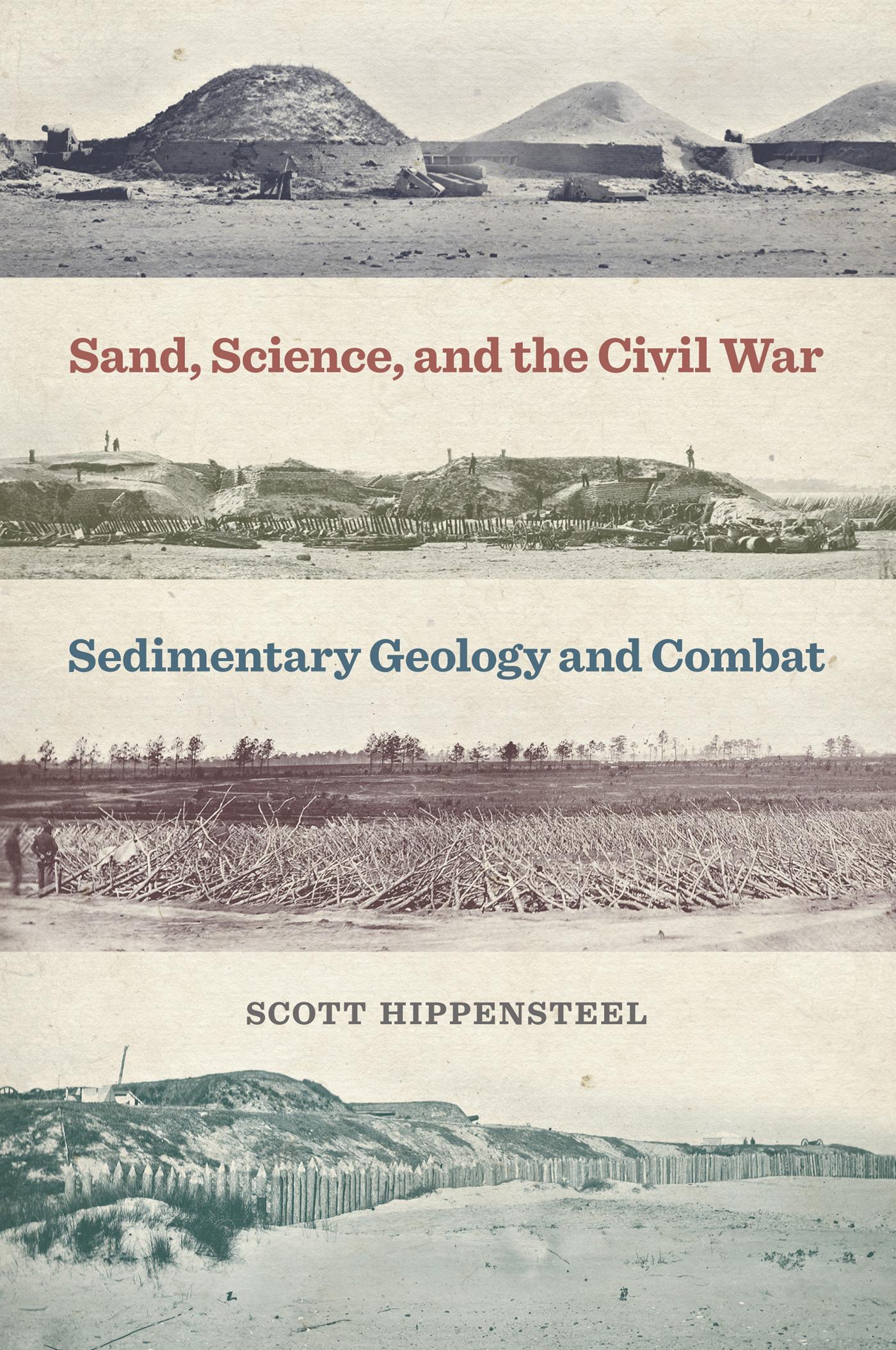
The influence of sedimentary geology on the strategy, combat, and tactics of the American Civil War is a subject that has been neglected by military historians. Sedimentary geology influenced everything from the nature of the landscape (flat vs. rolling terrain) to the effectiveness of the weapons (a single grain of sand can render a rifle musket as useless as a club). Sand, Science, and the Civil War investigates the role of sedimentary geology on the campaigns and battles of the Civil War on multiple scales, with a special emphasis on the fighting along the coastlines.
At the start of the Civil War the massive brick citadels guarding key coastal harbors and shipyards were thought to be invincible to artillery attack. The Union bombardment of Savannah’s key defensive fortification, Fort Pulaski, demonstrated the vulnerability of this type of fortress to the new rifled artillery available to the Union; Fort Pulaski surrendered within a day. When the Union later tried to capture the temporary sand fortifications of Battery Wagner (protecting Charleston) and Fort Fisher (protecting Wilmington) they employed similar tactics but with disastrous results. The value of sand in defensive positions vastly minimized the Federal advantage in artillery, making these coastal strongpoints especially costly to capture. Through this geologically centered historic lens, Scott Hippensteel explores the way sediments and sedimentary rocks influenced the fighting in all theaters of war and how geologic resources were exploited by both sides during the five years of conflict.
Paga fácilmente con tarjeta, Klarna, Apple Pay o Google Pay. ¿No estás contento? Siempre tienes 14 días de garantía de devolución. Lee más en nuestros términos. Si tienes preguntas, escríbenos a hello@memmo.org.
Memmo hace que estudiar sea más fácil, estés donde estés. Aquí tienes tus libros de texto y herramientas de estudio inteligentes en un solo lugar: resúmenes, quizzes, podcasts y flashcards. Y también a Ted, tu compañero de estudio que responde a todo lo que te preguntes. Más de 50 000 estudiantes ya estudian aquí. Está hecho para que aprendas más rápido y te estreses menos.