
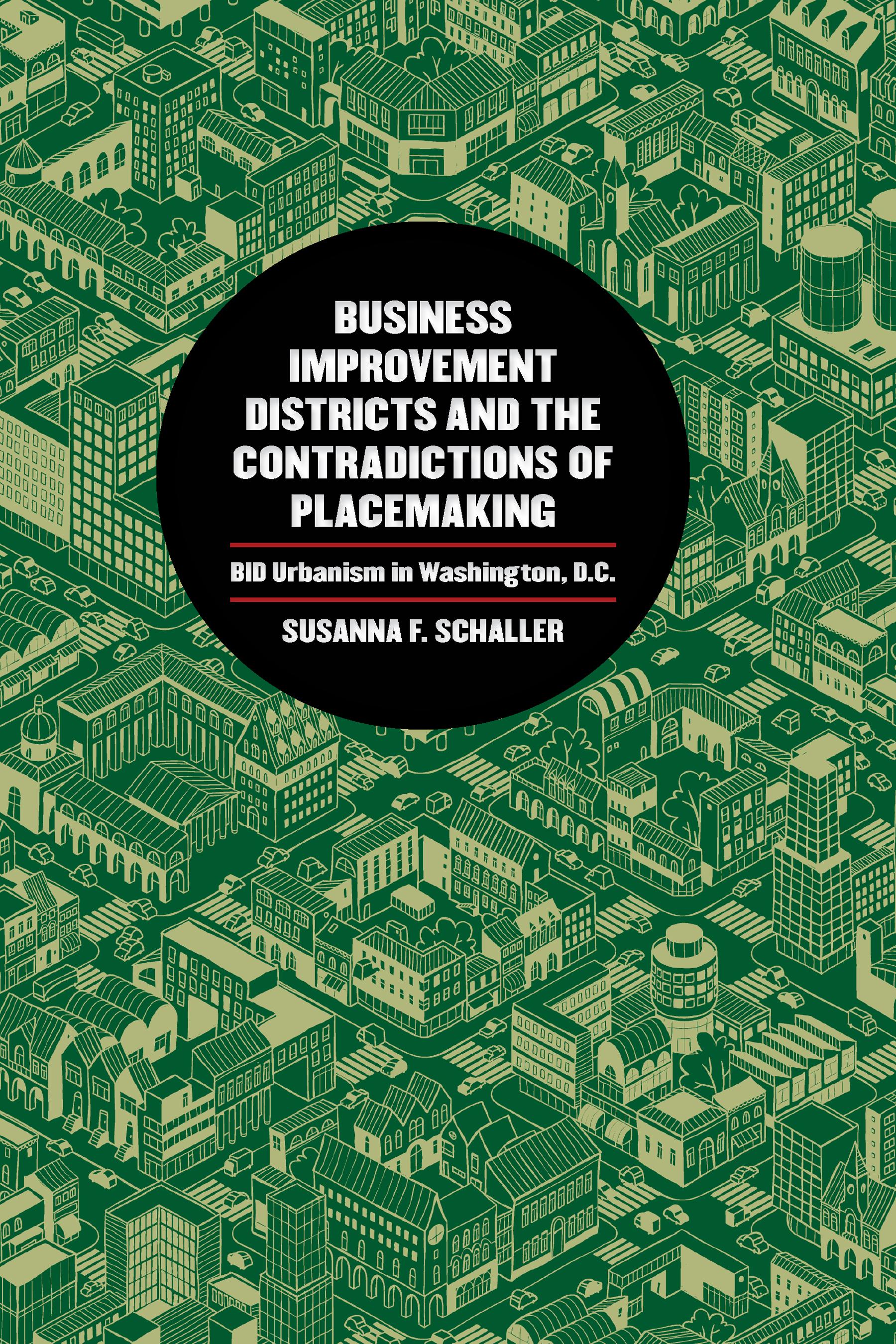
The “livable city,” the “creative city,” and more recently the “pop-up city” have become pervasive monikers that identify a new type of urbanism that has sprung up globally, produced and managed by the business improvement district and known colloquially by its acronym, BID. With this case study, Susanna F. Schaller draws on more than fifteen years of research to present a direct, focused engagement with both the planning history that has shaped Washington, D.C.’s segregated landscape and the intricacies of everyday life, politics, and planning practice as they relate to BIDs. Schaller offers a critical unpacking of the BID ethos, which draws on the language of economic liberalism (individual choice, civic engagement, localism, and grassroots development), to portray itself as color blind, democratic, and equitable.
Schaller reveals the contradictions embedded in the BID model. For the last thirty years, BID advocates have engaged in effective and persuasive storytelling; as a result, many policy makers and planners perpetuate the BID narrative without examining the institution and the inequities it has wrought as BID urbanism has oiled the urban gentrification machine. Schaller sheds light on these oversights, thus fostering a critical discussion of BIDs and their collective influence on future urban landscapes.
Paga fácilmente con tarjeta, Klarna, Apple Pay o Google Pay. ¿No estás contento? Siempre tienes 14 días de garantía de devolución. Lee más en nuestros términos. Si tienes preguntas, escríbenos a hello@memmo.org.
Memmo hace que estudiar sea más fácil, estés donde estés. Aquí tienes tus libros de texto y herramientas de estudio inteligentes en un solo lugar: resúmenes, quizzes, podcasts y flashcards. Y también a Ted, tu compañero de estudio que responde a todo lo que te preguntes. Más de 50 000 estudiantes ya estudian aquí. Está hecho para que aprendas más rápido y te estreses menos.