
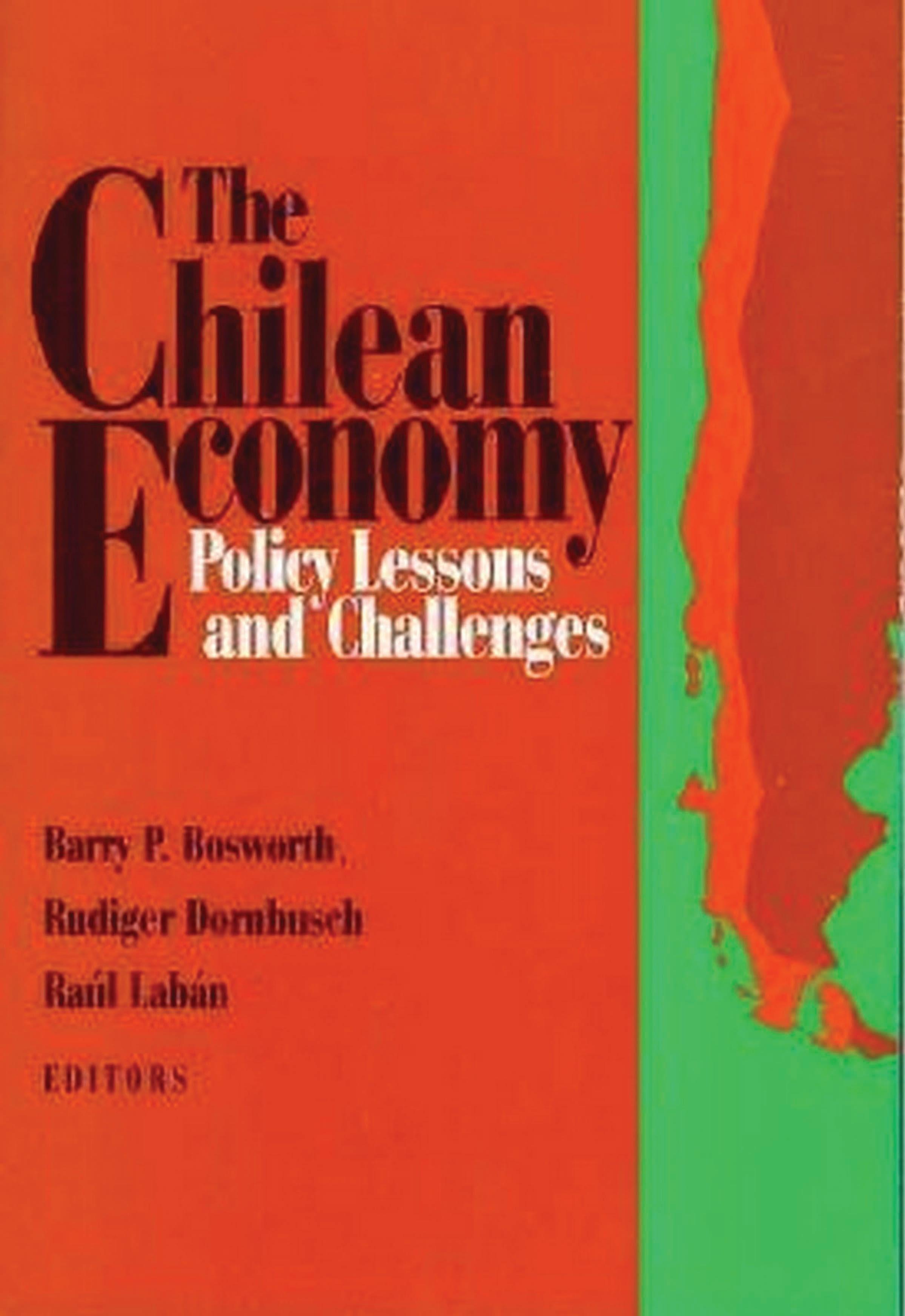
Should countries in Latin America and Eastern Europe follow the Chilean approach to economic restructuring, market liberalization, and stabilization? Following years of hyperinflation and domestic turmoil, Chile undertook a series of dramatic economic reforms. Chile has also served as a social laboratory for such policies as privatization and social security reform that are of interest to both developed and developing economies. Having implemented much of the original reform program and emerging in the 1990s with a new democratic government, Chile also raises interesting questions about what comes next in its policies to promote growth.
The advent in the 1990s of Chile as a model for economic reform is something of a surprise. Many of the reforms were actually introduced in the 1970s, and for a number of years many seemed to have failed to achieve their primary objectives. The more recent, positive view of the Chilean experience results from developments after 1983. Since then, the Chilean economy has grown robustly. What remains controversial is the question why the benefits of the reforms took so long to emerge.
In this book, international scholars review the reforms in Chile and assess their effectiveness. They evaluate stabilization policy, economic growth, privatization, reform of the social security system, and the politics of economic reform. Now that many of the original reforms have been largely completed, and Chile has maintained a coherent macroeconomic policy with slowly declining inflation, the authors prescribe what Chile must do to sustain growth in the future.
In addition to the editors, contributors include Eduardo Bitran, University of Chile; Vittorio Corbo, Catholic University of Chile; Peter Diamond, MIT; Sebastian Edwards, University of California, Los Angeles, and the World Bank; Stanley Fischer, MIT; Felipe Larrain B., Catholic University of Chile; Mario Marcel, IDB; Manuel Marfán, CIEPLAN; Raúl E. Sáez, CIEPLAN; Andrés Solimano, the World Bank; Andrés Velasco, New York University; and Salvador Valdés-Prieto, Catholic University of Chile.
The advent in the 1990s of Chile as a model for economic reform is something of a surprise. Many of the reforms were actually introduced in the 1970s, and for a number of years many seemed to have failed to achieve their primary objectives. The more recent, positive view of the Chilean experience results from developments after 1983. Since then, the Chilean economy has grown robustly. What remains controversial is the question why the benefits of the reforms took so long to emerge.
In this book, international scholars review the reforms in Chile and assess their effectiveness. They evaluate stabilization policy, economic growth, privatization, reform of the social security system, and the politics of economic reform. Now that many of the original reforms have been largely completed, and Chile has maintained a coherent macroeconomic policy with slowly declining inflation, the authors prescribe what Chile must do to sustain growth in the future.
In addition to the editors, contributors include Eduardo Bitran, University of Chile; Vittorio Corbo, Catholic University of Chile; Peter Diamond, MIT; Sebastian Edwards, University of California, Los Angeles, and the World Bank; Stanley Fischer, MIT; Felipe Larrain B., Catholic University of Chile; Mario Marcel, IDB; Manuel Marfán, CIEPLAN; Raúl E. Sáez, CIEPLAN; Andrés Solimano, the World Bank; Andrés Velasco, New York University; and Salvador Valdés-Prieto, Catholic University of Chile.
Páginas: 456
Categoría: Ekonomi & Utveckling
e-ISBN: 9780815723134
Peso de envío: 1.2 kg
Envío en: 1-2 días
Paga fácilmente con tarjeta, Klarna, Apple Pay o Google Pay. ¿No estás contento? Siempre tienes 14 días de garantía de devolución. Lee más en nuestros términos. Si tienes preguntas, escríbenos a hello@memmo.org.
Memmo hace que estudiar sea más fácil, estés donde estés. Aquí tienes tus libros de texto y herramientas de estudio inteligentes en un solo lugar: resúmenes, quizzes, podcasts y flashcards. Y también a Ted, tu compañero de estudio que responde a todo lo que te preguntes. Más de 50 000 estudiantes ya estudian aquí. Está hecho para que aprendas más rápido y te estreses menos.