
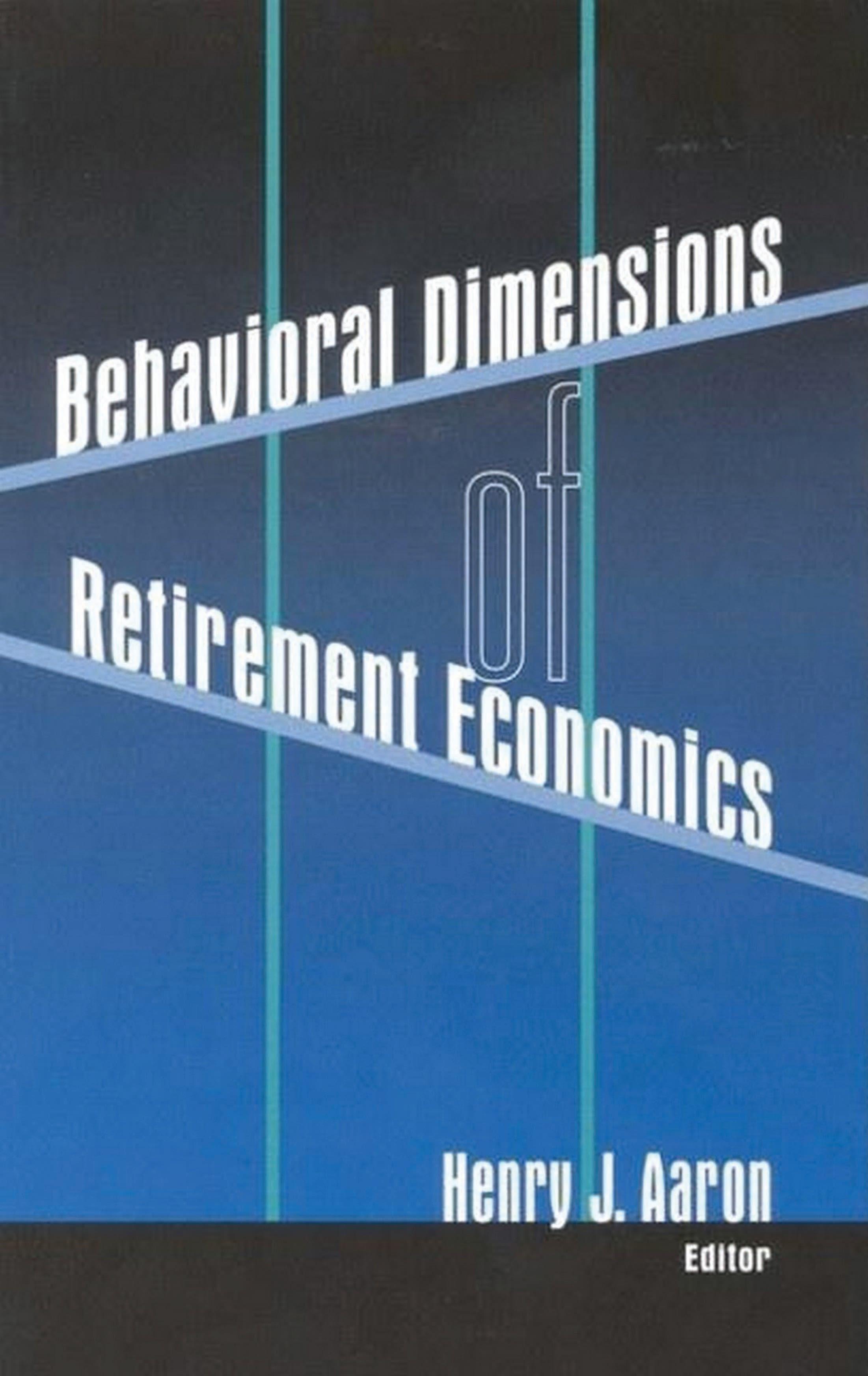
Deciding when and how to retire are among the most important decisions most people make. Can they be depended on to plan with foresight and make sound decisions? According to standard economic analysis the answer is a qualified "yes." But studies by psychologists, sociologists, and economists themselves raise doubts about this comforting appraisal.
This volume by analysts trained in economics and other disciplines suggests that retirement planning and decisions fall far short of the rational ideal. Gary Burtless explains what economic research has to say about retirement behavior. Annamaria Lusardi reports that many people in their fifties and older say they have not even thought about retirement. Mathey Rabin and Ted O'Donoghue show that procrastination can cause huge economic losses. Robert Axtell and Joshua Epstein show that herd behavior explains observed patterns of retirement behavior better than does the assumption of rational decision making. George Loewenstein, Drazen Prelec, and Roberto Weber report that many people incorrectly anticipate what retirement will be like and rationalize whatever decision they have made. David Fetherstonhaugh and Lee Ross report experimental evidence that the effect of Social Security provisions may depend on how these policies are ""framed"" as well as on the specific content of those policies. These and other authors also explore the broader implications of these behavioral patterns. Copublished with Russell Sage Foundation
This volume by analysts trained in economics and other disciplines suggests that retirement planning and decisions fall far short of the rational ideal. Gary Burtless explains what economic research has to say about retirement behavior. Annamaria Lusardi reports that many people in their fifties and older say they have not even thought about retirement. Mathey Rabin and Ted O'Donoghue show that procrastination can cause huge economic losses. Robert Axtell and Joshua Epstein show that herd behavior explains observed patterns of retirement behavior better than does the assumption of rational decision making. George Loewenstein, Drazen Prelec, and Roberto Weber report that many people incorrectly anticipate what retirement will be like and rationalize whatever decision they have made. David Fetherstonhaugh and Lee Ross report experimental evidence that the effect of Social Security provisions may depend on how these policies are ""framed"" as well as on the specific content of those policies. These and other authors also explore the broader implications of these behavioral patterns. Copublished with Russell Sage Foundation
Paga fácilmente con tarjeta, Klarna, Apple Pay o Google Pay. ¿No estás contento? Siempre tienes 14 días de garantía de devolución. Lee más en nuestros términos. Si tienes preguntas, escríbenos a hello@memmo.org.
Memmo hace que estudiar sea más fácil, estés donde estés. Aquí tienes tus libros de texto y herramientas de estudio inteligentes en un solo lugar: resúmenes, quizzes, podcasts y flashcards. Y también a Ted, tu compañero de estudio que responde a todo lo que te preguntes. Más de 50 000 estudiantes ya estudian aquí. Está hecho para que aprendas más rápido y te estreses menos.