
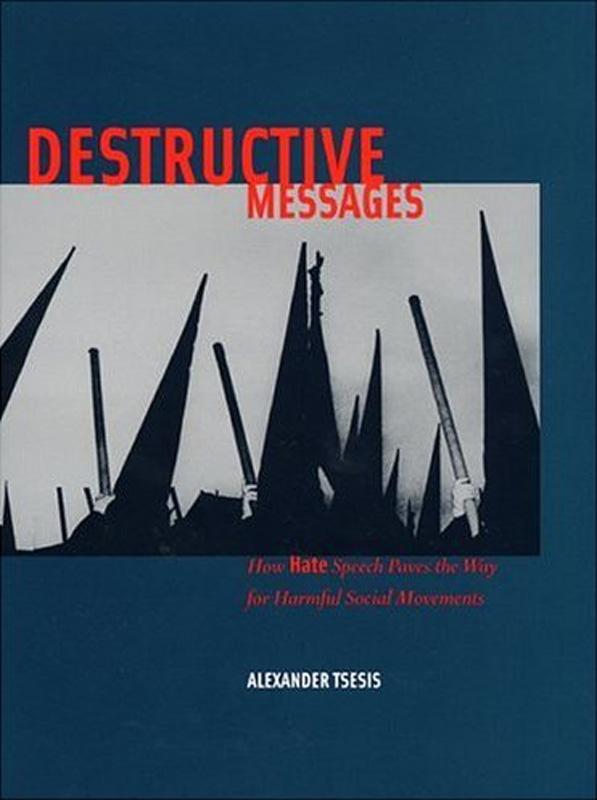
Destructive Messages argues that hate speech is dangerous not only when it poses an immediate threat of harm. It is also dangerous when it is systematically developed over time, becoming part of a culturally acceptable dialogue which can foster the persecution of minorities.
Tsesis traces a causal link between racist and biased rhetoric and injustices like genocide and slavery. He shows that hate speech and propaganda, when left unregulated, can weave animosity into the social fabric to such a great extent that it can cultivate an environment supportive of the commission of hate crimes. Tsesis uses historical examples to illuminate the central role racist speech played in encouraging attitudes that led to human rights violations against German Jews, Native Americans, and African Americans, and also discusses the dangers posed by hate speech spread on the Internet today. He also offers an examination of the psychology of scapegoating.
Destructive Messages argues that when hate speech is systematically developed over time it poses an even greater threat than when it creates an immediate clear and present danger. Tsesis offers concrete suggestions concerning how to reform current law in order to protect the rights of all citizens.
Paga fácilmente con tarjeta, Klarna, Apple Pay o Google Pay. ¿No estás contento? Siempre tienes 14 días de garantía de devolución. Lee más en nuestros términos. Si tienes preguntas, escríbenos a hello@memmo.org.
Memmo hace que estudiar sea más fácil, estés donde estés. Aquí tienes tus libros de texto y herramientas de estudio inteligentes en un solo lugar: resúmenes, quizzes, podcasts y flashcards. Y también a Ted, tu compañero de estudio que responde a todo lo que te preguntes. Más de 50 000 estudiantes ya estudian aquí. Está hecho para que aprendas más rápido y te estreses menos.