
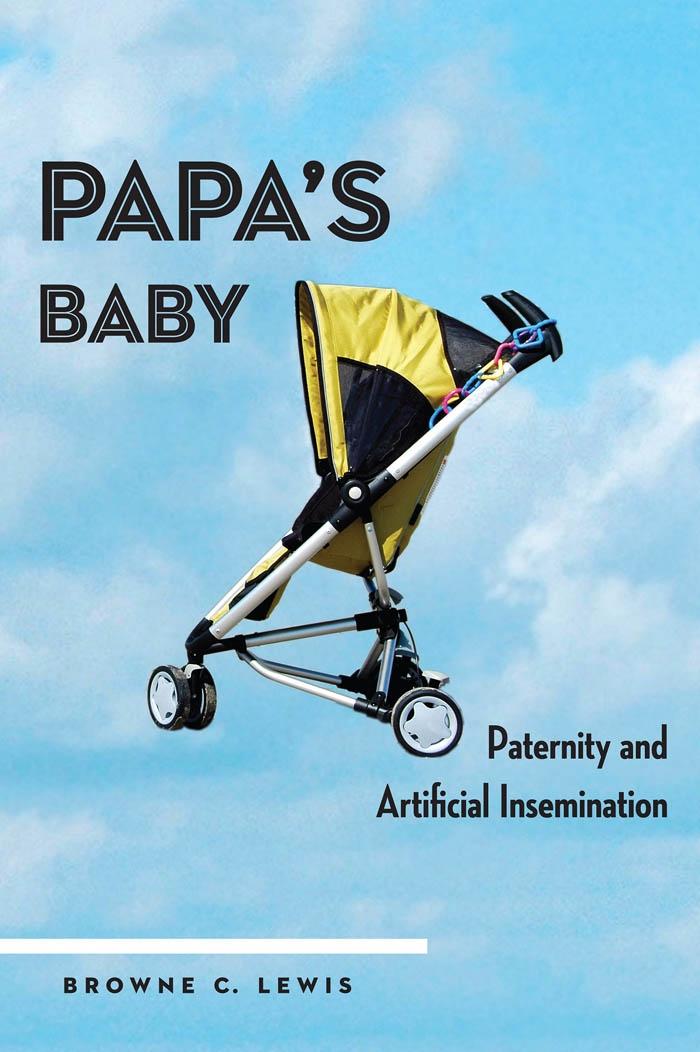
When a child is conceived from sexual intercourse between a married, heterosexual couple, the child has a legal father and mother. Whatever may happen thereafter, the child’s parents are legally bound to provide for their child, and if they don’t, they’re held accountable by law. But what about children created by artificial insemination? When it comes to paternity, the law is full of gray areas, resulting in many cases where children have no legal fathers.
In Papa’s Baby, Browne C. Lewis argues that the courts should take steps to insure that all children have at least two legal parents. Additionally, state legislatures should recognize that more than one class of fathers may exist and allocate paternal responsibility based, again, upon the best interest of the child. Lewis supplements her argument with concrete methods for dealing with different types of cases, including anonymous and non-anonymous sperm donors, married and unmarried women, and lesbian couples. In so doing, she first establishes different types of paternity, and then draws on these to create an expanded definition of paternity.
Paga fácilmente con tarjeta, Klarna, Apple Pay o Google Pay. ¿No estás contento? Siempre tienes 14 días de garantía de devolución. Lee más en nuestros términos. Si tienes preguntas, escríbenos a hello@memmo.org.
Memmo hace que estudiar sea más fácil, estés donde estés. Aquí tienes tus libros de texto y herramientas de estudio inteligentes en un solo lugar: resúmenes, quizzes, podcasts y flashcards. Y también a Ted, tu compañero de estudio que responde a todo lo que te preguntes. Más de 50 000 estudiantes ya estudian aquí. Está hecho para que aprendas más rápido y te estreses menos.