
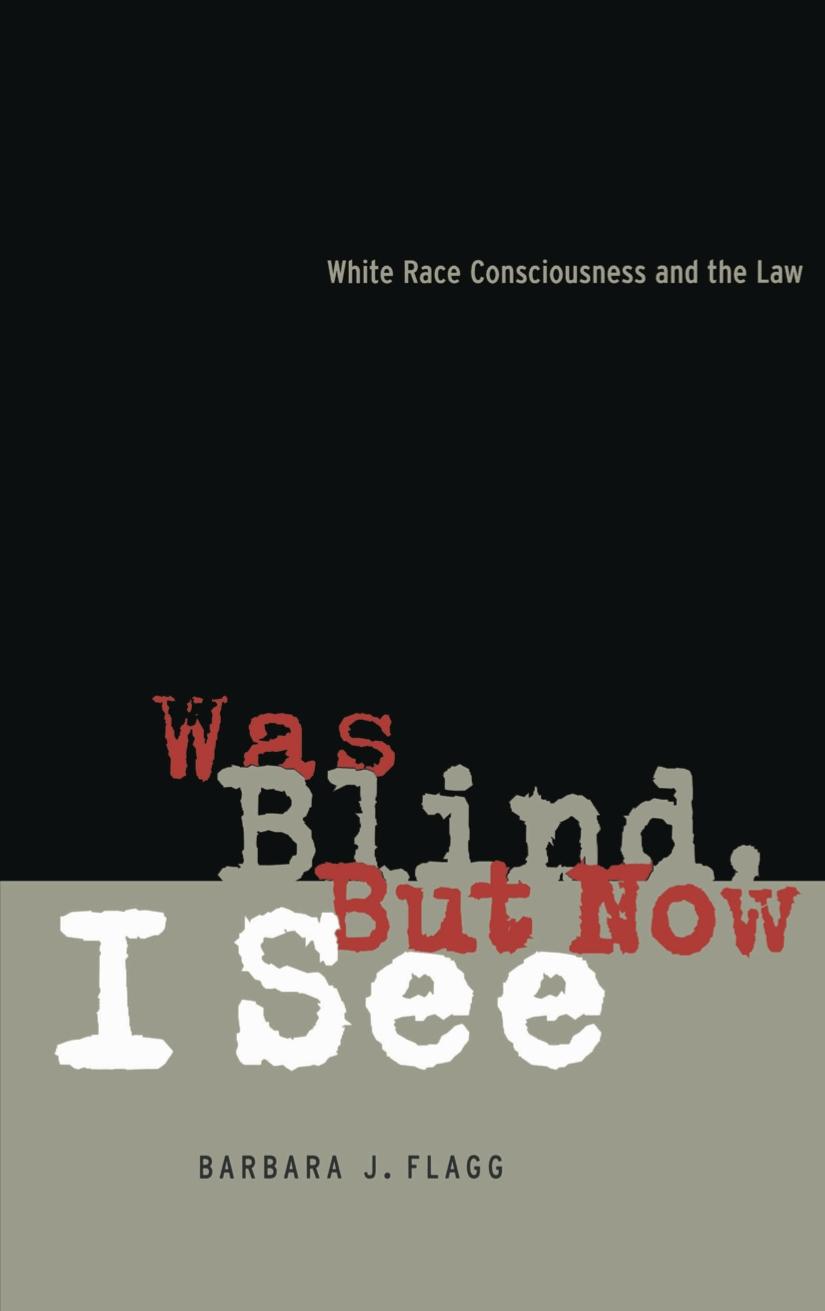
Race does not speak to most white people. Rather, whites tend to associate race with people of color and to equate whiteness with racelessness. As Barbara J. Flagg demonstrates in this important book, this "transparency" phenomenon—the invisibility of whiteness to white people—profoundly affects the ways in whites make decisions: they rely on criteria perceived by the decision maker as race-neutral but which in fact reflect white, race-specific norms.
Flagg here identifies this transparently white decision making as a form of institutional racism that contributes significantly, though unobtrusively, to the maintenance of white supremacy. Bringing the discussion to bear on the arena of law, Flagg analyzes key areas of race discrimination law and makes the case for reforms that would bring legal doctrine into greater harmony with the recognition of institutional racism in general and the transparency phenomenon in particular. She concludes with an exploration of the meaning of whiteness in a pluralist culture, paving the way for a positive, nonracist conception of whiteness as a distinct racial identity.
An informed and substantive call for doctrinal reform, Was Blind But Now I See is the most expansive treatment yet of the relationship between whiteness and law.
Paga fácilmente con tarjeta, Klarna, Apple Pay o Google Pay. ¿No estás contento? Siempre tienes 14 días de garantía de devolución. Lee más en nuestros términos. Si tienes preguntas, escríbenos a hello@memmo.org.
Memmo hace que estudiar sea más fácil, estés donde estés. Aquí tienes tus libros de texto y herramientas de estudio inteligentes en un solo lugar: resúmenes, quizzes, podcasts y flashcards. Y también a Ted, tu compañero de estudio que responde a todo lo que te preguntes. Más de 50 000 estudiantes ya estudian aquí. Está hecho para que aprendas más rápido y te estreses menos.