
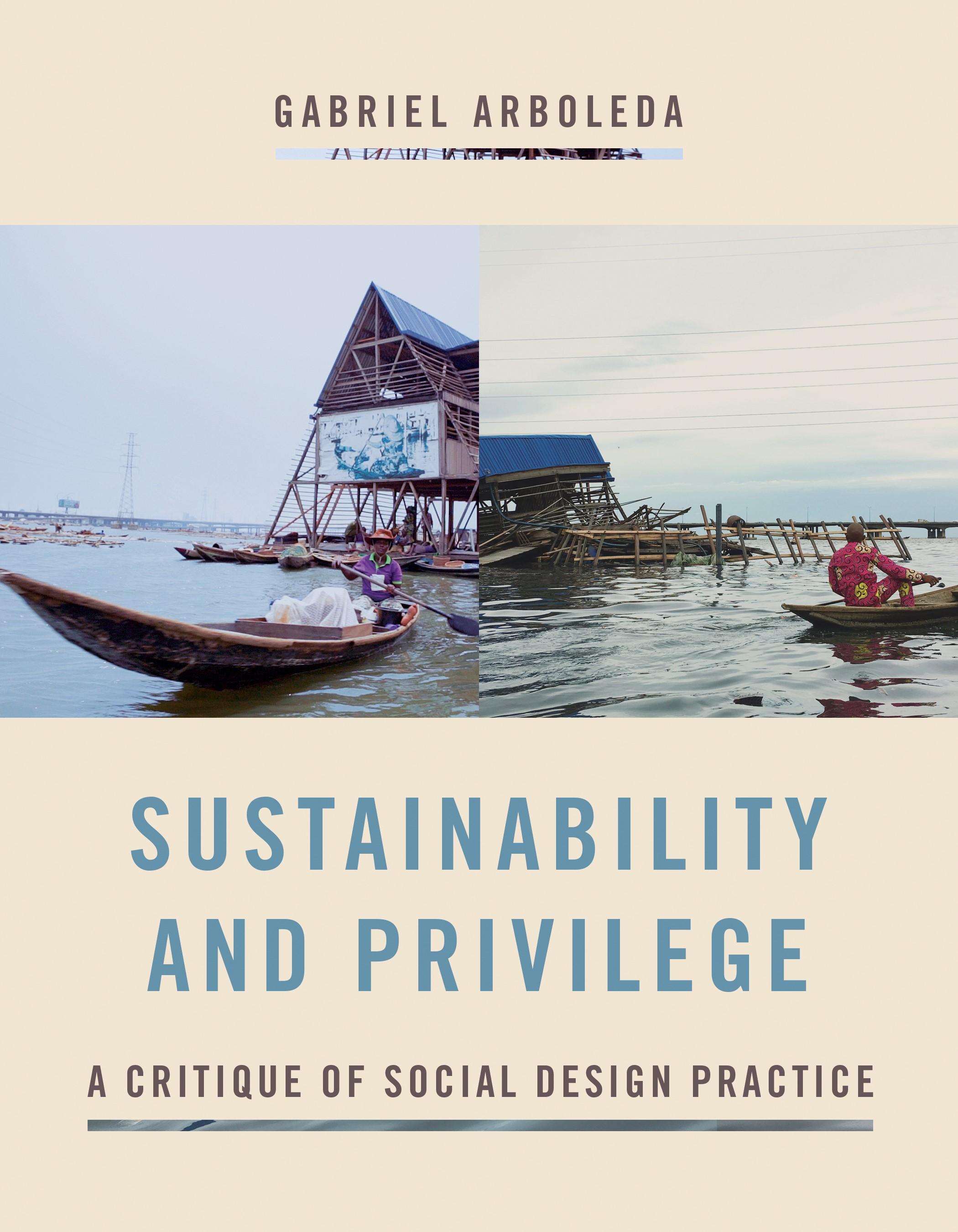
Social design—the practice of designing for poverty relief—is one of the most popular fields in contemporary architecture. Its advocates, focusing on the architect’s creativity and good intentions, are overwhelmingly laudatory, while its detractors, concerned with the experience of its beneficiaries, have dismissed it as an expression of cultural imperialism. Placed midway between innocuous celebration and radical critique, Sustainability and Privilege highlights the lessons that can be learned from social design’s current limitations and proposes a feasible way to improve this practice.
In this broad-ranging account, enlivened by fieldwork and case studies, Gabriel Arboleda contends that social design’s invocation of sustainability often serves to marginalize and displace vulnerable populations through projects that involve experimentation of faulty alternative technologies, or that result in so-called green gentrification, or that impose untoward economic and other burdens. Arboleda is fiercely critical of the way social design has been carried out in impoverished regions of the world, most notably in Africa and Latin America. In addressing the challenges posed by issues of privilege in social design’s use of sustainability, the book proposes a new interdisciplinary approach called ethnoarchitecture, arguing for a simpler, open-ended, and stakeholder-driven process that eliminates the casual imposition of the architect’s ideas on vulnerable populations, foregrounding the people’s voices, experience, and input in social design practice.
Paga fácilmente con tarjeta, Klarna, Apple Pay o Google Pay. ¿No estás contento? Siempre tienes 14 días de garantía de devolución. Lee más en nuestros términos. Si tienes preguntas, escríbenos a hello@memmo.org.
Memmo hace que estudiar sea más fácil, estés donde estés. Aquí tienes tus libros de texto y herramientas de estudio inteligentes en un solo lugar: resúmenes, quizzes, podcasts y flashcards. Y también a Ted, tu compañero de estudio que responde a todo lo que te preguntes. Más de 50 000 estudiantes ya estudian aquí. Está hecho para que aprendas más rápido y te estreses menos.