
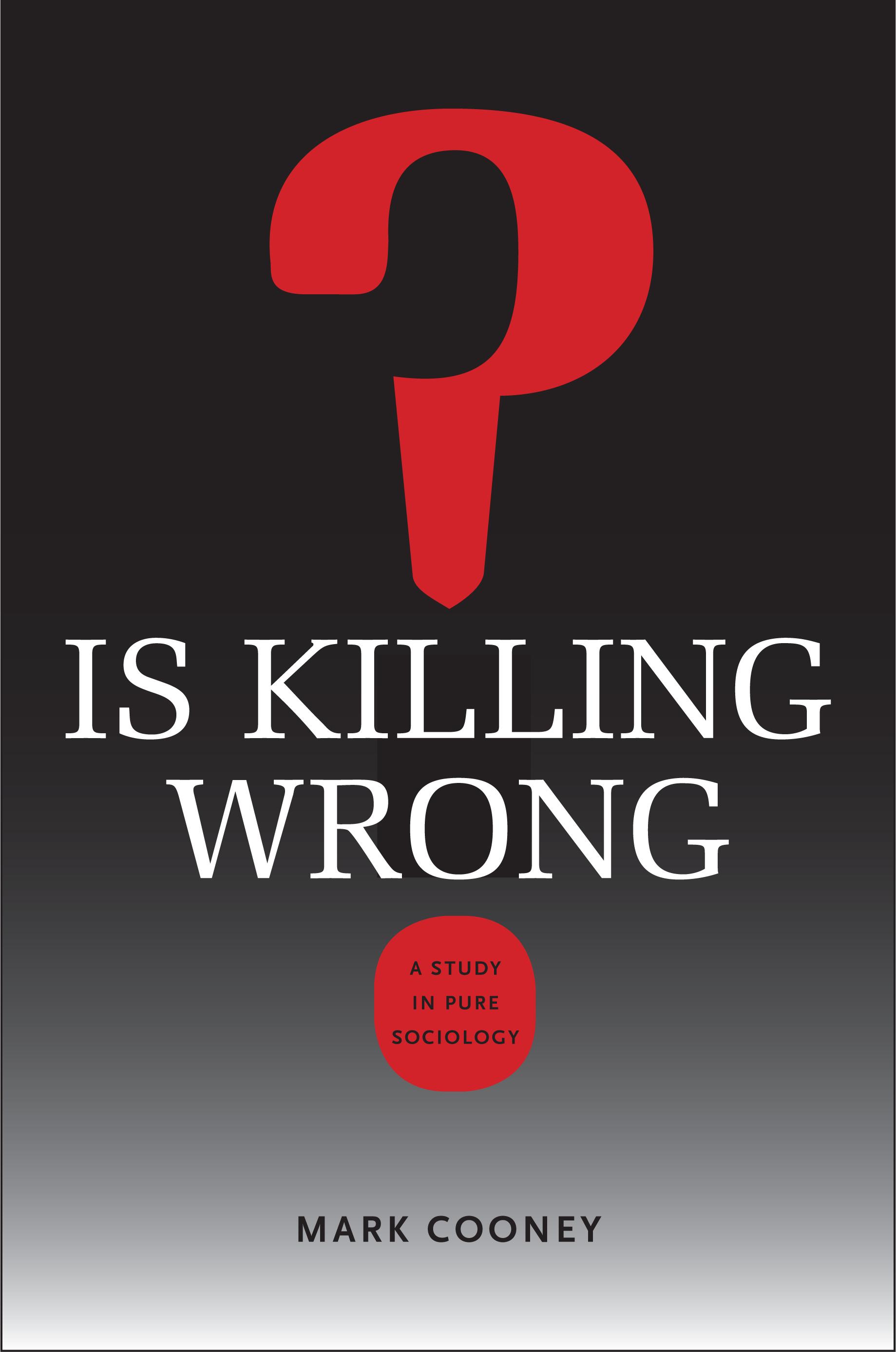
"Thou shalt not kill" is arguably the most basic moral and legal principle in any society. Yet while some killers are pilloried and punished, others are absolved and acquitted, and still others are lauded and lionized. Why? The traditional answer is that how killers are treated depends on the nature of their killing, whether it was aggressive or defensive, intentional or accidental. But those factors cannot explain the enormous variation in legal officials' and citizens' responses to real-life homicides. Cooney argues that a radically new style of thought—pure sociology—can. Conceived by the sociologist Donald Black, pure sociology makes no reference to psychology, to any single person's intent, or even to individuals as such. Instead, pure sociology explains behavior in terms of its social geometry—its location and direction in a multidimensional social space.
Is Killing Wrong? provides the most comprehensive assessment of pure sociology yet attempted. Drawing on data from well over one hundred societies, including the modern-day United States, it represents the most thorough account yet of case-level social control, or the response to conduct defined as wrong. In doing so, it demonstrates that the law and morality of homicide are neither universal nor relative but geometrical, as predicted by Black's theory.
Paga fácilmente con tarjeta, Klarna, Apple Pay o Google Pay. ¿No estás contento? Siempre tienes 14 días de garantía de devolución. Lee más en nuestros términos. Si tienes preguntas, escríbenos a hello@memmo.org.
Memmo hace que estudiar sea más fácil, estés donde estés. Aquí tienes tus libros de texto y herramientas de estudio inteligentes en un solo lugar: resúmenes, quizzes, podcasts y flashcards. Y también a Ted, tu compañero de estudio que responde a todo lo que te preguntes. Más de 50 000 estudiantes ya estudian aquí. Está hecho para que aprendas más rápido y te estreses menos.