
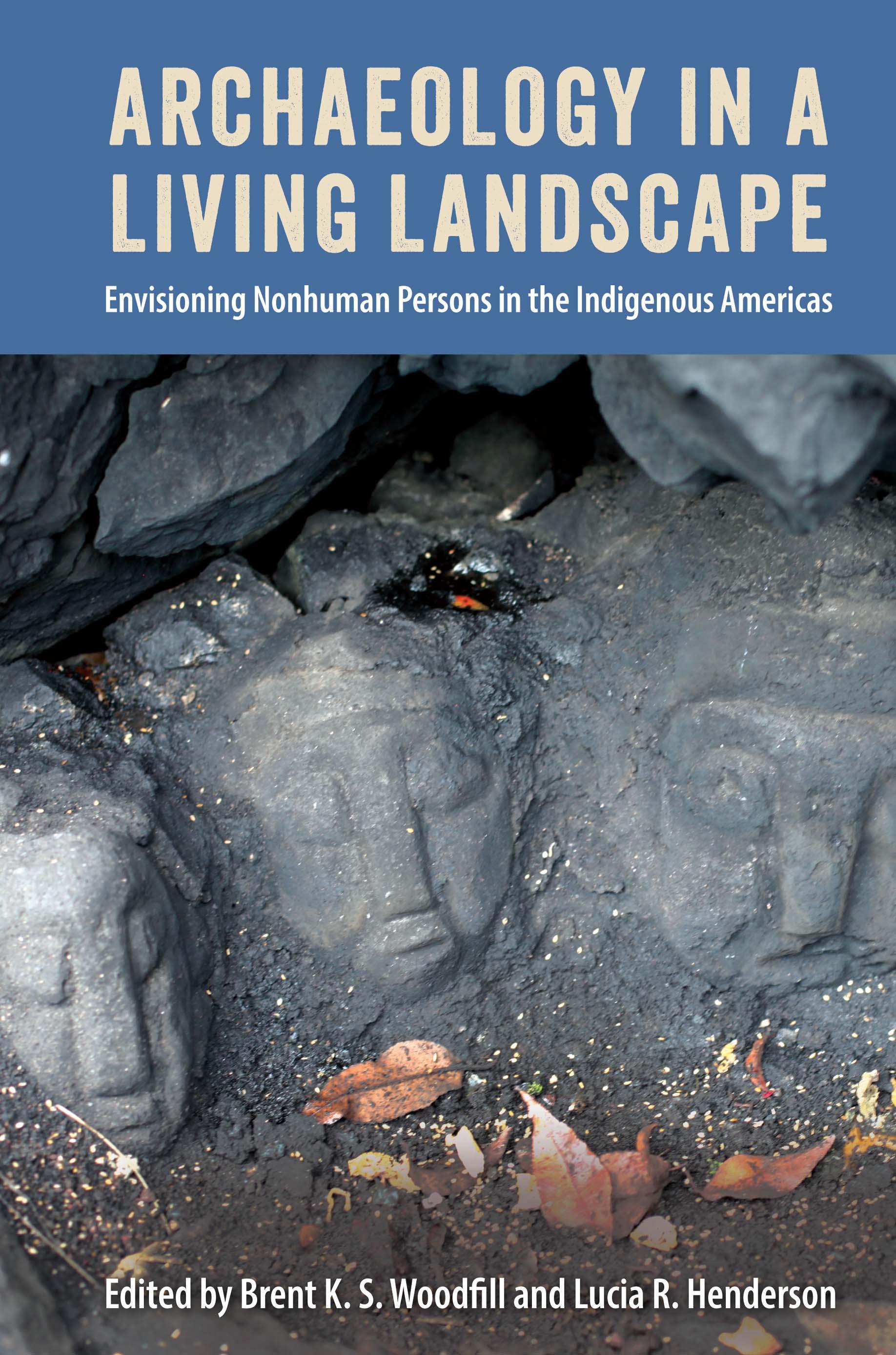
Recognizing and incorporating Indigenous knowledge systems in archaeological studies of the Americas
This book explores the diverse range of other-than-human persons that inhabited and affected the landscape of the ancient Americas. These case studies acknowledge what is often dismissed by Western scholars: that Indigenous communities have long recognized degrees of personhood in mountains, volcanoes, caves, springs, rivers, rocks, plants, archaeological sites, trees, and animals and that this worldview should be taken seriously in archaeological investigations, community relations, and interpretations.
In Archaeology in a Living Landscape, contributors examine the role of nonhuman agents in the ancient world, from land management and tenure to economics, politics, migration, pilgrimage, trade routes, conquest, ethics, and philosophy. Chapters describe Tlingit cosmology, lightning beings and magnetism in the Minnesota River Region, linguistic approaches to animacy in the United States Southeast, nonhuman persons in the ancient Maya economy, and Lacandon Maya ritual landscapes. They investigate the role of quarries in the building of Inka huacas (sacred spaces or objects), clay procurement and Andean apus (powerful mountains), Amazonian animism in polychrome ceramics, and the built and unbuilt landscape of the Mapuche. An epilogue by Dakota elder James Rock highlights how Western academic discourse often diverges from the viewpoints of Indigenous subjects.
The contributors to this volume use language accessible to readers of diverse backgrounds. They focus on the centrality of nonhuman persons in the lives of Indigenous communities, working to move away from Western biases to embrace and integrate Indigenous belief frameworks in their studies. Archaeology in a Living Landscape highlights the value of Indigenous knowledge systems not just as archaeological evidence but as a body of theory.
Paga fácilmente con tarjeta, Klarna, Apple Pay o Google Pay. ¿No estás contento? Siempre tienes 14 días de garantía de devolución. Lee más en nuestros términos. Si tienes preguntas, escríbenos a hello@memmo.org.
Memmo hace que estudiar sea más fácil, estés donde estés. Aquí tienes tus libros de texto y herramientas de estudio inteligentes en un solo lugar: resúmenes, quizzes, podcasts y flashcards. Y también a Ted, tu compañero de estudio que responde a todo lo que te preguntes. Más de 50 000 estudiantes ya estudian aquí. Está hecho para que aprendas más rápido y te estreses menos.