
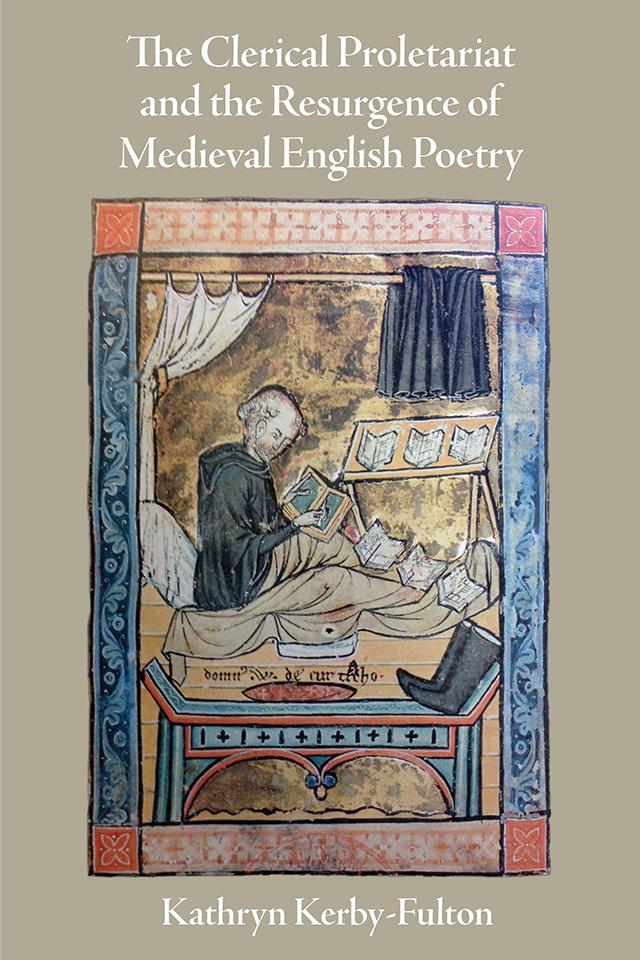
Despite the great literary achievements of Chaucer, Langland, and the Pearl Poet, Ricardian English books were still a niche market in 1400. As Kathryn Kerby-Fulton shows, however, their generation was transformational in nurturing the resurgence of English writing, in part as a result of the mass underemployment of clerks originally trained for the church but unable to find steady positions in it. Surviving instead as ecclesiastical or choral "piece workers," or in secular jobs in government or private households, this "clerical proletariat" lived and worked in liminal spaces between the ecclesiastical and lay world. And there the most enterprising found new material—and new audiences—for poetry in English.
Since English book production in London prior to 1380 was rare, Kerby-Fulton's study begins in the prior century with great regional poets, revealing their early experimentation with a new poetics of vocational crisis. Preoccupied with underemployment, patronage, careerist ambition, alienation, and changing literary fashion, these thirteenth-century writers were choosing the more avant garde option of writing in English while feeling backwards to earlier tradition in works such as Laȝamon's Brut and The Owl and the Nightingale. These early experimenters invoked semi-remembered literary forms in a still evolving written vernacular, breaking ground for Ricardian writers, who turned to these conventions during the massive clerical unemployment of the Great Schism era. Kerby-Fulton's is the first study of Langland's legacy of articulating an authorial employment crisis, and its echoes in Hoccleve and Audelay. It also uses new tools for uncovering proletarian writers in unattributed Middle English works, including the famous Harley 2253 lyrics, the "York Realist's" Second Trial from the York Cycle, St. Erkenwald, and Wynnere and Wastour. Taking in proletarian themes, including class, meritocracy, the abuse of children ("Choristers' Lament"), the gig economy, precarity, and the breaking of intellectual elites (Book of Margery Kempe), The Clerical Proletariat and the Resurgence of Medieval English Poetry speaks to both past and present employment urgencies.
Paga fácilmente con tarjeta, Klarna, Apple Pay o Google Pay. ¿No estás contento? Siempre tienes 14 días de garantía de devolución. Lee más en nuestros términos. Si tienes preguntas, escríbenos a hello@memmo.org.
Memmo hace que estudiar sea más fácil, estés donde estés. Aquí tienes tus libros de texto y herramientas de estudio inteligentes en un solo lugar: resúmenes, quizzes, podcasts y flashcards. Y también a Ted, tu compañero de estudio que responde a todo lo que te preguntes. Más de 50 000 estudiantes ya estudian aquí. Está hecho para que aprendas más rápido y te estreses menos.