
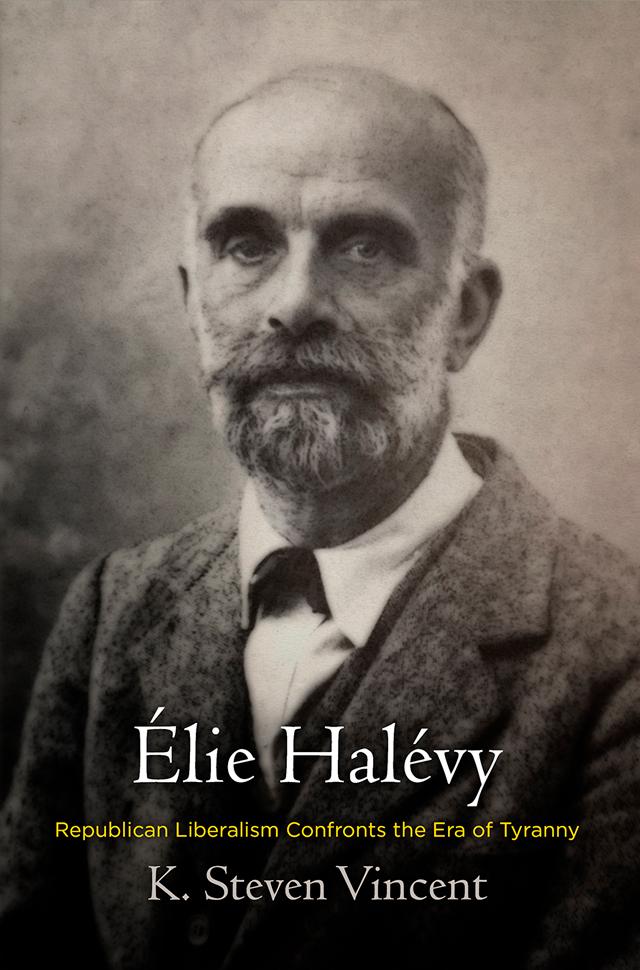
An intellectual biography of the renowned and influential observer of the "era of tyrannies"
Élie Halévy (1870-1937) was one of the most respected and influential intellectuals of the French Third Republic. In this densely contextualized biography, K. Steven Vincent describes how Halévy, best remembered as the historian of British Utilitarianism and nineteenth-century English history, was also a persistent, acute, and increasingly anxious observer of society in a period defined by industrialization and imperialism and by what Halévy famously called the "era of tyrannies."
Vincent distinguishes three broad phases in the development of Halévy's thought. In the first, Halévy brought his version of neo-Kantianism to debates with sociologists and philosophers and to his study of English Utilitarianism. He forged ties with Xavier Léon, Léon Brunschvicg, and Alain (Émile-Auguste Chartier), life-long intellectual interlocutors. Together they founded the Revue de métaphysique et de morale, a continuing venue for Halévy's reflections. The Dreyfus Affair, Vincent argues, caused Halévy to shift his focus from philosophy to history and from metaphysics to politics. He became a philosopher-historian, less interested in abstract neo-Kantianism and more in real-world action, less given to rarified debates over truth and more to investigation of how theories and their applications were situated within broader political, economic, and cultural movements. World War I and its destabilizing effects provoked the third phase, Vincent explains. As he watched reason recede before rabid nationalism and a pox of political enthusiasms, Halévy sounded the alarm about liberal democracy's vulnerabilities.
Vincent situates Halévy on the unsteady and narrowing middle ground between state socialism and fascism, showing how he defended liberalism while, at the same time, appreciating socialists' analyses of capitalism's negative impact and their calls for reform and greater economic equality. Through his analysis of Halévy's life and works, Vincent illuminates the complexity of the Third Republic's philosophical, historical, and political thought and concludes with an incisive summary of the distinctive nature of French liberalism.
Paga fácilmente con tarjeta, Klarna, Apple Pay o Google Pay. ¿No estás contento? Siempre tienes 14 días de garantía de devolución. Lee más en nuestros términos. Si tienes preguntas, escríbenos a hello@memmo.org.
Memmo hace que estudiar sea más fácil, estés donde estés. Aquí tienes tus libros de texto y herramientas de estudio inteligentes en un solo lugar: resúmenes, quizzes, podcasts y flashcards. Y también a Ted, tu compañero de estudio que responde a todo lo que te preguntes. Más de 50 000 estudiantes ya estudian aquí. Está hecho para que aprendas más rápido y te estreses menos.