
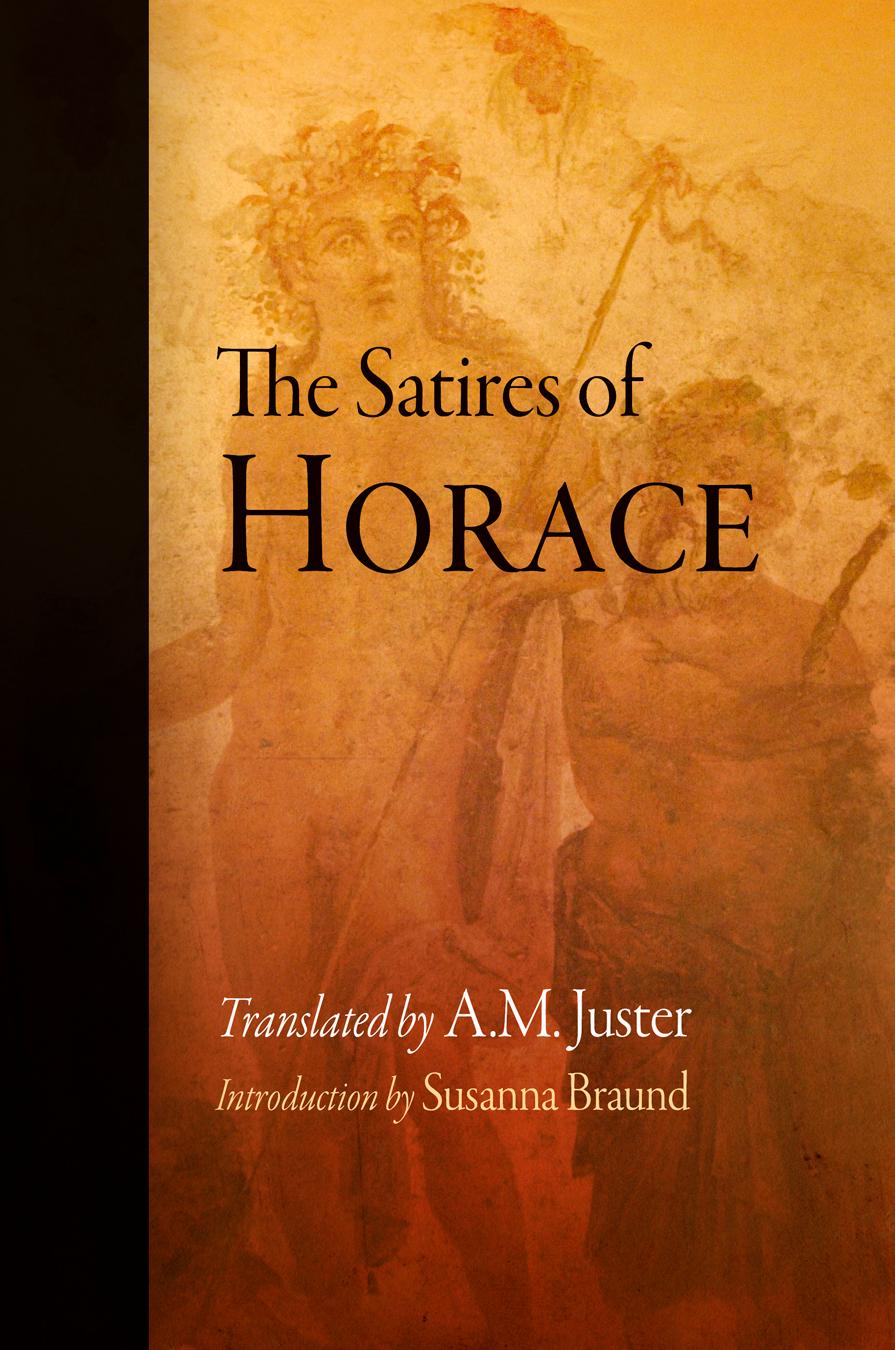
The Roman philosopher and dramatic critic Quintus Horatius Flaccus (65-3 B.C.), known in English as Horace, was also the most famous lyric poet of his age. Written in the troubled decade ending with the establishment of Augustus's regime, his Satires provide trenchant social commentary on men's perennial enslavement to money, power, fame, and sex. Not as frequently translated as his Odes, in recent decades the Satires have been rendered into prose or bland verse.
Horace continues to influence modern lyric poetry, and our greatest poets continue to translate and marvel at his command of formal style, his economy of expression, his variety, and his mature humanism. Horace's comic genius has also had a profound influence on the Western literary tradition through such authors as Swift, Pope, and Boileau, but interest in the Satires has dwindled due to the difficulty of capturing Horace's wit and formality with the techniques of contemporary free verse.
A. M. Juster's striking new translation relies on the tools and spirit of the English light verse tradition while taking care to render the original text as accurately as possible.
Paga fácilmente con tarjeta, Klarna, Apple Pay o Google Pay. ¿No estás contento? Siempre tienes 14 días de garantía de devolución. Lee más en nuestros términos. Si tienes preguntas, escríbenos a hello@memmo.org.
Memmo hace que estudiar sea más fácil, estés donde estés. Aquí tienes tus libros de texto y herramientas de estudio inteligentes en un solo lugar: resúmenes, quizzes, podcasts y flashcards. Y también a Ted, tu compañero de estudio que responde a todo lo que te preguntes. Más de 50 000 estudiantes ya estudian aquí. Está hecho para que aprendas más rápido y te estreses menos.