
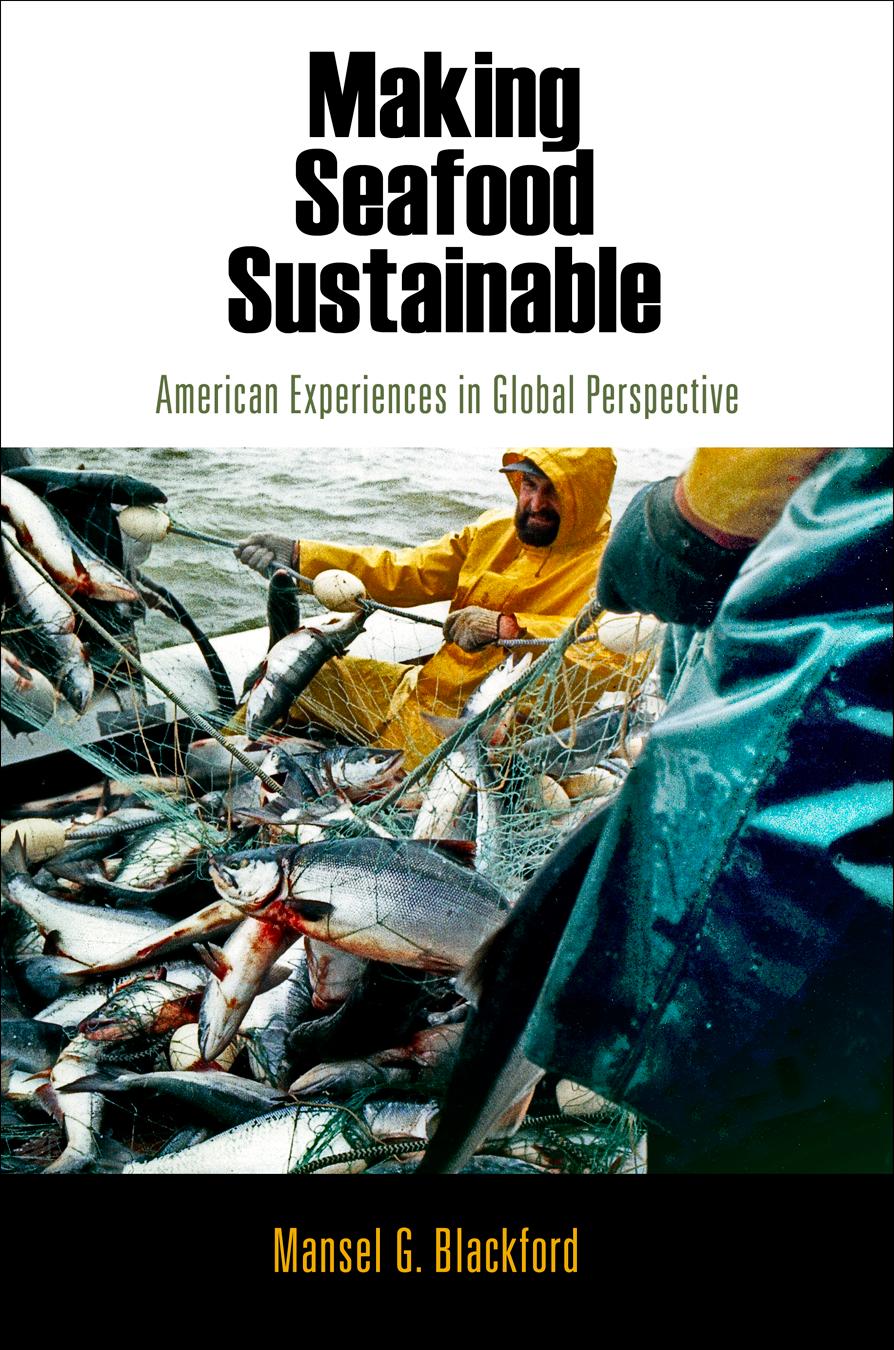
In the spring of 2007, National Geographic warned, "The oceans are in deep blue trouble. From the northernmost reaches of the Greenland Sea to the swirl of the Antarctic Circle, we are gutting our seas of fish." There were legitimate grounds for concern. After increasing more than fourfold between 1950 and 1994, the global wild fish catch reached a plateau and stagnated despite exponential growth in the fishing industry. As numerous scientific reports showed, many fish stocks around the world collapsed, creating a genuine global overfishing crisis.
Making Seafood Sustainable analyzes the ramifications of overfishing for the United States by investigating how fishers, seafood processors, retailers, government officials, and others have worked together to respond to the crisis. Historian Mansel G. Blackford examines how these players took steps to make fishing in some American waters, especially in Alaskan waters, sustainable. Critical to these efforts, Blackford argues, has been government and industry collaboration in formulating and enforcing regulations. What can be learned from these successful experiences? Are they applicable elsewhere? What are the drawbacks? Making Seafood Sustainable addresses these questions and suggests that sustainable seafood management can be made to work. The economic and social costs incurred in achieving sustainable resource usage are significant, but there are ways to mitigate them. More broadly, this study illustrates ways to manage commonly held natural resources around the world—land, water, oil, and so on—in sustainable ways.
Paga fácilmente con tarjeta, Klarna, Apple Pay o Google Pay. ¿No estás contento? Siempre tienes 14 días de garantía de devolución. Lee más en nuestros términos. Si tienes preguntas, escríbenos a hello@memmo.org.
Memmo hace que estudiar sea más fácil, estés donde estés. Aquí tienes tus libros de texto y herramientas de estudio inteligentes en un solo lugar: resúmenes, quizzes, podcasts y flashcards. Y también a Ted, tu compañero de estudio que responde a todo lo que te preguntes. Más de 50 000 estudiantes ya estudian aquí. Está hecho para que aprendas más rápido y te estreses menos.