
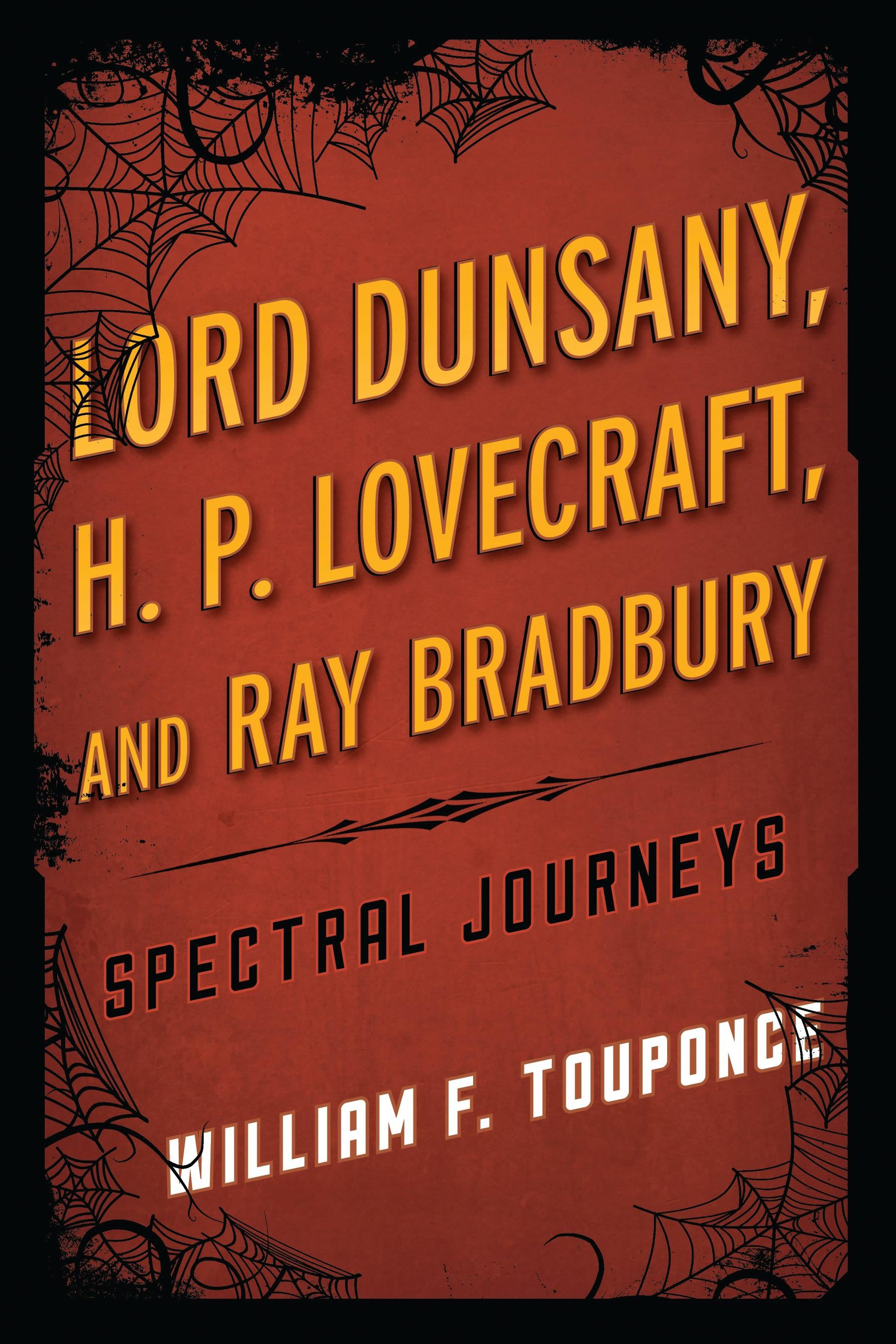
In his classic study Supernatural Horror in Literature, H. P. Lovecraft discusses the emergence of what he called spectral literature—literature that involves the gothic themes of the supernatural found in the past but also considers modern society and humanity. Beyond indicating how authors of such works derived pleasure from a sense of cosmic atmosphere, Lovecraft did not elaborate on what he meant by the term spectral as a form of haunted literature concerned with modernity.
In Lord Dunsany, H. P. Lovecraft, and Ray Bradbury: Spectral Journeys, William F. Touponce examines what these three masters of weird fiction reveal about modernity and the condition of being modern in their tales. In this study, Touponce confirms that these three authors viewed storytelling as a kind of journey into the spectral. Furthermore, he explains how each identifies modernity with capitalism in various ways and shows a concern with surpassing the limits of realism, which they see as tied to the representation of bourgeois society.
The collected writings of Lord Dunsany, H. P. Lovecraft, and Ray Bradbury span the length of the tumultuous twentieth century with hundreds of stories. By comparing these authors, Touponce also traces the development of supernatural fiction since the early 1900s. Reading about how these works were tied to various stages of capitalism, one can see the connection between supernatural literature and society. This study will appeal to fans of the three authors discussed here, as well as to scholars and others interested in the connection between literature and society, criticism of supernatural fiction, the nature of storytelling, and the meaning and experience of modernity.
In Lord Dunsany, H. P. Lovecraft, and Ray Bradbury: Spectral Journeys, William F. Touponce examines what these three masters of weird fiction reveal about modernity and the condition of being modern in their tales. In this study, Touponce confirms that these three authors viewed storytelling as a kind of journey into the spectral. Furthermore, he explains how each identifies modernity with capitalism in various ways and shows a concern with surpassing the limits of realism, which they see as tied to the representation of bourgeois society.
The collected writings of Lord Dunsany, H. P. Lovecraft, and Ray Bradbury span the length of the tumultuous twentieth century with hundreds of stories. By comparing these authors, Touponce also traces the development of supernatural fiction since the early 1900s. Reading about how these works were tied to various stages of capitalism, one can see the connection between supernatural literature and society. This study will appeal to fans of the three authors discussed here, as well as to scholars and others interested in the connection between literature and society, criticism of supernatural fiction, the nature of storytelling, and the meaning and experience of modernity.
Páginas: 166
Categoría: Litteraturvetenskap & Teori
e-ISBN: 9780810892200
Peso de envío: 1.2 kg
Envío en: 1-2 días
Paga fácilmente con tarjeta, Klarna, Apple Pay o Google Pay. ¿No estás contento? Siempre tienes 14 días de garantía de devolución. Lee más en nuestros términos. Si tienes preguntas, escríbenos a hello@memmo.org.
Memmo hace que estudiar sea más fácil, estés donde estés. Aquí tienes tus libros de texto y herramientas de estudio inteligentes en un solo lugar: resúmenes, quizzes, podcasts y flashcards. Y también a Ted, tu compañero de estudio que responde a todo lo que te preguntes. Más de 50 000 estudiantes ya estudian aquí. Está hecho para que aprendas más rápido y te estreses menos.