
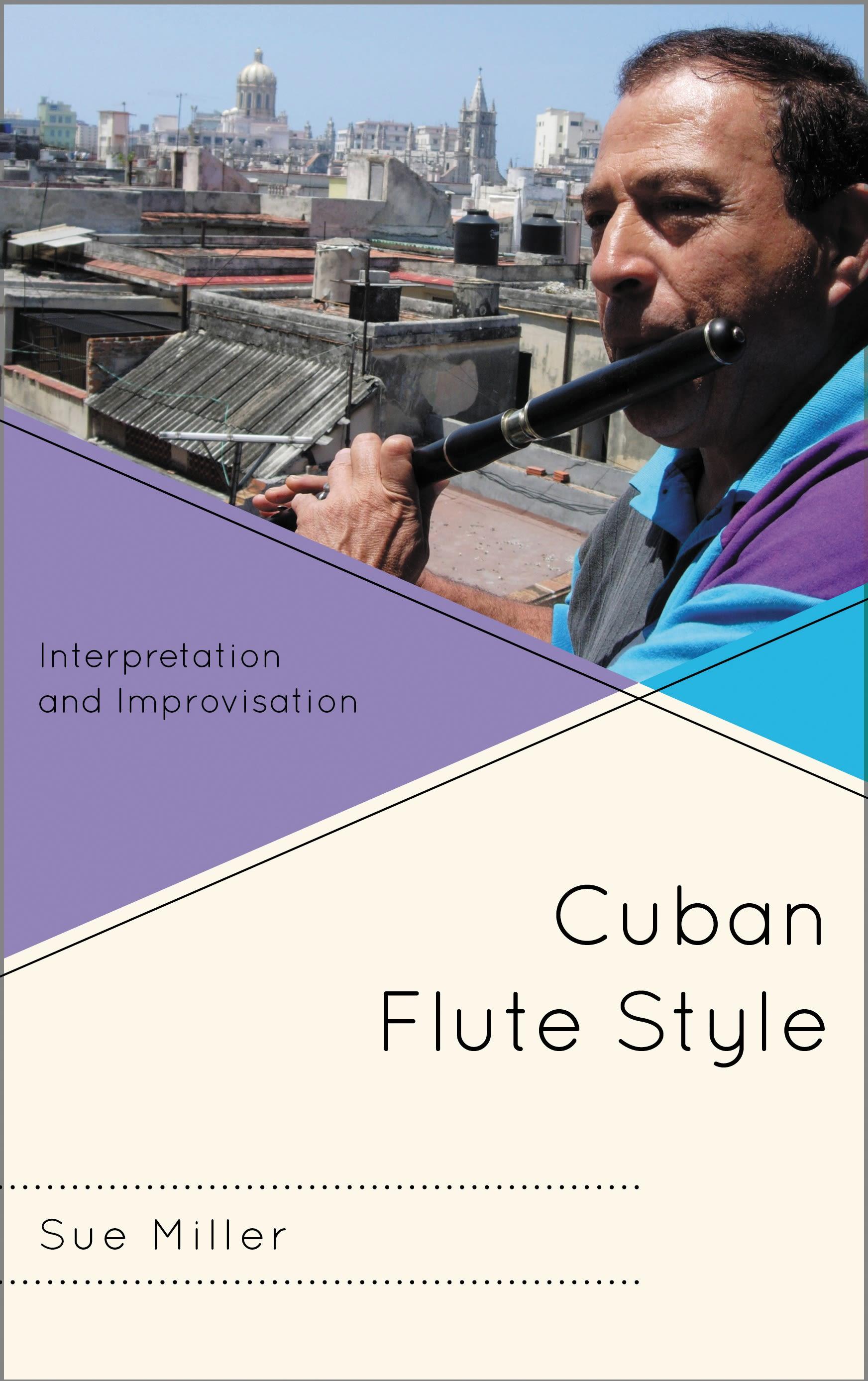
Richard Egües and José Fajardo are universally regarded as the leading exponents of charanga flute playing, an improvisatory style that crystallized in 1950s Cuba with the rise of the mambo and the chachachá. Despite the commercial success of their recordings with Orquesta Aragón and Fajardo y sus Estrellas and their influence not only on Cuban flute players but also on other Latin dance musicians, no in-depth analytical study of their flute solos exists.
In Cuban Flute Style: Interpretation and Improvisation, Sue Miller—music historian, charanga flute player, and former student of Richard Egües—examines the early-twentieth-century decorative style of flute playing in the Cuban danzón and its links with the later soloistic style of the 1950s as exemplified by Fajardo and Egües. Transcriptions and analyses of recorded performances demonstrate the characteristic elements of the style as well as the styles of individual players. A combination of musicological analysis and ethnomusicological fieldwork reveals the polyrhythmic and melodic aspects of the Cuban flute style, with commentary from flutists Richard Egües, Joaquín Oliveros, Polo Tamayo, Eddy Zervigón, and other renowned players.
Miller also covers techniques for flutists seeking to learn the style—including altissimo fingerings for the Boehm flute and fingerings for the five-key charanga flute—as well as guidance on articulation, phrasing, repertoire, practicing improvisation, and working with recordings. Cuban Flute Style will appeal to those working in the fields of Cuban music, improvisation, music analysis, ethnomusicology, performance and performance practice, popular music, and cultural theory.
In Cuban Flute Style: Interpretation and Improvisation, Sue Miller—music historian, charanga flute player, and former student of Richard Egües—examines the early-twentieth-century decorative style of flute playing in the Cuban danzón and its links with the later soloistic style of the 1950s as exemplified by Fajardo and Egües. Transcriptions and analyses of recorded performances demonstrate the characteristic elements of the style as well as the styles of individual players. A combination of musicological analysis and ethnomusicological fieldwork reveals the polyrhythmic and melodic aspects of the Cuban flute style, with commentary from flutists Richard Egües, Joaquín Oliveros, Polo Tamayo, Eddy Zervigón, and other renowned players.
Miller also covers techniques for flutists seeking to learn the style—including altissimo fingerings for the Boehm flute and fingerings for the five-key charanga flute—as well as guidance on articulation, phrasing, repertoire, practicing improvisation, and working with recordings. Cuban Flute Style will appeal to those working in the fields of Cuban music, improvisation, music analysis, ethnomusicology, performance and performance practice, popular music, and cultural theory.
Paga fácilmente con tarjeta, Klarna, Apple Pay o Google Pay. ¿No estás contento? Siempre tienes 14 días de garantía de devolución. Lee más en nuestros términos. Si tienes preguntas, escríbenos a hello@memmo.org.
Memmo hace que estudiar sea más fácil, estés donde estés. Aquí tienes tus libros de texto y herramientas de estudio inteligentes en un solo lugar: resúmenes, quizzes, podcasts y flashcards. Y también a Ted, tu compañero de estudio que responde a todo lo que te preguntes. Más de 50 000 estudiantes ya estudian aquí. Está hecho para que aprendas más rápido y te estreses menos.