
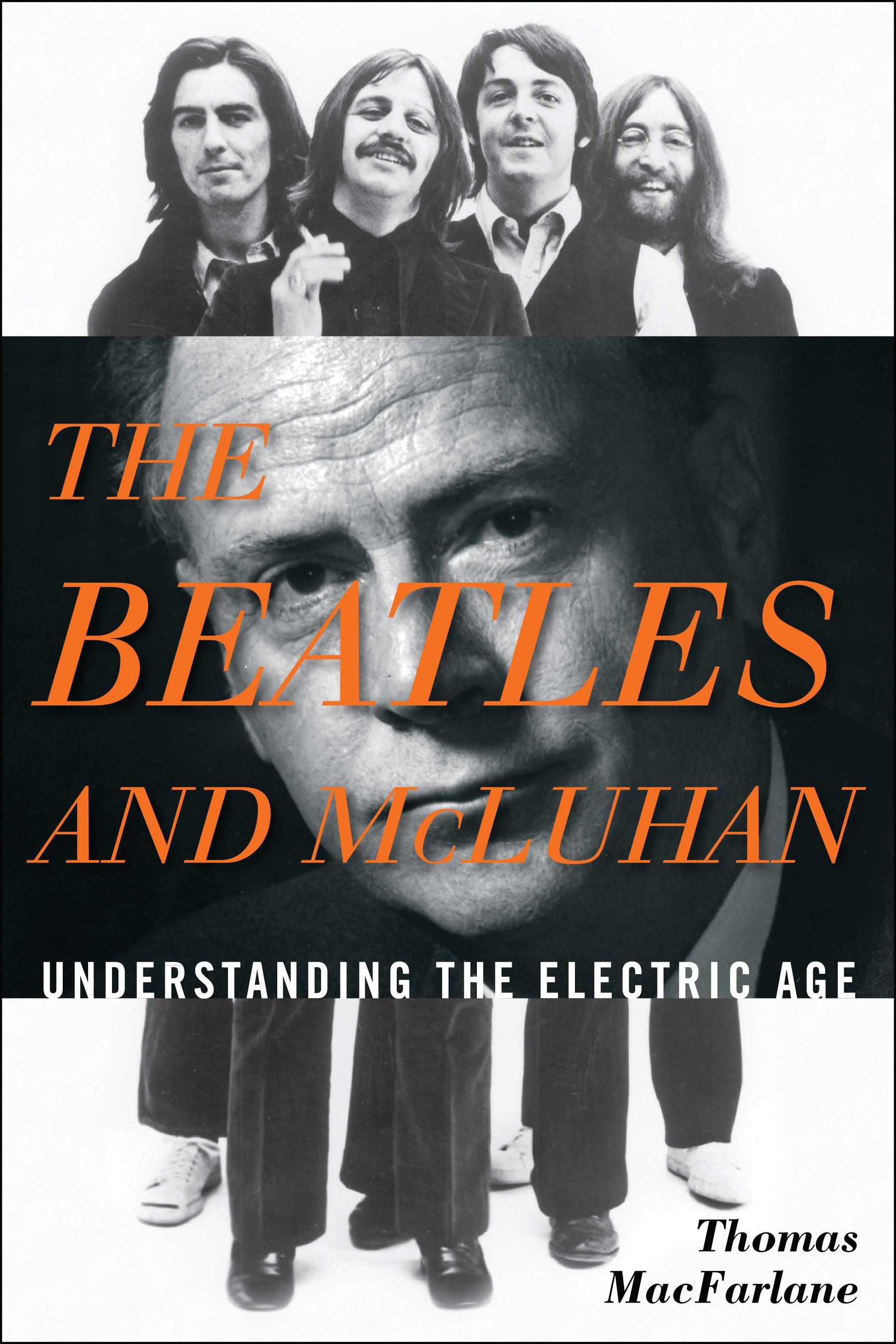
In the 1960s, The Beatles would address like no other musical act a radical shift in the cultural mindset of the late twentieth century. Through tools of “electric technology,” this shift encompassed the decline of visual modes of perception and the emergence of a “way-of-knowing” based increasingly on sound. In this respect, the musical works of The Beatles would come to resonate with and ultimately reflect Marshall McLuhan’s ideas on the transition into a culture of “all-at-once-ness”: a simultaneous world in which immersion in vibrant global community increasingly trumps the fixed viewpoint of the individual.
By engaging with recording technologies in a way that no popular act had before, The Beatles opened up for exploration the acoustical space precipitated by this shift. In The Beatles and McLuhan: Understanding the Electric Age, scholar and musician Thomas MacFarlane examines how the incorporation of electric technology in The Beatles’ art would enhance their musical impact. MacFarlane surveys the relationship between McLuhan's ideas on the nature and effects of electric technology and The Beatles own engagement of that technology; offers analyses of key works from The Beatles' studio years, with particular attention paid to the presence of cultural metaphors embedded in the medium of multi-track recording; and collates these data to offer stunning conclusions about The Beatles’ creative process in the recording studio and its cultural implications. This work also features the first published transcriptions ever of the complete filmed conversation between John Lennon and Marshall McLuhan on their respective ideas, as well as an interview between MacFarlane and McLuhan’s son and executor, Michael McLuhan, on his father’s and the Beatles’ legacy.
The Beatles and McLuhan will interest scholars and students of music and music history, recording technology, media studies, communications, and popular culture.
By engaging with recording technologies in a way that no popular act had before, The Beatles opened up for exploration the acoustical space precipitated by this shift. In The Beatles and McLuhan: Understanding the Electric Age, scholar and musician Thomas MacFarlane examines how the incorporation of electric technology in The Beatles’ art would enhance their musical impact. MacFarlane surveys the relationship between McLuhan's ideas on the nature and effects of electric technology and The Beatles own engagement of that technology; offers analyses of key works from The Beatles' studio years, with particular attention paid to the presence of cultural metaphors embedded in the medium of multi-track recording; and collates these data to offer stunning conclusions about The Beatles’ creative process in the recording studio and its cultural implications. This work also features the first published transcriptions ever of the complete filmed conversation between John Lennon and Marshall McLuhan on their respective ideas, as well as an interview between MacFarlane and McLuhan’s son and executor, Michael McLuhan, on his father’s and the Beatles’ legacy.
The Beatles and McLuhan will interest scholars and students of music and music history, recording technology, media studies, communications, and popular culture.
Páginas: 194
Categoría: Film- & Medievetenskap
e-ISBN: 9780810884335
Peso de envío: 1.2 kg
Envío en: 1-2 días
Paga fácilmente con tarjeta, Klarna, Apple Pay o Google Pay. ¿No estás contento? Siempre tienes 14 días de garantía de devolución. Lee más en nuestros términos. Si tienes preguntas, escríbenos a hello@memmo.org.
Memmo hace que estudiar sea más fácil, estés donde estés. Aquí tienes tus libros de texto y herramientas de estudio inteligentes en un solo lugar: resúmenes, quizzes, podcasts y flashcards. Y también a Ted, tu compañero de estudio que responde a todo lo que te preguntes. Más de 50 000 estudiantes ya estudian aquí. Está hecho para que aprendas más rápido y te estreses menos.