
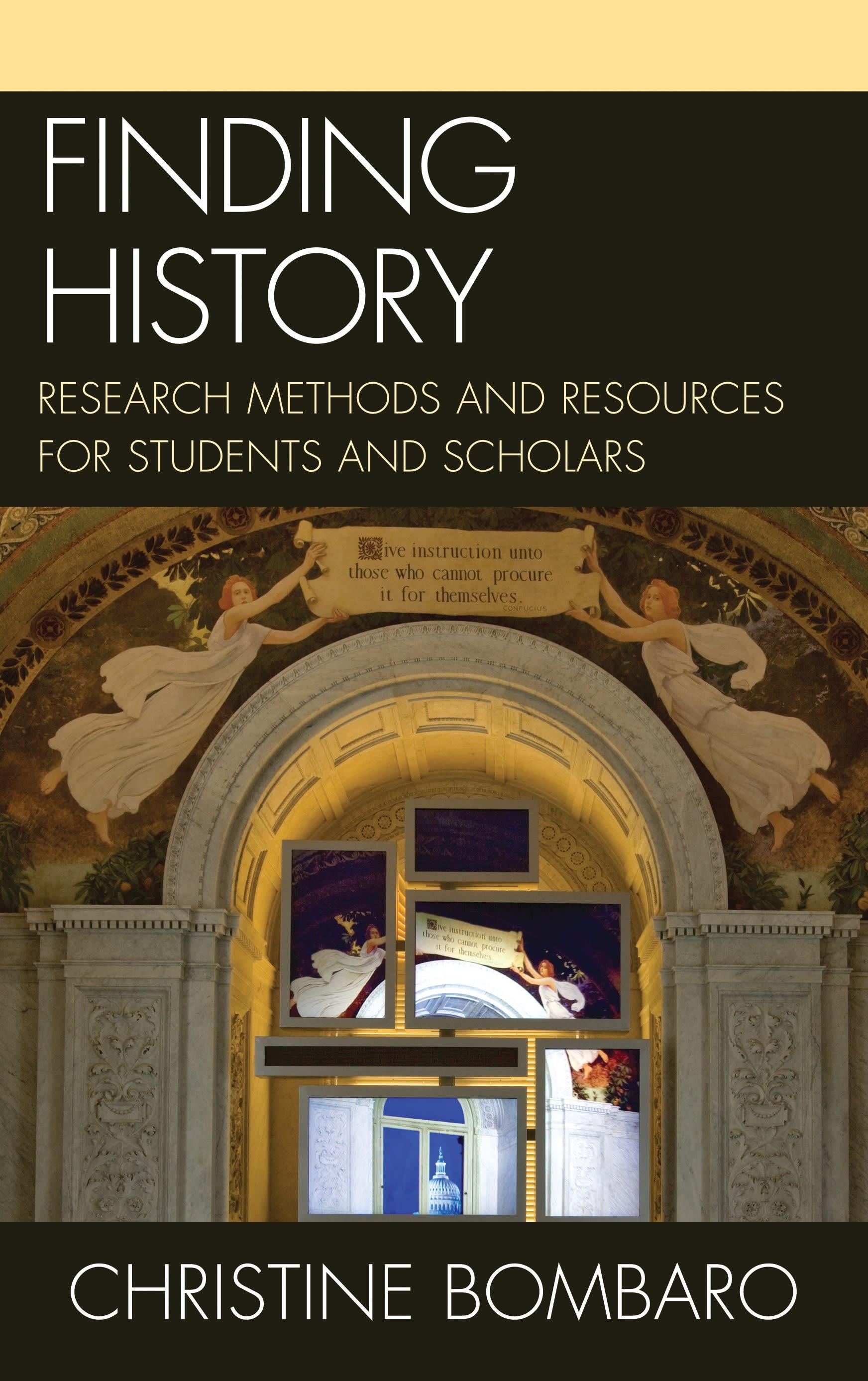
In today’s world of modern research methods, the irony is that even though more materials are readily available now than ever before, this proliferation of sources has actually made the process more difficult for the novice researcher. In addition, today’s professors expect high-quality sources to be used in students’ undergraduate research precisely because so much information is available; however, without instruction, many students are not even aware of the standard history sources that they should be using routinely for history research projects. Finding History is a practical and modern guide to research for history projects, helping to sort through the available resources and technology for students, scholars, and librarians.
Finding History includes practical, step-by-step instructions for discovering historical evidence using library catalogs, databases, and websites. It simplifies and clarifies the research process so that students new to the experience may locate appropriate research material with the same skill as seasoned historians. This book addresses the information literacy skills defined by the American Library Association and the American Historical Association, which include
recognizing the need for scholarly historical information;defining and identifying the need for primary, secondary, and tertiary sources;knowing what finding tools are available to help locate historical sources;using history research tools efficiently and effectively;learning research vocabulary as well as the vocabulary of the historical profession;making evaluative judgments about the scholarly value of materials once they are located;physically acquiring research materials;using research material effectively to support a thesis or argument; andusing research material ethically and responsibly.
Including search samples and tables, Finding History is a valuable resource for anyone wanting to ensure their research draws from the best available sources and those needing instruction in locating, obtaining, evaluating, and using scholarly sources efficiently, directly, and ethically.
Finding History includes practical, step-by-step instructions for discovering historical evidence using library catalogs, databases, and websites. It simplifies and clarifies the research process so that students new to the experience may locate appropriate research material with the same skill as seasoned historians. This book addresses the information literacy skills defined by the American Library Association and the American Historical Association, which include
recognizing the need for scholarly historical information;defining and identifying the need for primary, secondary, and tertiary sources;knowing what finding tools are available to help locate historical sources;using history research tools efficiently and effectively;learning research vocabulary as well as the vocabulary of the historical profession;making evaluative judgments about the scholarly value of materials once they are located;physically acquiring research materials;using research material effectively to support a thesis or argument; andusing research material ethically and responsibly.
Including search samples and tables, Finding History is a valuable resource for anyone wanting to ensure their research draws from the best available sources and those needing instruction in locating, obtaining, evaluating, and using scholarly sources efficiently, directly, and ethically.
Paga fácilmente con tarjeta, Klarna, Apple Pay o Google Pay. ¿No estás contento? Siempre tienes 14 días de garantía de devolución. Lee más en nuestros términos. Si tienes preguntas, escríbenos a hello@memmo.org.
Memmo hace que estudiar sea más fácil, estés donde estés. Aquí tienes tus libros de texto y herramientas de estudio inteligentes en un solo lugar: resúmenes, quizzes, podcasts y flashcards. Y también a Ted, tu compañero de estudio que responde a todo lo que te preguntes. Más de 50 000 estudiantes ya estudian aquí. Está hecho para que aprendas más rápido y te estreses menos.