
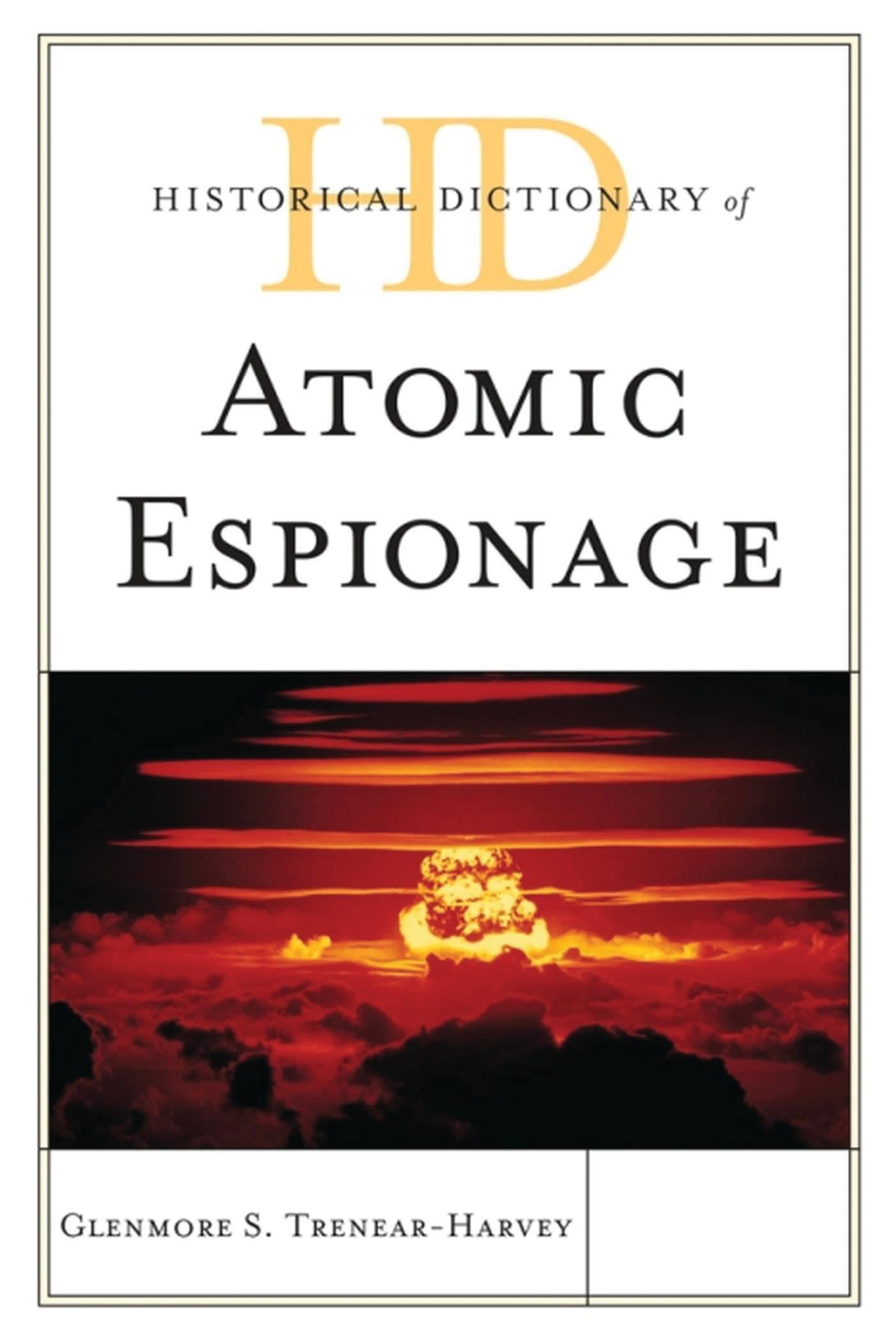
Almost from the moment in 1940 that Otto Frisch and Rudofl Peierls suggested, from their small office in the University of Birmingham, that an atomic weapon could be miniaturized and delivered to its target by aircraft, the concept of atomic espionage can be said to have existed. No sooner had the famous Frisch-Peierls Memorandum been received by the British War Cabinet than a Soviet mole, John Cairncross, passed the details on to his Soviet contact. And 70 years later with the International Atomic Energy Authority (IAEA) estimating that up to 40 countries now have the capability of building nuclear weapons, the need to monitor this activity remains crucial.
The Historical Dictionary of Atomic Espionage relates the history of atomic espionage through a chronology, an introductory essay, and cross-referenced dictionary entries on the agencies, agents, and operations. This book is an excellent access point for students, researchers, and anyone wanting to know more about atomic espionage.
The Historical Dictionary of Atomic Espionage relates the history of atomic espionage through a chronology, an introductory essay, and cross-referenced dictionary entries on the agencies, agents, and operations. This book is an excellent access point for students, researchers, and anyone wanting to know more about atomic espionage.
Paga fácilmente con tarjeta, Klarna, Apple Pay o Google Pay. ¿No estás contento? Siempre tienes 14 días de garantía de devolución. Lee más en nuestros términos. Si tienes preguntas, escríbenos a hello@memmo.org.
Memmo hace que estudiar sea más fácil, estés donde estés. Aquí tienes tus libros de texto y herramientas de estudio inteligentes en un solo lugar: resúmenes, quizzes, podcasts y flashcards. Y también a Ted, tu compañero de estudio que responde a todo lo que te preguntes. Más de 50 000 estudiantes ya estudian aquí. Está hecho para que aprendas más rápido y te estreses menos.