
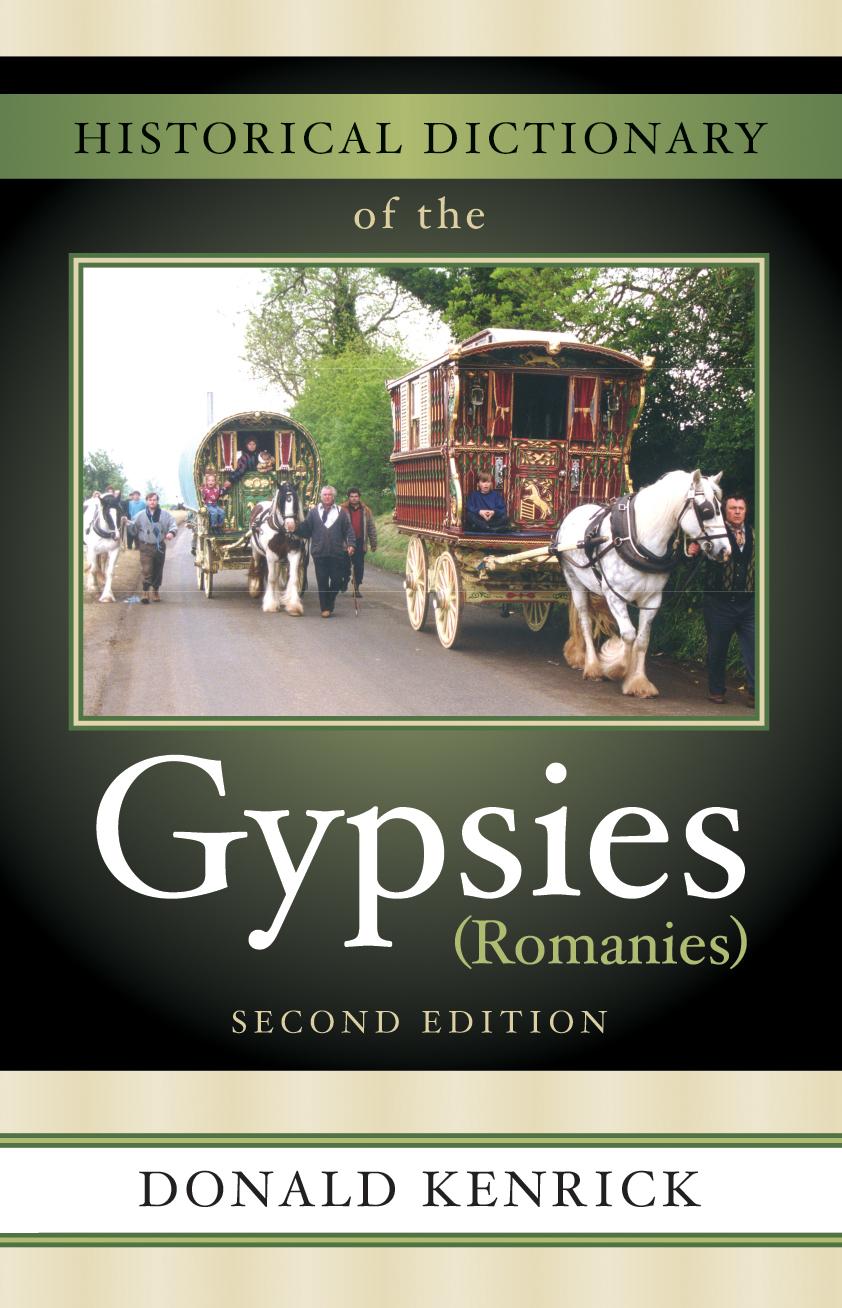
Originating in India, the Gypsies arrived in Europe around the 14th century, spreading not only across the entirety of the continent but also immigrating to the Americas. The first Gypsy migration included farmworkers, blacksmiths, and mercenary soldiers, as well as musicians, fortune-tellers, and entertainers. At first, they were generally welcome as an interesting diversion to the dull routine of that period. Soon, however, they attracted the antagonism of the governing powers, as they have continually done throughout the following centuries.
The second edition of the Historical Dictionary of the Gypsies (Romanies) seeks to end such prejudice by clarifying the facts about this nomadic people. Through a list of acronyms, a chronology, an introductory essay, a bibliography, and hundreds of cross-referenced dictionary entries on significant persons, places, events, institutions, and aspects of culture, society, economy, and politics, the history of the Gypsies and their culture is told.
The second edition of the Historical Dictionary of the Gypsies (Romanies) seeks to end such prejudice by clarifying the facts about this nomadic people. Through a list of acronyms, a chronology, an introductory essay, a bibliography, and hundreds of cross-referenced dictionary entries on significant persons, places, events, institutions, and aspects of culture, society, economy, and politics, the history of the Gypsies and their culture is told.
Paga fácilmente con tarjeta, Klarna, Apple Pay o Google Pay. ¿No estás contento? Siempre tienes 14 días de garantía de devolución. Lee más en nuestros términos. Si tienes preguntas, escríbenos a hello@memmo.org.
Memmo hace que estudiar sea más fácil, estés donde estés. Aquí tienes tus libros de texto y herramientas de estudio inteligentes en un solo lugar: resúmenes, quizzes, podcasts y flashcards. Y también a Ted, tu compañero de estudio que responde a todo lo que te preguntes. Más de 50 000 estudiantes ya estudian aquí. Está hecho para que aprendas más rápido y te estreses menos.