
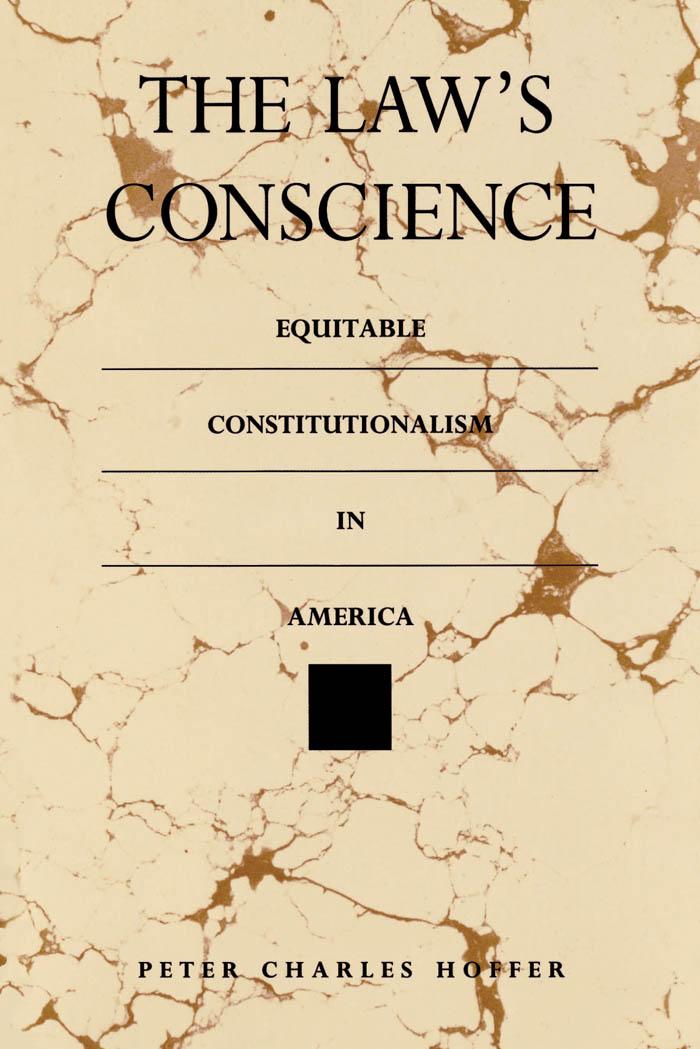
The Law’s Conscience is a history of equity in Anglo-American juris-prudence from the inception of the chancellor’s court in medieval England to the recent civil rights and affirmative action decisions of the United States Supreme Court. Peter Hoffer argues that equity embodies a way of looking at law, including constitutions, based on ideas of mutual fairness, public trusteeship, and equal protection. His central theme is the tension between the ideal of equity and the actual availability of equitable remedies.
Hoffer examines this tension in the trusteeship constitutionalism of John Locke and Thomas Jefferson; the incorporation of equity in the first American constitutions; the antebellum controversy over slavery; the fortunes of the Freedmen’s Bureau after the Civil War; the emergence of the doctrine of “Balance of Equity” in twentieth-century public-interest law; and the desegregation and reverse discrimination cases of the past thirty-five years. Brown v. Board of Education (1954) was the most important equity suit in American history, and Hoffer begins and ends his book with a new interpretation of its lessons.
Paga fácilmente con tarjeta, Klarna, Apple Pay o Google Pay. ¿No estás contento? Siempre tienes 14 días de garantía de devolución. Lee más en nuestros términos. Si tienes preguntas, escríbenos a hello@memmo.org.
Memmo hace que estudiar sea más fácil, estés donde estés. Aquí tienes tus libros de texto y herramientas de estudio inteligentes en un solo lugar: resúmenes, quizzes, podcasts y flashcards. Y también a Ted, tu compañero de estudio que responde a todo lo que te preguntes. Más de 50 000 estudiantes ya estudian aquí. Está hecho para que aprendas más rápido y te estreses menos.