
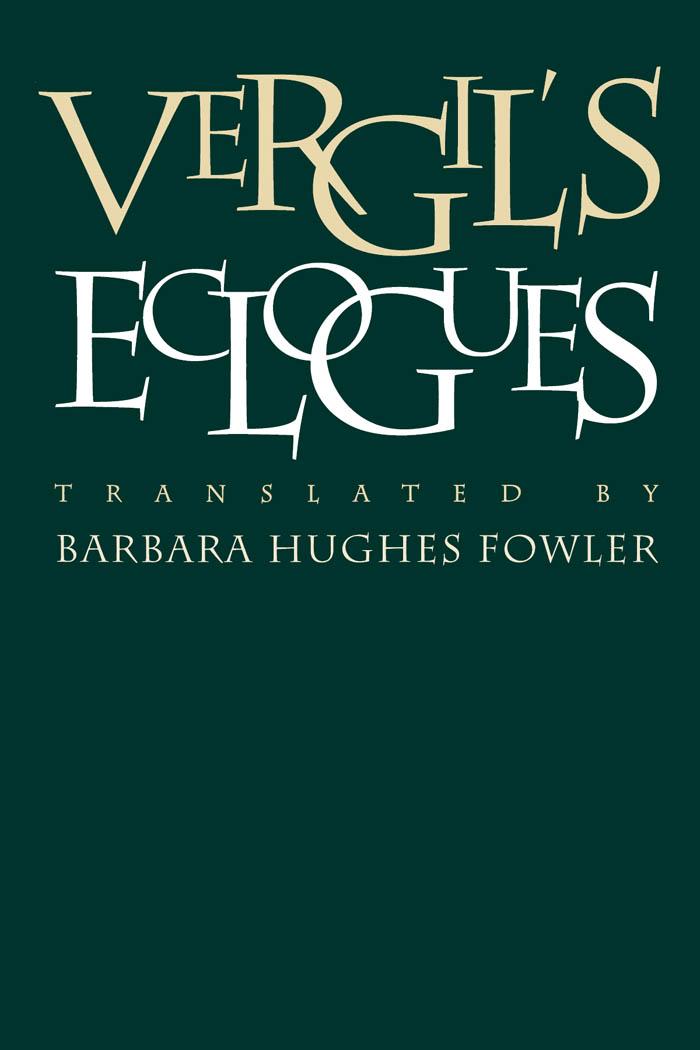
Best remembered for his unfinished epic, the Aeneid, the poet Vergil was celebrated in his time both for the perfection of his art and for the centrality of his ideas to Roman culture. The Eclogues, his earliest confirmed work, were composed in part out of political considerations: when the Roman authorities threatened to seize his family’s land, Vergil’s appeal in the form of Eclogue IX won a stay. Eclogue I appears to be a thank-you for that favor. Barbara Hughes Fowler provides scholars and students with a new American verse translation of Vergil’s Eclogues. An accomplished translator, Fowler renders the poet’s words into an English that is contemporary while remaining close to the spirit of the original. In an introduction to the text, she compares the treatment of the pastoral form by Vergil and Theocritus, illuminating the ways in which Vergil borrowed from and built upon the earlier poet’s work, and thereby moved the genre in a new direction.
Paga fácilmente con tarjeta, Klarna, Apple Pay o Google Pay. ¿No estás contento? Siempre tienes 14 días de garantía de devolución. Lee más en nuestros términos. Si tienes preguntas, escríbenos a hello@memmo.org.
Memmo hace que estudiar sea más fácil, estés donde estés. Aquí tienes tus libros de texto y herramientas de estudio inteligentes en un solo lugar: resúmenes, quizzes, podcasts y flashcards. Y también a Ted, tu compañero de estudio que responde a todo lo que te preguntes. Más de 50 000 estudiantes ya estudian aquí. Está hecho para que aprendas más rápido y te estreses menos.