
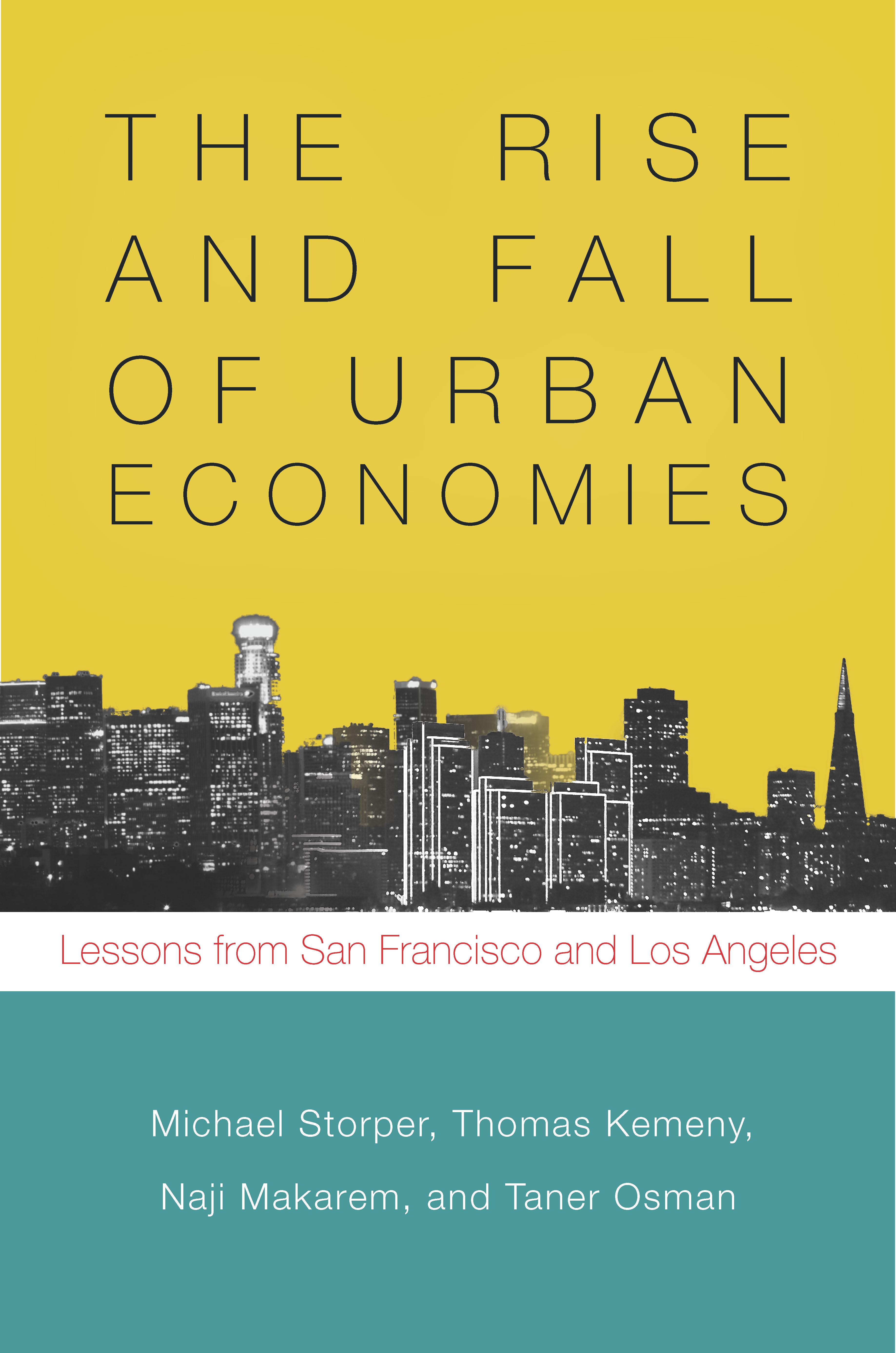
Today, the Bay Area is home to the most successful knowledge economy in America, while Los Angeles has fallen progressively further behind its neighbor to the north and a number of other American metropolises. Yet, in 1970, experts would have predicted that L.A. would outpace San Francisco in population, income, economic power, and influence. The usual factors used to explain urban growth—luck, immigration, local economic policies, and the pool of skilled labor—do not account for the contrast between the two cities and their fates. So what does?
The Rise and Fall of Urban Economies challenges many of the conventional notions about economic development and sheds new light on its workings. The authors argue that it is essential to understand the interactions of three major components—economic specialization, human capital formation, and institutional factors—to determine how well a regional economy will cope with new opportunities and challenges. Drawing on economics, sociology, political science, and geography, they argue that the economic development of metropolitan regions hinges on previously underexplored capacities for organizational change in firms, networks of people, and networks of leaders. By studying San Francisco and Los Angeles in unprecedented levels of depth, this book extracts lessons for the field of economic development studies and urban regions around the world.
Paga fácilmente con tarjeta, Klarna, Apple Pay o Google Pay. ¿No estás contento? Siempre tienes 14 días de garantía de devolución. Lee más en nuestros términos. Si tienes preguntas, escríbenos a hello@memmo.org.
Memmo hace que estudiar sea más fácil, estés donde estés. Aquí tienes tus libros de texto y herramientas de estudio inteligentes en un solo lugar: resúmenes, quizzes, podcasts y flashcards. Y también a Ted, tu compañero de estudio que responde a todo lo que te preguntes. Más de 50 000 estudiantes ya estudian aquí. Está hecho para que aprendas más rápido y te estreses menos.