
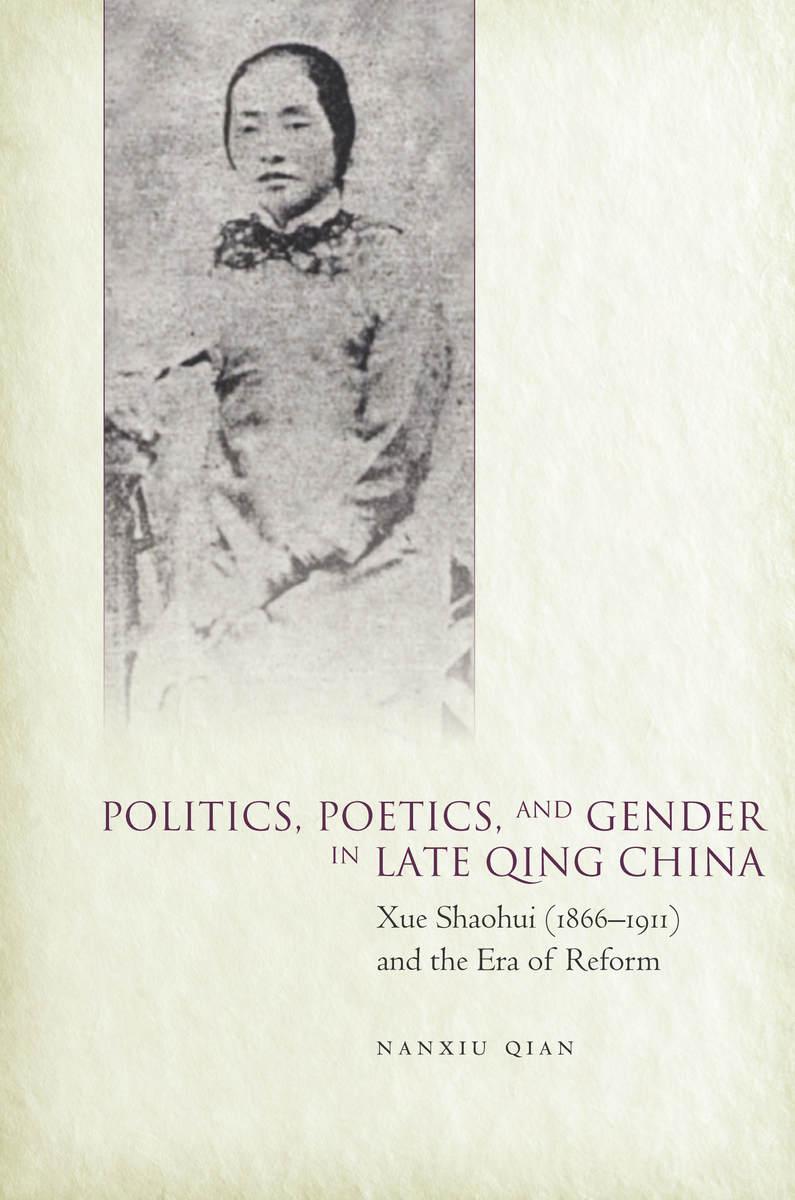
In 1898, Qing dynasty emperor Guangxu ordered a series of reforms to correct the political, economic, cultural, and educational weaknesses exposed by China's defeat by Japan in the First Sino-Japanese War. The "Hundred Day's Reform" has received a great deal of attention from historians who have focused on the well-known male historical actors, but until now the Qing women reformers have received almost no consideration. In this book, historian Nanxiu Qian reveals the contributions of the active, optimistic, and self-sufficient women reformers of the late Qing Dynasty.
Qian examines the late Qing reforms from the perspective of Xue Shaohui, a leading woman writer who openly argued against male reformers' approach that subordinated women's issues to larger national concerns, instead prioritizing women's self-improvement over national empowerment. Drawing upon intellectual and spiritual resources from the freewheeling, xianyuan (worthy ladies) model of the Wei-Jin period of Chinese history (220–420) and the culture of women writers of late imperial China, and open to Western ideas and knowledge, Xue and the reform-minded members of her social and intellectual networks went beyond the inherited Confucian pattern in their quest for an ideal womanhood and an ideal social order. Demanding equal political and educational rights with men, women reformers challenged leading male reformers' purpose of achieving national "wealth and power," intending instead to unite women of all nations in an effort to create a just and harmonious new world.
Paga fácilmente con tarjeta, Klarna, Apple Pay o Google Pay. ¿No estás contento? Siempre tienes 14 días de garantía de devolución. Lee más en nuestros términos. Si tienes preguntas, escríbenos a hello@memmo.org.
Memmo hace que estudiar sea más fácil, estés donde estés. Aquí tienes tus libros de texto y herramientas de estudio inteligentes en un solo lugar: resúmenes, quizzes, podcasts y flashcards. Y también a Ted, tu compañero de estudio que responde a todo lo que te preguntes. Más de 50 000 estudiantes ya estudian aquí. Está hecho para que aprendas más rápido y te estreses menos.