
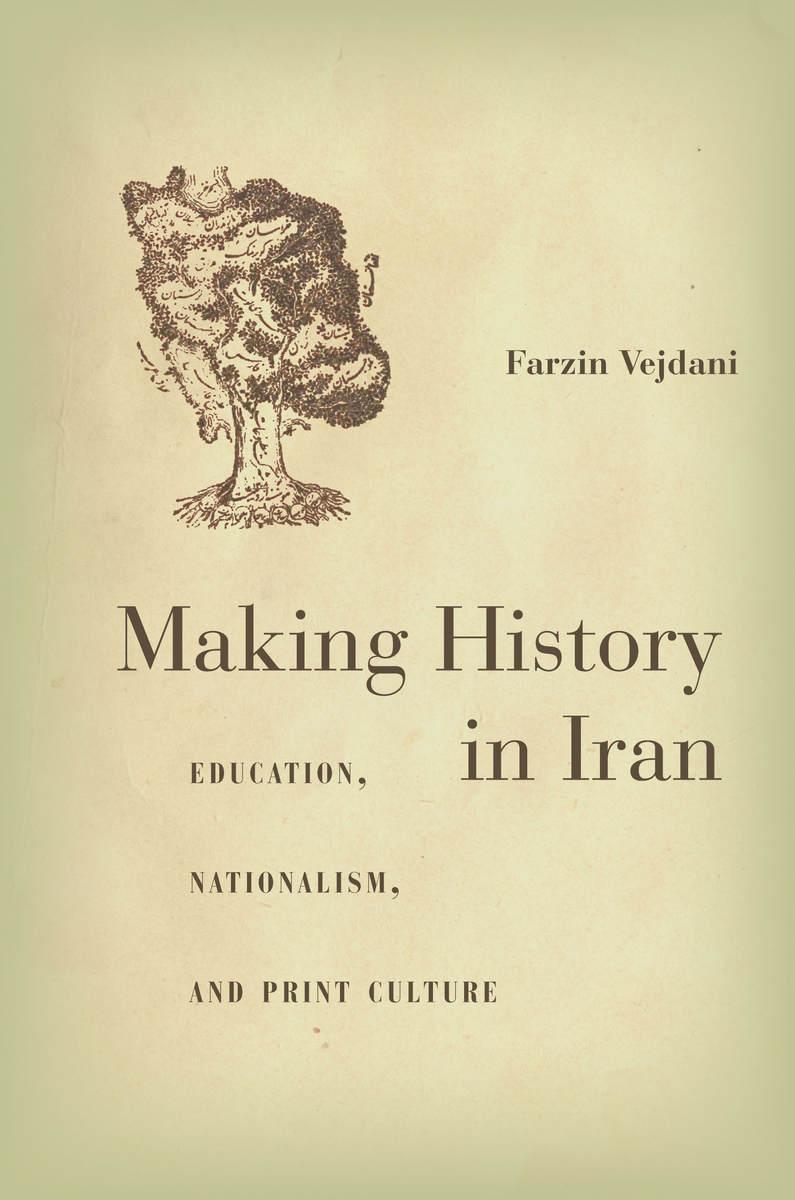
Iranian history was long told through a variety of stories and legend, tribal lore and genealogies, and tales of the prophets. But in the late nineteenth century, new institutions emerged to produce and circulate a coherent history that fundamentally reshaped these fragmented narratives and dynastic storylines. Farzin Vejdani investigates this transformation to show how cultural institutions and a growing public-sphere affected history-writing, and how in turn this writing defined Iranian nationalism. Interactions between the state and a cross-section of Iranian society—scholars, schoolteachers, students, intellectuals, feminists, and poets—were crucial in shaping a new understanding of nation and history.
This enlightening book draws on previously unexamined primary sources—including histories, school curricula, pedagogical materials, periodicals, and memoirs—to demonstrate how the social locations of historians writ broadly influenced their interpretations of the past. The relative autonomy of these historians had a direct bearing on whether history upheld the status quo or became an instrument for radical change, and the writing of history became central to debates on social and political reform, the role of women in society, and the criteria for citizenship and nationality. Ultimately, this book traces how contending visions of Iranian history were increasingly unified as a centralized Iranian state emerged in the early twentieth century.
Paga fácilmente con tarjeta, Klarna, Apple Pay o Google Pay. ¿No estás contento? Siempre tienes 14 días de garantía de devolución. Lee más en nuestros términos. Si tienes preguntas, escríbenos a hello@memmo.org.
Memmo hace que estudiar sea más fácil, estés donde estés. Aquí tienes tus libros de texto y herramientas de estudio inteligentes en un solo lugar: resúmenes, quizzes, podcasts y flashcards. Y también a Ted, tu compañero de estudio que responde a todo lo que te preguntes. Más de 50 000 estudiantes ya estudian aquí. Está hecho para que aprendas más rápido y te estreses menos.