
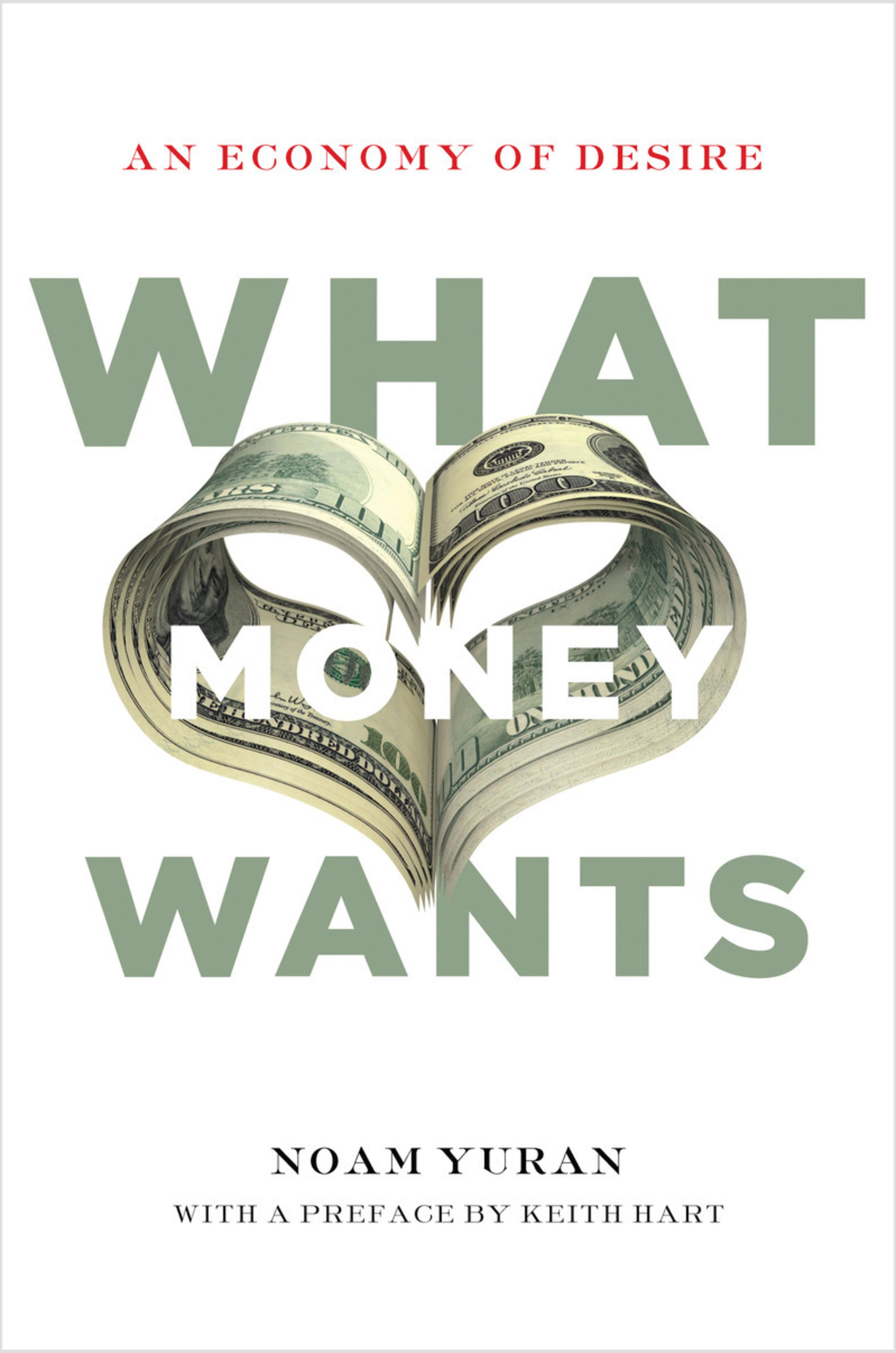
One thing all mainstream economists agree upon is that money has nothing whatsoever to do with desire. This strange blindness of the profession to what is otherwise considered to be a basic feature of economic life serves as the starting point for this provocative new theory of money. Through the works of Karl Marx, Thorstein Veblen, and Max Weber, What Money Wants argues that money is first and foremost an object of desire. In contrast to the common notion that money is but an ordinary object that people believe to be money, this book explores the theoretical consequences of the possibility that an ordinary object fulfills money's function insofar as it is desired as money. Rather than conceiving of the desire for money as pathological, Noam Yuran shows how it permeates economic reality, from finance to its spectacular double in our consumer economy of addictive shopping. Rich in colorful and accessible examples, from the work of Charles Dickens to Reality TV and commercials, this book convinces us that we must return to Marx and Veblen if we are to understand how brand names, broadcast television, and celebrity culture work. Analyzing both classical and contemporary economic theory, it reveals the philosophical dimensions of the controversy between orthodox and heterodox economics.
Paga fácilmente con tarjeta, Klarna, Apple Pay o Google Pay. ¿No estás contento? Siempre tienes 14 días de garantía de devolución. Lee más en nuestros términos. Si tienes preguntas, escríbenos a hello@memmo.org.
Memmo hace que estudiar sea más fácil, estés donde estés. Aquí tienes tus libros de texto y herramientas de estudio inteligentes en un solo lugar: resúmenes, quizzes, podcasts y flashcards. Y también a Ted, tu compañero de estudio que responde a todo lo que te preguntes. Más de 50 000 estudiantes ya estudian aquí. Está hecho para que aprendas más rápido y te estreses menos.