
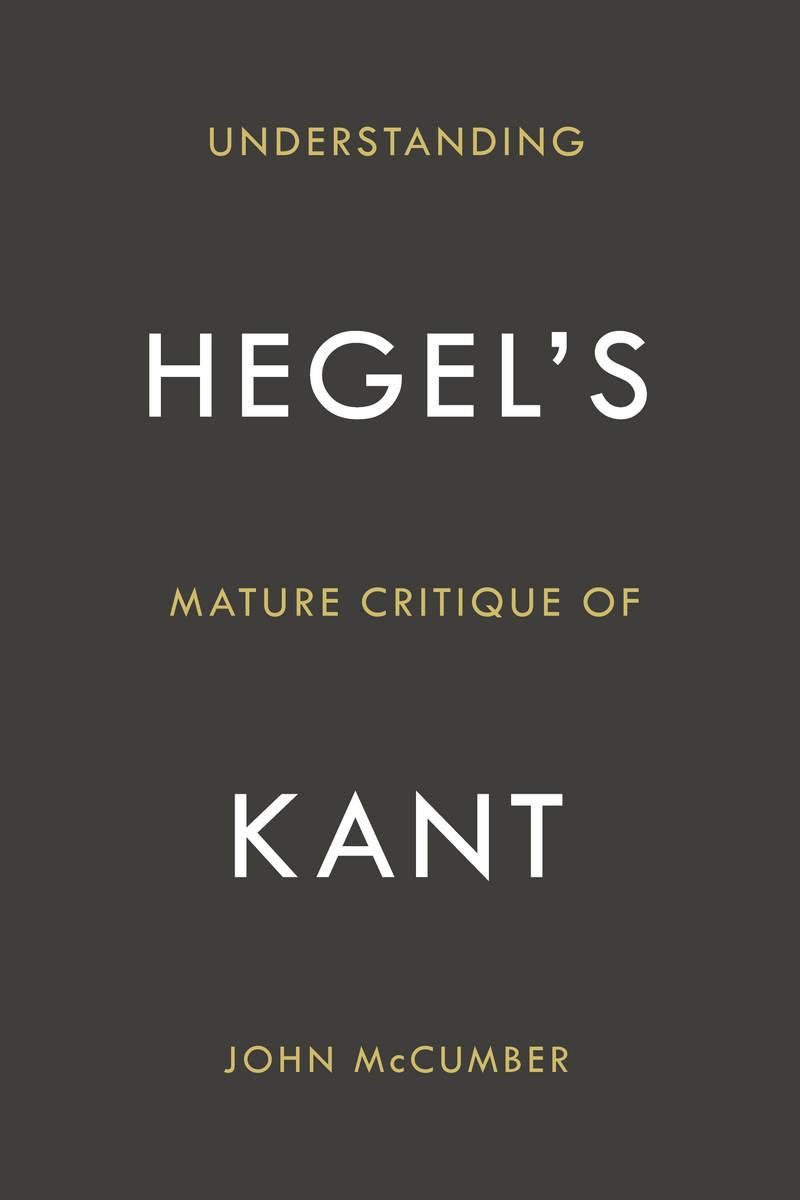
Hegel's critique of Kant was a turning point in the history of philosophy: for the first time, the concrete, situated, and in certain senses "naturalistic" style pioneered by Hegel confronted the thin, universalistic, and argumentatively purified style of philosophy that had found its most rigorous expression in Kant. The controversy has hardly died away: it virtually haunts contemporary philosophy from epistemology to ethical theory. Yet if this book is right, the full import of Hegel's critique of Kant has not been understood. Working from Hegel's mature texts (after 1807) and reading them in light of an overall interpretation of Hegel's project as a linguistic, "definitional" system, the book offers major reinterpretations of Hegel's views: The Kantian thing-in-itself is not denied but relocated as a temporal aspect of our experience. Hegel's linguistic idealism is understood in terms of his realistic view of sensation. Instead of claiming that Kant's categorical imperative is too empty to provide concrete moral guidance, Hegel praises its emptiness as the foundation for a diverse society.
Paga fácilmente con tarjeta, Klarna, Apple Pay o Google Pay. ¿No estás contento? Siempre tienes 14 días de garantía de devolución. Lee más en nuestros términos. Si tienes preguntas, escríbenos a hello@memmo.org.
Memmo hace que estudiar sea más fácil, estés donde estés. Aquí tienes tus libros de texto y herramientas de estudio inteligentes en un solo lugar: resúmenes, quizzes, podcasts y flashcards. Y también a Ted, tu compañero de estudio que responde a todo lo que te preguntes. Más de 50 000 estudiantes ya estudian aquí. Está hecho para que aprendas más rápido y te estreses menos.