
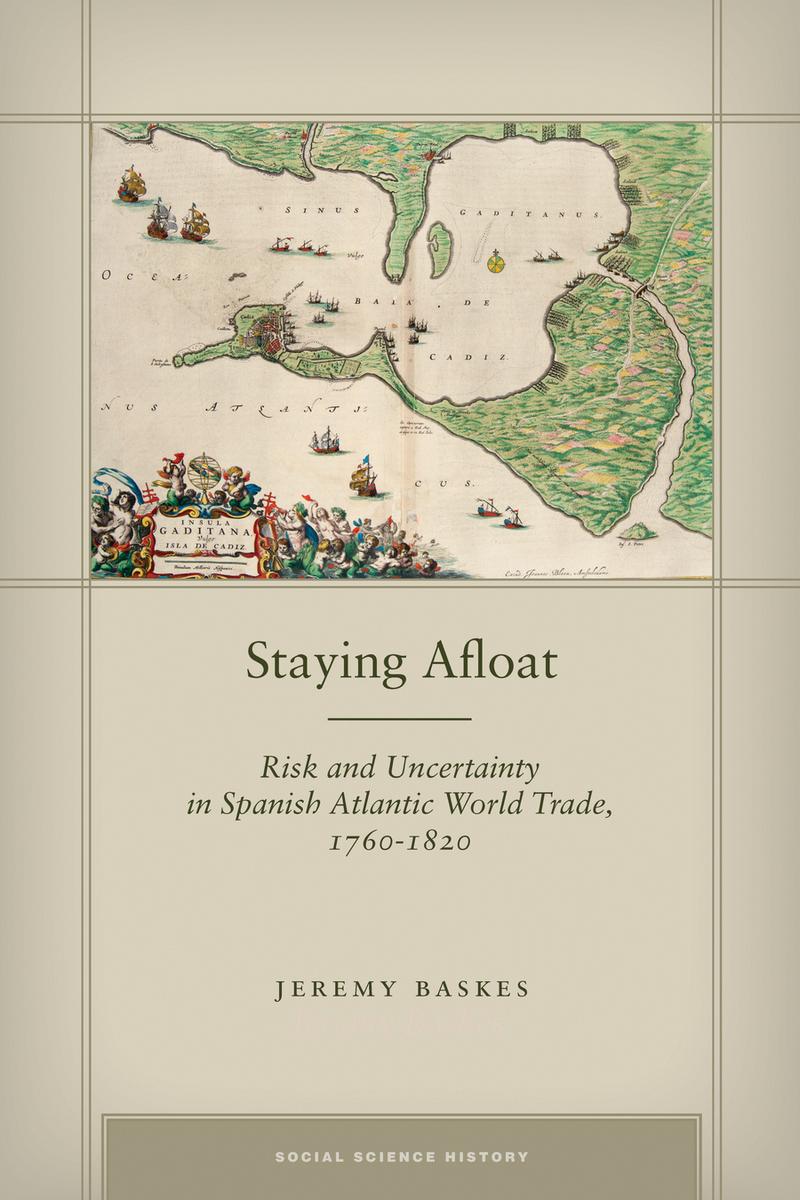
Early modern, long-distance trade was fraught with risk and uncertainty, driving merchants to seek means (that is, institutions) to reduce them. In the traditional historiography on Spanish colonial trade, the role of risk is largely ignored. Instead, the guild merchants are depicted as anti-competitive monopolists who manipulated markets and exploited colonial consumers. Jeremy Baskes argues that much of the commercial behavior interpreted by modern historians as predatory was instead designed to reduce the uncertainty and risk of Atlantic world trade.
This book discusses topics from the development and use of maritime insurance in eighteenth- century Spain to the commercial strategies of Spanish merchants; the traditionally misunderstood effects of the 1778 promulgation of "comercio libre," and the financial chaos and bankruptcies that ensued; the economic rationale for the Spanish flotillas; and the impact of war and privateering on commerce and business decisions. By elevating risk to the center of focus, this multifaceted study makes a number of revisionist contributions to the late colonial economic history of the Spanish empire.
Paga fácilmente con tarjeta, Klarna, Apple Pay o Google Pay. ¿No estás contento? Siempre tienes 14 días de garantía de devolución. Lee más en nuestros términos. Si tienes preguntas, escríbenos a hello@memmo.org.
Memmo hace que estudiar sea más fácil, estés donde estés. Aquí tienes tus libros de texto y herramientas de estudio inteligentes en un solo lugar: resúmenes, quizzes, podcasts y flashcards. Y también a Ted, tu compañero de estudio que responde a todo lo que te preguntes. Más de 50 000 estudiantes ya estudian aquí. Está hecho para que aprendas más rápido y te estreses menos.