
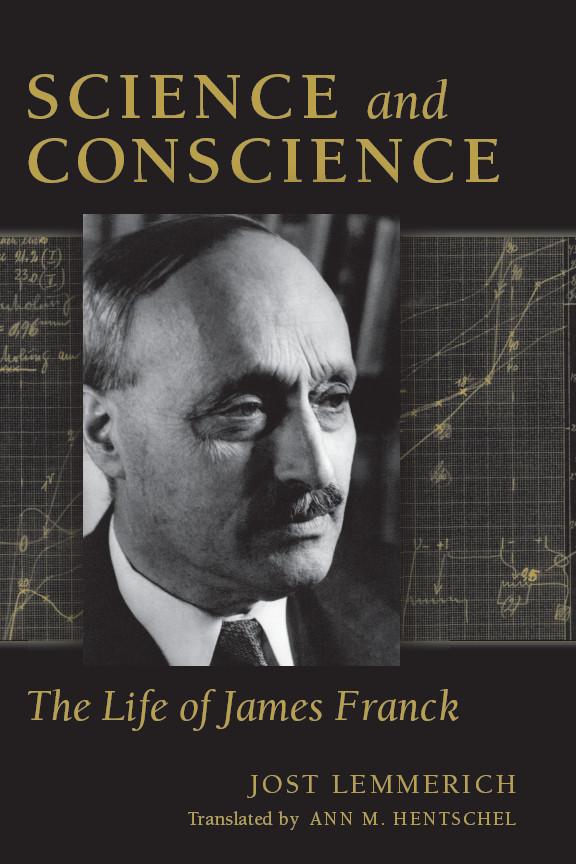
James Franck (1882–1964) was one of the twentieth century's most respected scientists, known both for his contributions to physics and for his moral courage. During the 1920s, Franck was a prominent figure in the German physics community. His research into the structure of the atom earned him the Nobel Prize in Physics in 1925. After the Nazis seized power in 1933, Franck resigned his professorship at Gottingen in protest against anti-Jewish policies. He soon emigrated to the United States, where, at the University of Chicago, he began innovative research into photosynthesis.
When the Second World War began, Franck was recruited for the Manhattan Project. With Enrico Fermi and Leo Szilard, he created a controlled nuclear chain reaction which led to the creation of a nuclear weapon. During the final months of the war, however, Franck grew concerned about the consequences of using such a weapon. He became the principal author of the celebrated "Franck Report," which urged Truman not to use the atomic bomb and warned that a nuclear arms race against the Soviet Union would be an inevitable result. After the War, Franck turned his attention back to photosynthesis; his discoveries influenced chemistry as well as physics.
Paga fácilmente con tarjeta, Klarna, Apple Pay o Google Pay. ¿No estás contento? Siempre tienes 14 días de garantía de devolución. Lee más en nuestros términos. Si tienes preguntas, escríbenos a hello@memmo.org.
Memmo hace que estudiar sea más fácil, estés donde estés. Aquí tienes tus libros de texto y herramientas de estudio inteligentes en un solo lugar: resúmenes, quizzes, podcasts y flashcards. Y también a Ted, tu compañero de estudio que responde a todo lo que te preguntes. Más de 50 000 estudiantes ya estudian aquí. Está hecho para que aprendas más rápido y te estreses menos.