
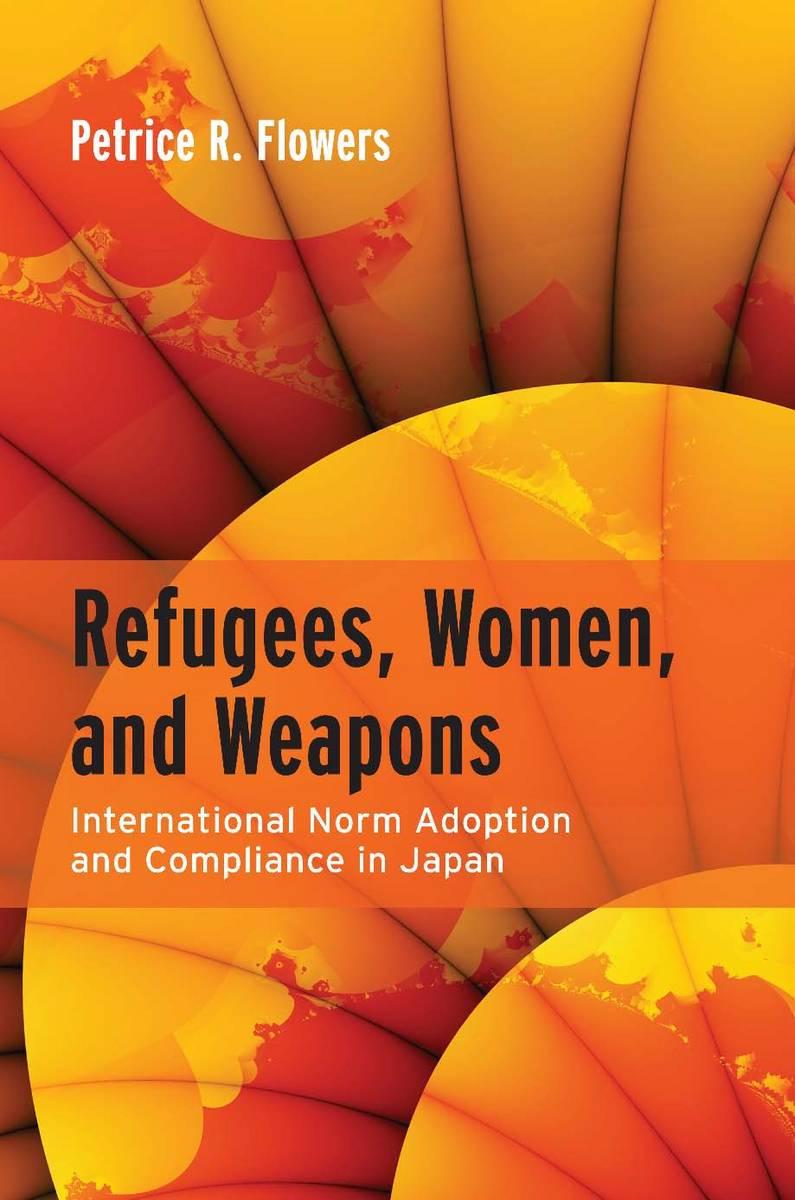
In a world dominated by considerations of material and security threats, Japan provides a fascinating case for why, and under what conditions, a state would choose to adopt international norms and laws that are seemingly in direct conflict with its domestic norms. Approaching compliance from within a constructivist framework, author Petrice R. Flowers analyzes three treaties—addressing refugee policy, women's employment, and the use of land mines—that Japan has adopted. Refugees, Women, and Weapons probes how international relations and domestic politics both play a role in constructing state identity, and how state identity in turn influences compliance.
Flowers argues that, although state desire for legitimacy is a key factor in norm adoption, to achieve anything other than a low level of compliance requires strong domestic advocacy. She offers a comprehensive theoretical model that tests the explanatory power of two understudied factors: the strength of nonstate actors and the degree to which international and domestic norms conflict. Flowers evaluates how these factors, typically studied and analyzed individually, interact and affect one another.
Paga fácilmente con tarjeta, Klarna, Apple Pay o Google Pay. ¿No estás contento? Siempre tienes 14 días de garantía de devolución. Lee más en nuestros términos. Si tienes preguntas, escríbenos a hello@memmo.org.
Memmo hace que estudiar sea más fácil, estés donde estés. Aquí tienes tus libros de texto y herramientas de estudio inteligentes en un solo lugar: resúmenes, quizzes, podcasts y flashcards. Y también a Ted, tu compañero de estudio que responde a todo lo que te preguntes. Más de 50 000 estudiantes ya estudian aquí. Está hecho para que aprendas más rápido y te estreses menos.