
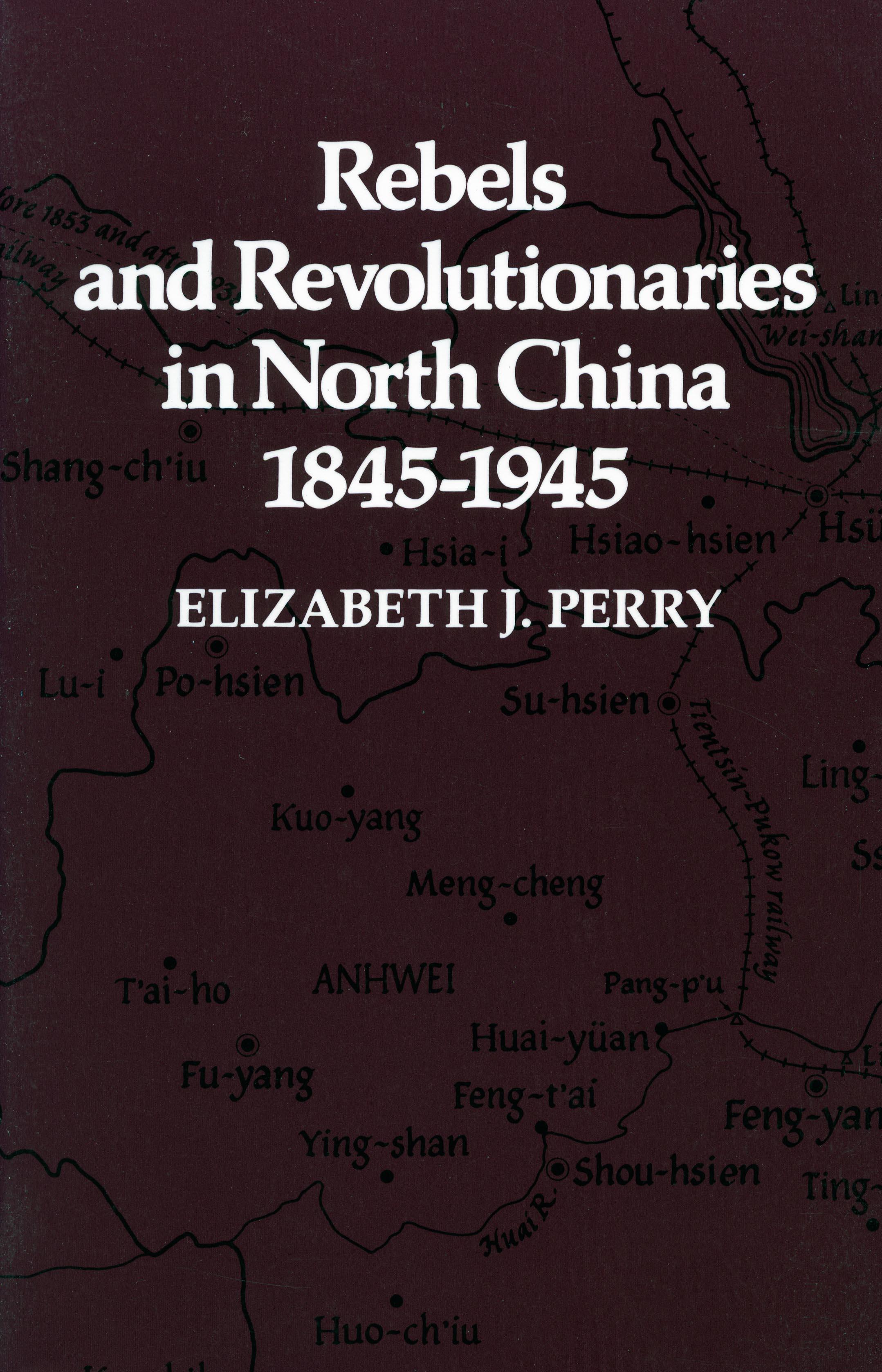
Why do peasants rebel? In particular, why do some peasants rebel and not others? Starting from the fact that only in certain geographical areas does rebellion seem to recur persistently, the author examines three notable rebel movements in one such area in China: Huaipei, a region of poor soil and unstable weather bounded by the Huai and Yellow (Huang He) rivers.
The Nien rebels of the 1850s and 1860s and the Red Spear Society of the Republican era are described as representing traditional forms of violent competition for scarce economic resources. The Nien were essentially "predatory," using violence as a way of obtaining food and other necessities; the Red Spears essentially "protective," concerned to defend peasant homes and property against bandits, warlord armies, and state efforts at taxation. The communist movement of the 1930s and 1940s, by contrast, looked beyond these traditional patterns to a national social revolution that would render local rebellions unnecessary.
The author throws new light on the role of secret societies in peasant protest, and offers a new interpretation of the relationship between rebellion and revolution.
Paga fácilmente con tarjeta, Klarna, Apple Pay o Google Pay. ¿No estás contento? Siempre tienes 14 días de garantía de devolución. Lee más en nuestros términos. Si tienes preguntas, escríbenos a hello@memmo.org.
Memmo hace que estudiar sea más fácil, estés donde estés. Aquí tienes tus libros de texto y herramientas de estudio inteligentes en un solo lugar: resúmenes, quizzes, podcasts y flashcards. Y también a Ted, tu compañero de estudio que responde a todo lo que te preguntes. Más de 50 000 estudiantes ya estudian aquí. Está hecho para que aprendas más rápido y te estreses menos.
También te podría gustar
Comprar el libro0