
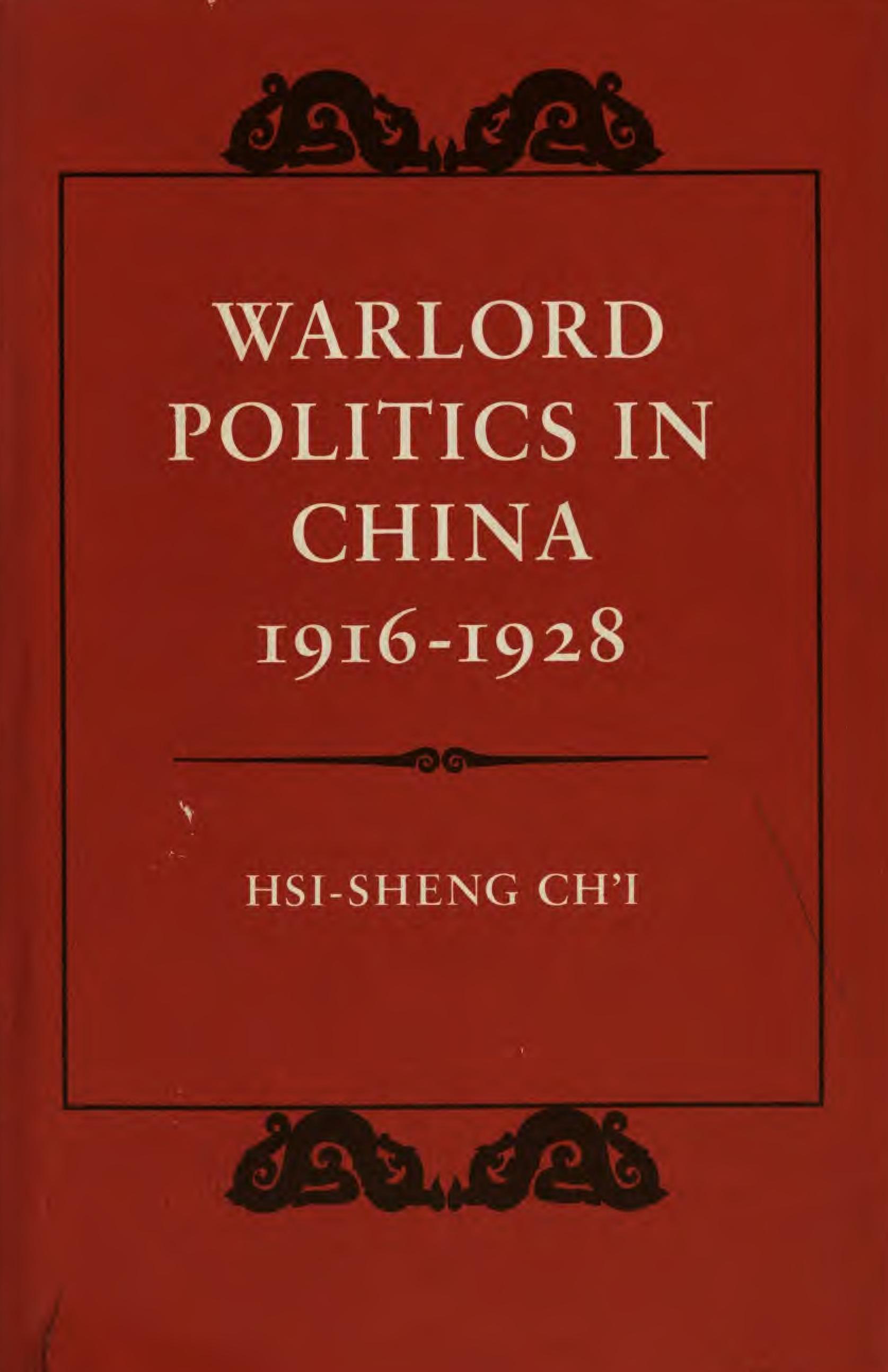
The first comprehensive analytical treatment of warlordism in twentieth-century China, this book approaches regional militarism as a generic phenomenon of Chinese politics in the most complex and chaotic era of recent Chinese history.
After describing the emergence of militarist regimes after the death of Yuan Shih-k'ai in 1916, the author analyzes their membership, goals, capabilities, and sources of cohesion, in the process presenting new information on their organization, methods of recruitment, quality of training, types of weapons, tactical and strategic concepts, and means of financing. On the strength of this information, he offers a convincing explanation I balance-of-power terms for the baffling advances, retreats, clashes, and changes of allegiance that have puzzled students of the era.
His analysis makes clear how the leading warlords viewed the state, themselves, and each other. A concluding chapter presents an explanation based on systems theory for the Kuomintang's triumph over the warlords who had sought to confine its domain to Kwangtung.
Included as appendixes are a chronology of events and lists of national leaders and provincial military authorities from 1916 to 1928.
Paga fácilmente con tarjeta, Klarna, Apple Pay o Google Pay. ¿No estás contento? Siempre tienes 14 días de garantía de devolución. Lee más en nuestros términos. Si tienes preguntas, escríbenos a hello@memmo.org.
Memmo hace que estudiar sea más fácil, estés donde estés. Aquí tienes tus libros de texto y herramientas de estudio inteligentes en un solo lugar: resúmenes, quizzes, podcasts y flashcards. Y también a Ted, tu compañero de estudio que responde a todo lo que te preguntes. Más de 50 000 estudiantes ya estudian aquí. Está hecho para que aprendas más rápido y te estreses menos.
También te podría gustar
Comprar el libro0