
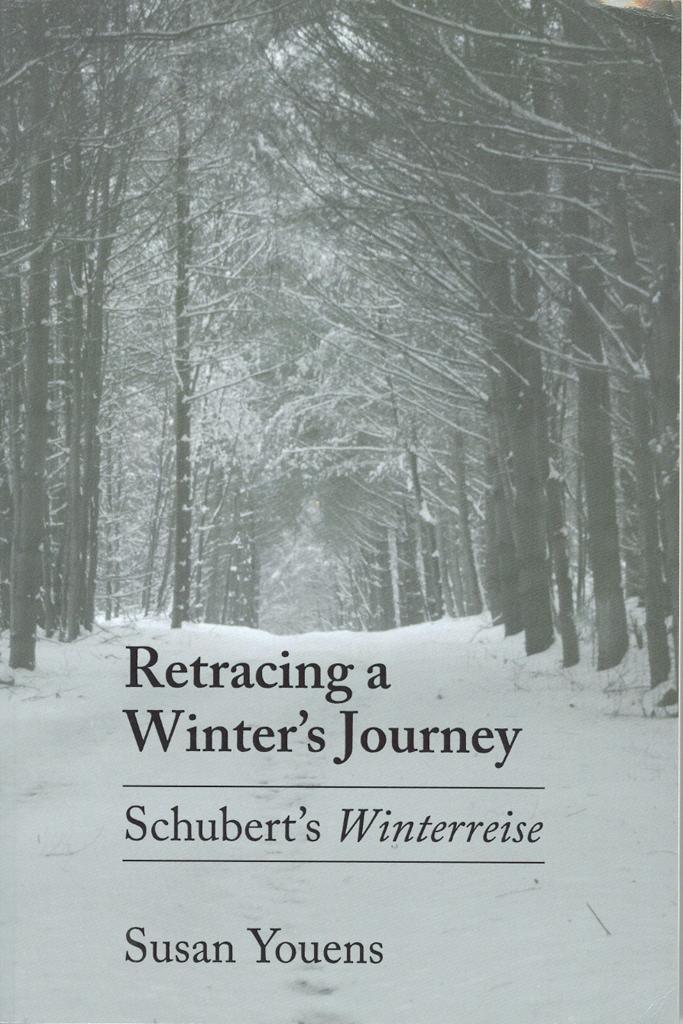
"I like these songs better than all the rest, and someday you will too," Franz Schubert told the friends who were the first to hear his song cycle Winterreise. These lieder have always found admiring audiences, but the poetry he chose to set them to has been widely regarded as weak and trivial. Susan Youens looks not only at Schubert's music but at the poetry, drawn from the works of Wilhelm Müller, who once wrote in his diary, "perhaps there is a kindred spirit somewhere who will hear the tunes behind the words and give them back to me!"
Youens maintains that Müller, in depicting the wanderings of the alienated lover, produced poetry that was simple but not simple-minded, poetry that embraced simplicity as part of its meaning. In her view, Müller used the ruder folk forms to give his verse greater immediacy, to convey more powerfully the wanderer's complex inner state. Youens addresses many different aspects of Winterreise: the cultural milieu to which it belonged, the genesis of both the poetry and the music, Schubert's transformation of poetic cycle into music, the philosophical dimension of the work, and its musical structure.
Paga fácilmente con tarjeta, Klarna, Apple Pay o Google Pay. ¿No estás contento? Siempre tienes 14 días de garantía de devolución. Lee más en nuestros términos. Si tienes preguntas, escríbenos a hello@memmo.org.
Memmo hace que estudiar sea más fácil, estés donde estés. Aquí tienes tus libros de texto y herramientas de estudio inteligentes en un solo lugar: resúmenes, quizzes, podcasts y flashcards. Y también a Ted, tu compañero de estudio que responde a todo lo que te preguntes. Más de 50 000 estudiantes ya estudian aquí. Está hecho para que aprendas más rápido y te estreses menos.