
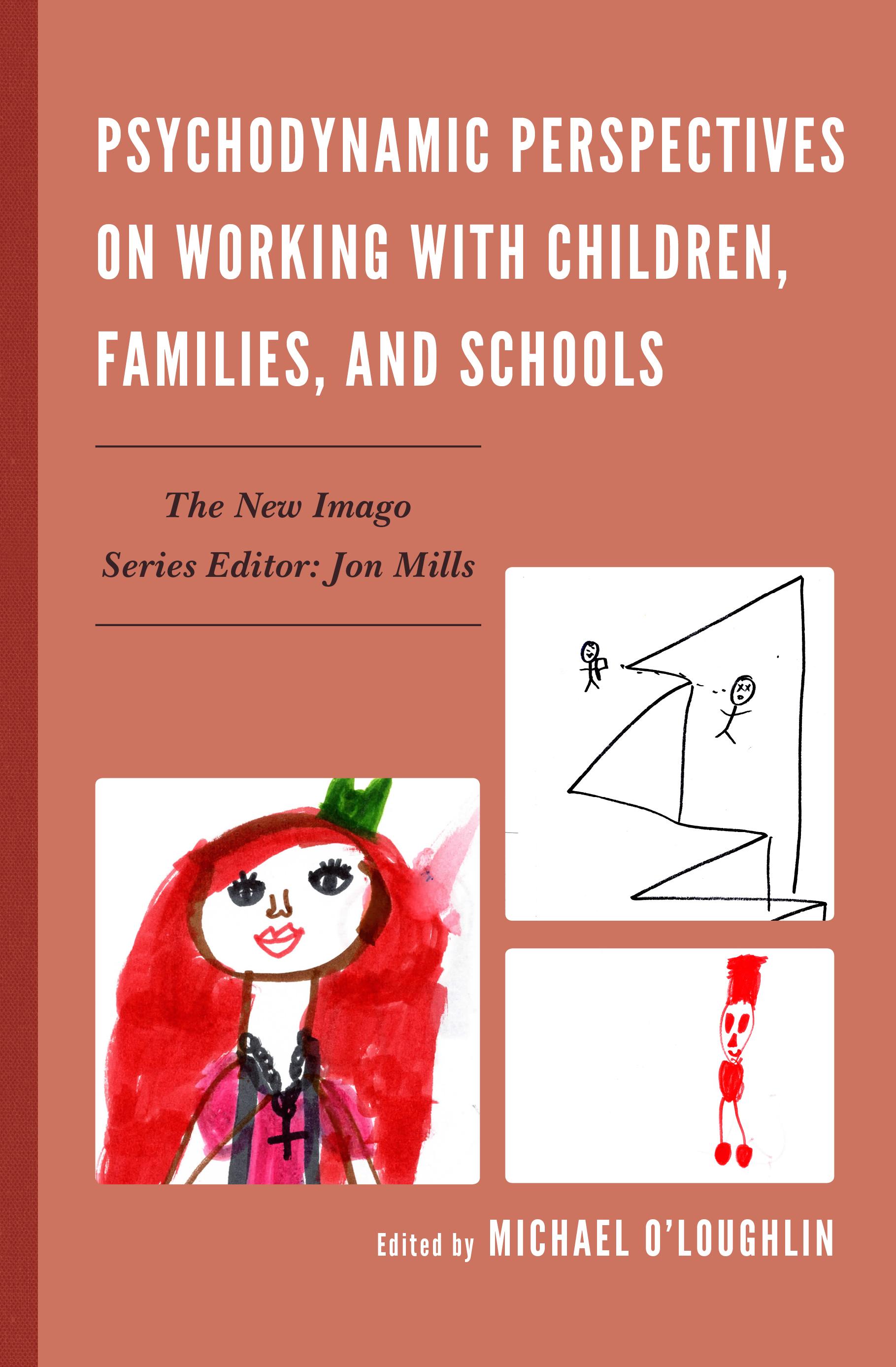
Psychodynamic Perspectives on Working with Children, Families, and Schools
Autor: Jonathan Cohen, Karen L. Lombardi, Michael O'Loughlin, Leon Hoffman, Derek Bunyard, Carrie Catapano, Carola B. Chase, Howard H. Covitz, Daniel B. Frank, Al Galves, Patrick Lewis, Robbie Lloyd, Karen Lupe, Katy Meyer, Devin Thornburg, Norma Tracey, Fabio Camargo Bandeira Villela, Ana Archangelo, Donna Wolf-Palacio
Editorial: Bloomsbury Publishing
Edición: 1
Fecha de publicación: 2012
ISBN: 9781442238176
With the push toward accountability and test performance in schools there has been a decline in emphasis on creativity, imagination, and feelings in schools. Psychodynamic Perspectives on Working with Children, Families, and Schools is designed for students and professionals who are interested in restoring such values to their work with children.
There is an absence of psychoanalytic ways of thinking in conventional professional discourses of schooling. With a few notable exceptions, the discourses of child development, classroom management, early childhood education, special education, school psychology, and school counseling have constructed notions of children and schooling that are often behaviorist, instrumental, and symptom-focused. Curriculum too often focuses on acquisition of knowledge and behaviors; discipline is conceptualized as compliance, and symptoms such as anger, school resistance, etc., are pathologized and reacted to out of context; children’s special needs are often conceptualized instrumentally; and children with complex psychological symptoms are delimited, depersonalized, or simply removed.
Professionals who work with children psychodynamically draw on diverse frameworks including the work of Anna Freud, the long tradition of the Tavistock Clinic in London [e.g., Anne Alvarez, Susan Reid, Margaret Rustin, Frances Tustin, etc.], the writings of Klein, Winnicott, and their colleagues, French analysts [e.g., Piera Aulagnier, Didier Anzieu, Laurent Danon-Boileau, Françoise Dolto, Maud Mannoni, and Catherine Mathelin] and Italian infant/child analyst Alessandro Piontelli. This work is valuable but often inaccessible to school professionals because the writing is somewhat specialized, and because there is no tradition of teaching such work in professional preparation in those fields. This collection is theoretically grounded in that the authors share a commitment to valuing children’s emotions and understand the usefulness of psychoanalytic approaches for enhancing children’s lives. It is laden with examples to invite into this discussion those students and professionals who value these ideas but for whom this book may be their first introduction to progressive educational ideals and psychodynamic ways of working with children. Psychodynamic Perspectives on Working with Children, Families, and Schools provides an introductory volume to open the door to the possibility of introducing psychodynamic frameworks to education and human service professors and school professionals and professionals working with children.
There is an absence of psychoanalytic ways of thinking in conventional professional discourses of schooling. With a few notable exceptions, the discourses of child development, classroom management, early childhood education, special education, school psychology, and school counseling have constructed notions of children and schooling that are often behaviorist, instrumental, and symptom-focused. Curriculum too often focuses on acquisition of knowledge and behaviors; discipline is conceptualized as compliance, and symptoms such as anger, school resistance, etc., are pathologized and reacted to out of context; children’s special needs are often conceptualized instrumentally; and children with complex psychological symptoms are delimited, depersonalized, or simply removed.
Professionals who work with children psychodynamically draw on diverse frameworks including the work of Anna Freud, the long tradition of the Tavistock Clinic in London [e.g., Anne Alvarez, Susan Reid, Margaret Rustin, Frances Tustin, etc.], the writings of Klein, Winnicott, and their colleagues, French analysts [e.g., Piera Aulagnier, Didier Anzieu, Laurent Danon-Boileau, Françoise Dolto, Maud Mannoni, and Catherine Mathelin] and Italian infant/child analyst Alessandro Piontelli. This work is valuable but often inaccessible to school professionals because the writing is somewhat specialized, and because there is no tradition of teaching such work in professional preparation in those fields. This collection is theoretically grounded in that the authors share a commitment to valuing children’s emotions and understand the usefulness of psychoanalytic approaches for enhancing children’s lives. It is laden with examples to invite into this discussion those students and professionals who value these ideas but for whom this book may be their first introduction to progressive educational ideals and psychodynamic ways of working with children. Psychodynamic Perspectives on Working with Children, Families, and Schools provides an introductory volume to open the door to the possibility of introducing psychodynamic frameworks to education and human service professors and school professionals and professionals working with children.
Paga fácilmente con tarjeta, Klarna, Apple Pay o Google Pay. ¿No estás contento? Siempre tienes 14 días de garantía de devolución. Lee más en nuestros términos. Si tienes preguntas, escríbenos a hello@memmo.org.
Memmo hace que estudiar sea más fácil, estés donde estés. Aquí tienes tus libros de texto y herramientas de estudio inteligentes en un solo lugar: resúmenes, quizzes, podcasts y flashcards. Y también a Ted, tu compañero de estudio que responde a todo lo que te preguntes. Más de 50 000 estudiantes ya estudian aquí. Está hecho para que aprendas más rápido y te estreses menos.