
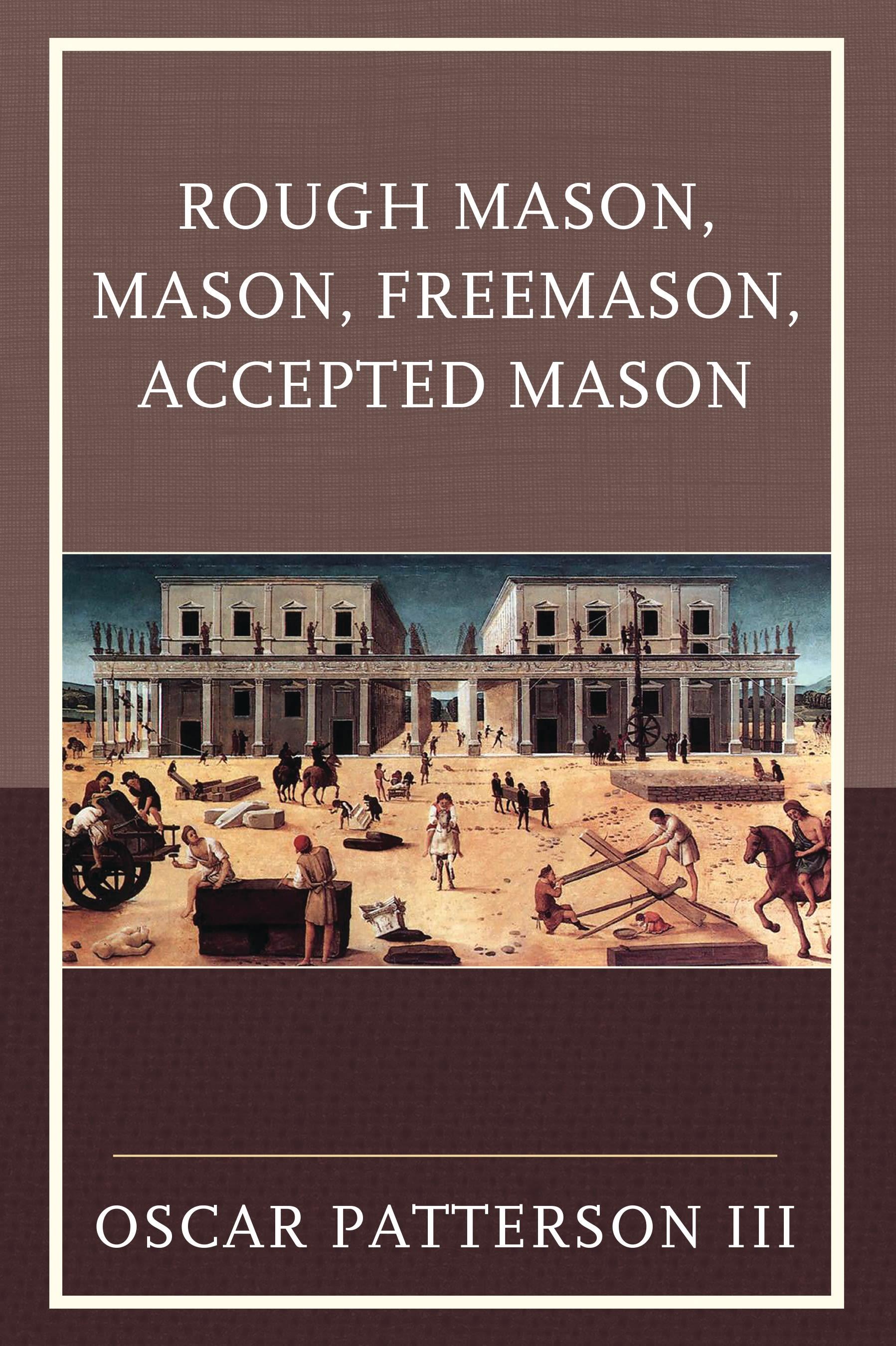
Modern Freemasonry in the United States and Great Britain celebrates its 300th anniversary in 2017 tracing its direct history from the Grand Lodge of England founded in 1717. This text is intended to provide a theory of origin for the Fraternity. It is based on available sources, many of which are not Masonic in nature, but cover the disciplines of history, religion, ethics, economics, politics, and labor development.
The book begins with an overview of how the Fraternity initiated members in the seventeenth and early eighteenth centuries, and includes the ancient Legend of Noah. It then reviews how history is written and exams the utilization of Biblical and legendary accounts in the development of a country’s, peoples’, or organization’s history. The text moves on to the transition from craft guild to fraternal organization and gives the full text of Freemasonry’s four oldest documents: Regius Poem, Cooke Manuscript, Graham Manuscript, and Schaw Statutes.
This is followed by a description of the London Masons’ Company based on the assumption that this city-wide organization of craftsmen chartered in 1481 may have been the administrative precursor of the Grand Lodge of England. The author then reviews the demise of craft guilds and the rise of fraternal societies in the seventeenth and eighteenth centuries.
Additional chapters review the Masonic approach to ritual, education, and ethical decision making. The text closes with a discussion of the philosophy of Freemasonry as well as comments and suggestions regarding Freemasonry’s future. The last chapter is a Scottish Charge appropriate to all men, not just Freemasons.
The book begins with an overview of how the Fraternity initiated members in the seventeenth and early eighteenth centuries, and includes the ancient Legend of Noah. It then reviews how history is written and exams the utilization of Biblical and legendary accounts in the development of a country’s, peoples’, or organization’s history. The text moves on to the transition from craft guild to fraternal organization and gives the full text of Freemasonry’s four oldest documents: Regius Poem, Cooke Manuscript, Graham Manuscript, and Schaw Statutes.
This is followed by a description of the London Masons’ Company based on the assumption that this city-wide organization of craftsmen chartered in 1481 may have been the administrative precursor of the Grand Lodge of England. The author then reviews the demise of craft guilds and the rise of fraternal societies in the seventeenth and eighteenth centuries.
Additional chapters review the Masonic approach to ritual, education, and ethical decision making. The text closes with a discussion of the philosophy of Freemasonry as well as comments and suggestions regarding Freemasonry’s future. The last chapter is a Scottish Charge appropriate to all men, not just Freemasons.
Paga fácilmente con tarjeta, Klarna, Apple Pay o Google Pay. ¿No estás contento? Siempre tienes 14 días de garantía de devolución. Lee más en nuestros términos. Si tienes preguntas, escríbenos a hello@memmo.org.
Memmo hace que estudiar sea más fácil, estés donde estés. Aquí tienes tus libros de texto y herramientas de estudio inteligentes en un solo lugar: resúmenes, quizzes, podcasts y flashcards. Y también a Ted, tu compañero de estudio que responde a todo lo que te preguntes. Más de 50 000 estudiantes ya estudian aquí. Está hecho para que aprendas más rápido y te estreses menos.