
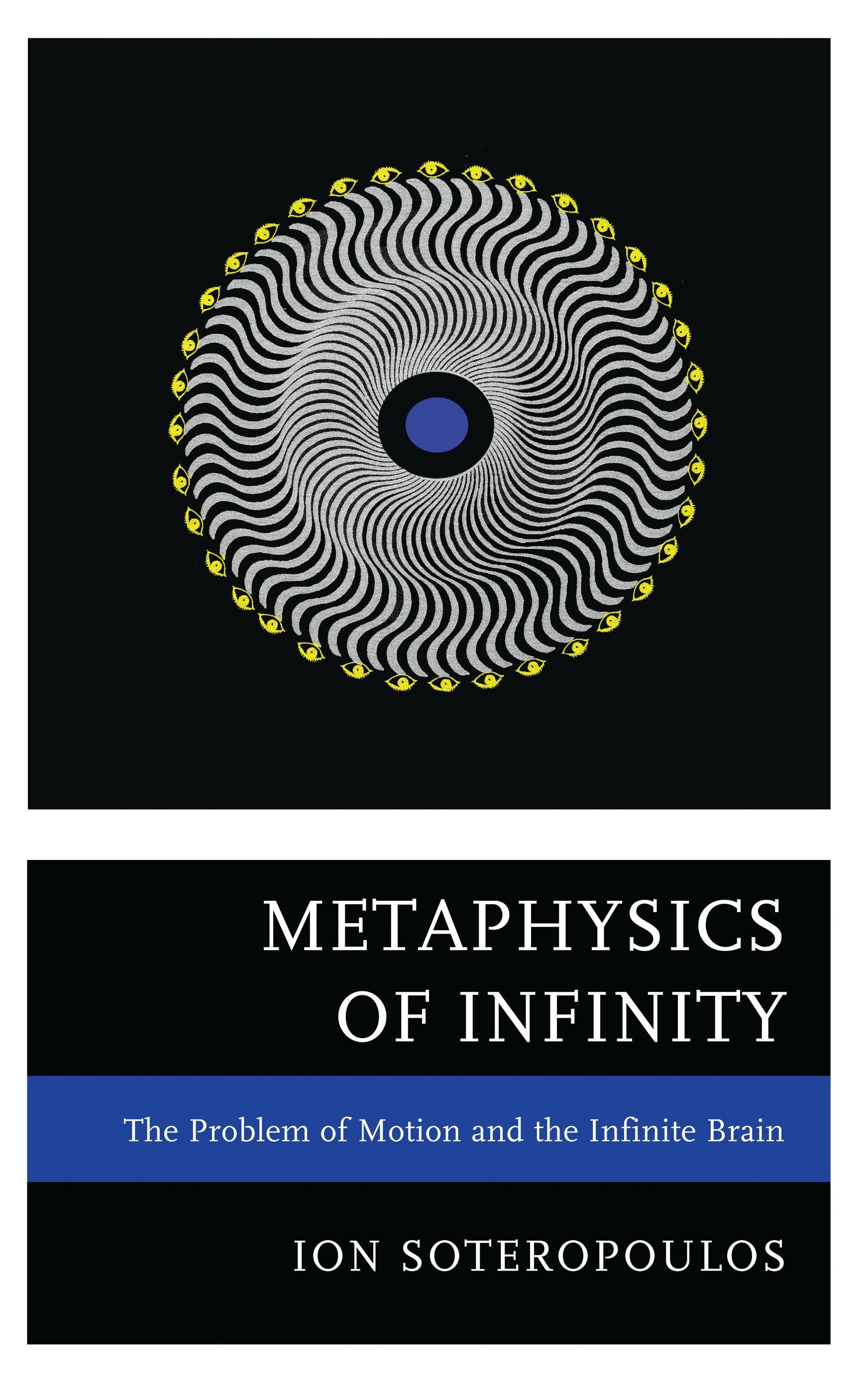
Since the time of the Greek philosopher Zeno (fifth century BCE), our faculty of analytic understanding has failed to comprehend motion through the ages. The reason is the paradox or contradiction associated with motion. One fundamental contradiction is the conflict between the finite body and the infinite divisibility of the unit distance ab. Indeed, how is it possible to move from a to b if we must first pass through an infinite series of sub-distances in one instant? How can we traverse an unlimited series-a series without limit-yet reach its limit?
Because the heart of the problem is the conflict between the finite and the infinite, its solution depends on reconciling this contradiction and transforming this reconciliation into the founding principle of motion. Having accomplished these two things, this work investigates the sweeping consequences they have regarding the geometric form of the physical universe, the Aristotelian ontology of the physical body, the nature of our finite brain, the finite analytic paradigm of empirical science and the meaning of our technological acceleration.
This book will appeal to a wide range of readers with interests in the logical mechanics of the physical universe, the hidden powers of our finite brain, and the utility of robots in the future. Although some of the presentation requires the understanding of elementary mathematical equations, the argument is conducted at the deepest level: that of principles. This approach enables readers to follow the book's reasoning without technical training on the subject.
For more information, please visit the Apeiron Centre site: www.apeironcentre.org
Because the heart of the problem is the conflict between the finite and the infinite, its solution depends on reconciling this contradiction and transforming this reconciliation into the founding principle of motion. Having accomplished these two things, this work investigates the sweeping consequences they have regarding the geometric form of the physical universe, the Aristotelian ontology of the physical body, the nature of our finite brain, the finite analytic paradigm of empirical science and the meaning of our technological acceleration.
This book will appeal to a wide range of readers with interests in the logical mechanics of the physical universe, the hidden powers of our finite brain, and the utility of robots in the future. Although some of the presentation requires the understanding of elementary mathematical equations, the argument is conducted at the deepest level: that of principles. This approach enables readers to follow the book's reasoning without technical training on the subject.
For more information, please visit the Apeiron Centre site: www.apeironcentre.org
Paga fácilmente con tarjeta, Klarna, Apple Pay o Google Pay. ¿No estás contento? Siempre tienes 14 días de garantía de devolución. Lee más en nuestros términos. Si tienes preguntas, escríbenos a hello@memmo.org.
Memmo hace que estudiar sea más fácil, estés donde estés. Aquí tienes tus libros de texto y herramientas de estudio inteligentes en un solo lugar: resúmenes, quizzes, podcasts y flashcards. Y también a Ted, tu compañero de estudio que responde a todo lo que te preguntes. Más de 50 000 estudiantes ya estudian aquí. Está hecho para que aprendas más rápido y te estreses menos.