
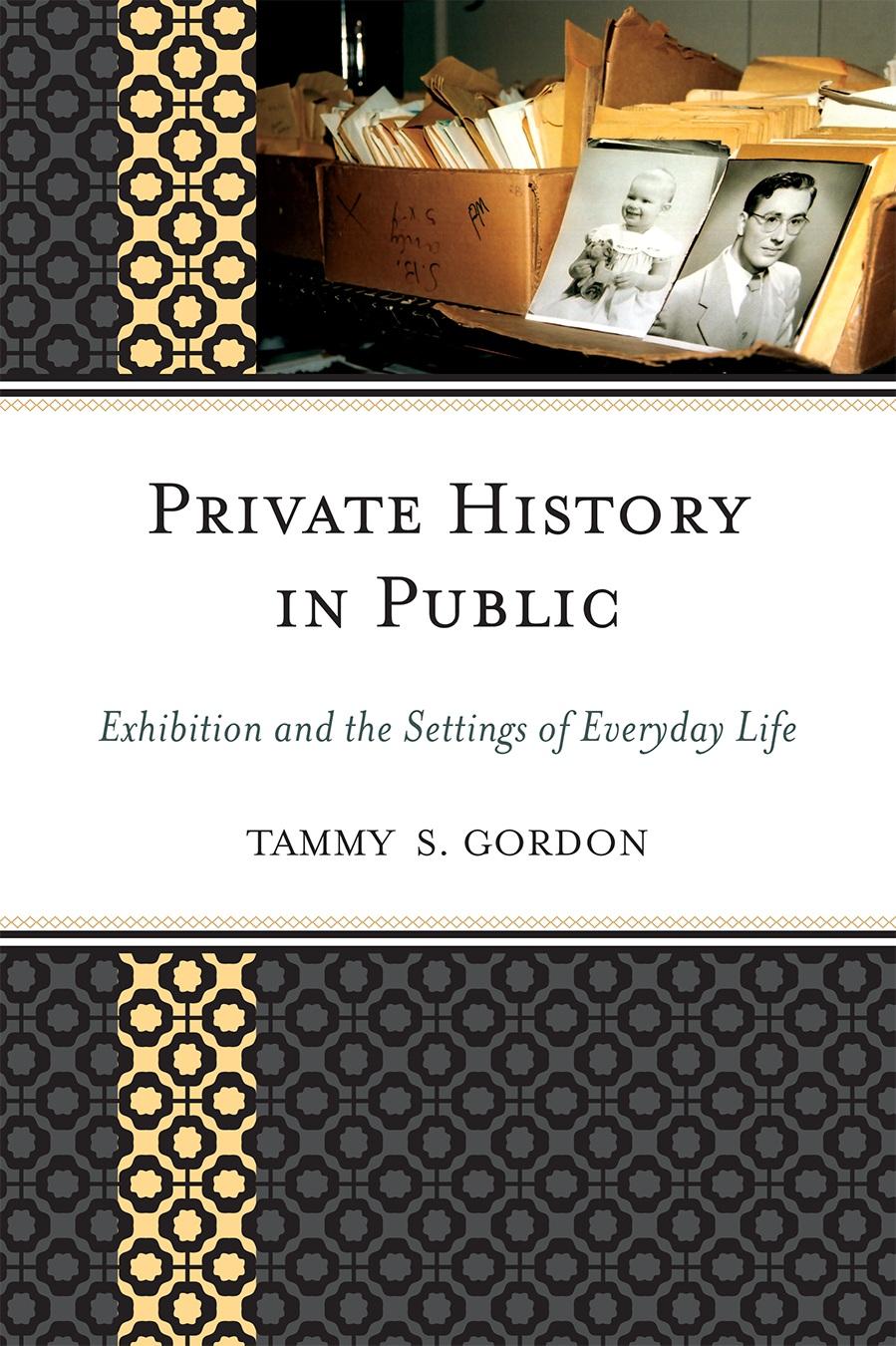
In small community museums, truck stops, restaurants, bars, barbershops, schools, and churches, people create displays to tell the histories that matter to them. Much of this history is personal: family history, community history, history of a trade, or the history of something considered less than genteel. It is often history based on the historical record, but also based on feelings, beliefs, and memory. It is neglected history.
Private History in Public is about those history exhibits that complicate the public/private dichotomy, exhibits that serve to explain communities, families, and individuals to outsiders and tie insiders together through a shared narrative of historical experience. Tammy S. Gordon looks beyond the large professionalized museum exhibits that have dominated scholarship in museum studies and public history and offers a new way of understanding the broad spectrum of exhibition types in the United States.
Private History in Public is about those history exhibits that complicate the public/private dichotomy, exhibits that serve to explain communities, families, and individuals to outsiders and tie insiders together through a shared narrative of historical experience. Tammy S. Gordon looks beyond the large professionalized museum exhibits that have dominated scholarship in museum studies and public history and offers a new way of understanding the broad spectrum of exhibition types in the United States.
Paga fácilmente con tarjeta, Klarna, Apple Pay o Google Pay. ¿No estás contento? Siempre tienes 14 días de garantía de devolución. Lee más en nuestros términos. Si tienes preguntas, escríbenos a hello@memmo.org.
Memmo hace que estudiar sea más fácil, estés donde estés. Aquí tienes tus libros de texto y herramientas de estudio inteligentes en un solo lugar: resúmenes, quizzes, podcasts y flashcards. Y también a Ted, tu compañero de estudio que responde a todo lo que te preguntes. Más de 50 000 estudiantes ya estudian aquí. Está hecho para que aprendas más rápido y te estreses menos.