
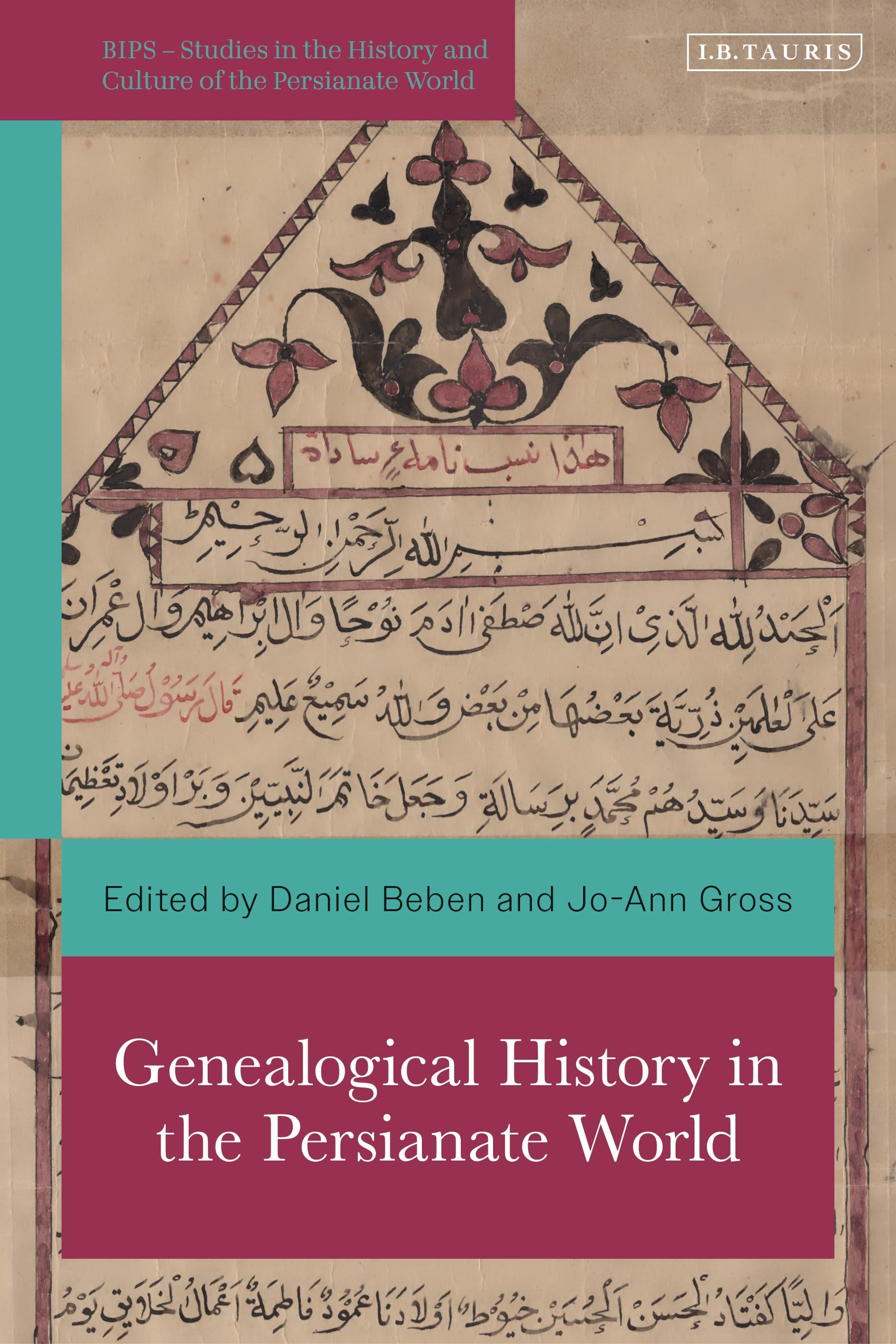
Scholarship on the Muslim world has recently begun to pay increased attention to non-literary genres of documentation as sources for historical research.
Genealogical writings are one form of such documentation that has demonstrated significant potential for addressing a wide range of research concerns, particularly for topics that receive little attention in historical chronicles and other state-centered narrative sources. However, while genealogical documentation has received some attention in scholarship on the Arab world, it remains mostly unstudied in scholarship on Persianate societies. The chapters in this book offer reflections on theoretical and methodological issues concerning the study of genealogical documentation, combined with case studies based primarily on previously unpublished, unstudied source materials. The topics explored span the full breadth of the Persianate world, from Anatolia to the Ferghana Valley in Central Asia to the Gujarat region of India, utilizing sources dating from the fourteenth to the twentieth century. The book will be of significant interest to scholars and students of Islamic history and the Persianate ecumene as well as readers in other fields interested in comparative research demonstrating the use of genealogical documentation as historical sources.
Genealogical writings are one form of such documentation that has demonstrated significant potential for addressing a wide range of research concerns, particularly for topics that receive little attention in historical chronicles and other state-centered narrative sources. However, while genealogical documentation has received some attention in scholarship on the Arab world, it remains mostly unstudied in scholarship on Persianate societies. The chapters in this book offer reflections on theoretical and methodological issues concerning the study of genealogical documentation, combined with case studies based primarily on previously unpublished, unstudied source materials. The topics explored span the full breadth of the Persianate world, from Anatolia to the Ferghana Valley in Central Asia to the Gujarat region of India, utilizing sources dating from the fourteenth to the twentieth century. The book will be of significant interest to scholars and students of Islamic history and the Persianate ecumene as well as readers in other fields interested in comparative research demonstrating the use of genealogical documentation as historical sources.
Paga fácilmente con tarjeta, Klarna, Apple Pay o Google Pay. ¿No estás contento? Siempre tienes 14 días de garantía de devolución. Lee más en nuestros términos. Si tienes preguntas, escríbenos a hello@memmo.org.
Memmo hace que estudiar sea más fácil, estés donde estés. Aquí tienes tus libros de texto y herramientas de estudio inteligentes en un solo lugar: resúmenes, quizzes, podcasts y flashcards. Y también a Ted, tu compañero de estudio que responde a todo lo que te preguntes. Más de 50 000 estudiantes ya estudian aquí. Está hecho para que aprendas más rápido y te estreses menos.