
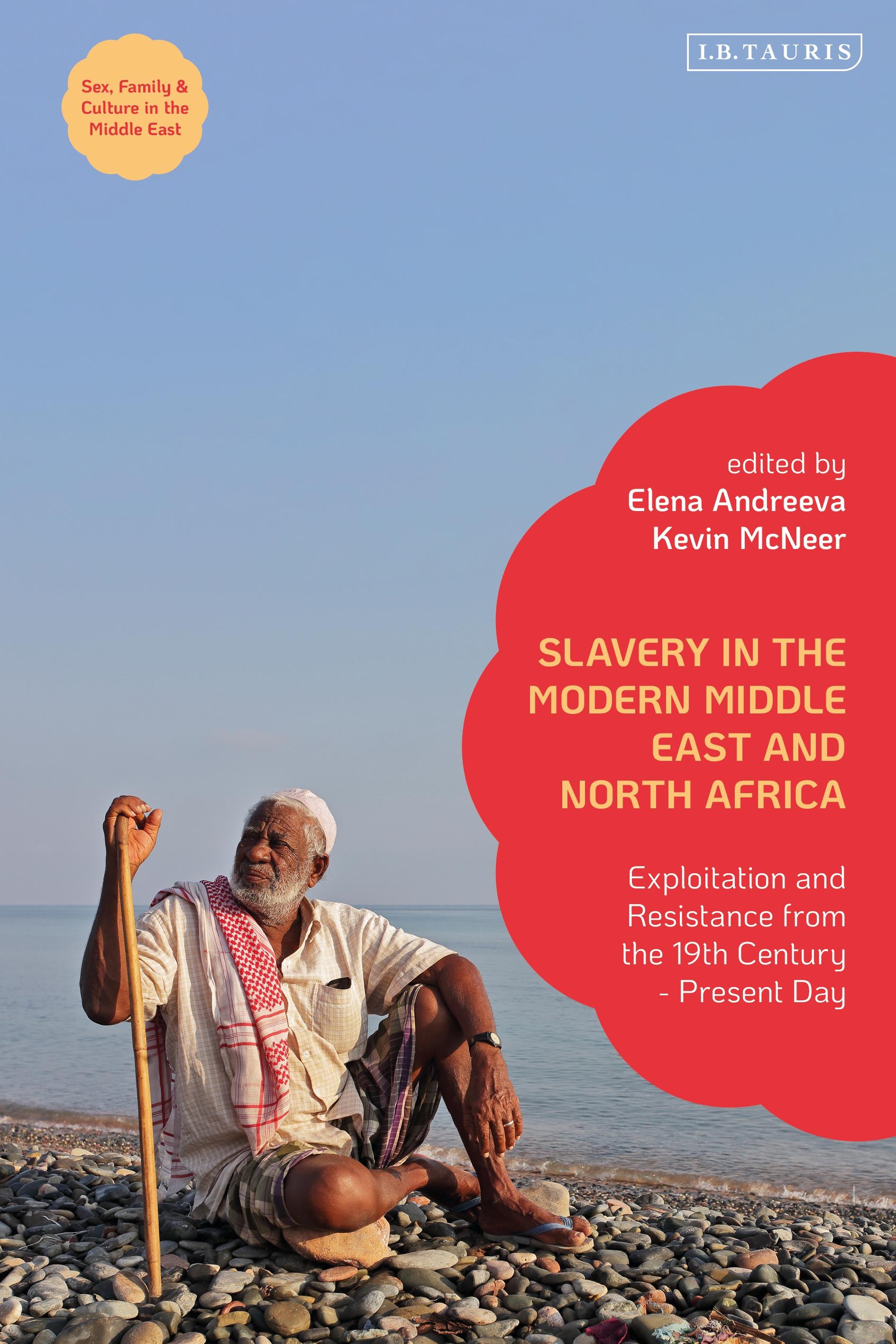
What is the nature of slavery as practiced and at times reintroduced over the past two centuries in the Middle East and North Africa? In spite of the rich regional diversity of the areas studied – from Morocco to the Indian Ocean to Iran – this anthology demonstrates clear commonalities across the super-region. These include the regulation of slavery by Islam and local traditions, the absence of a rigid racial hierarchy as in North American slavery, the management of the sexuality and reproductive capacity of female slaves, and views on identity and heritage among descendants of slaves. Authors also examine the economic and theological underpinnings of contemporary slavery and human trafficking.
The book is among the first to focus on slavery across the Islamic world from the 19th century to the present – a period constituting the endgame of institutionalized slavery in the region but also the persistence of forms of de facto enslavement. Each chapter scrutinizes from a different vantage point – institutions, economics, the abolitionist movement, literature, folklore, and the moving image – creating a multi-dimensional picture of the phenomenon.
The authors have mined government archives and statistics, memoirs, interviews, photographs, drawings, songs, cinema and television. Not only are Arabic, Persian and Turkish sources leveraged, but a variety of materials in minor and endangered languages, such as Soqotri, Balochi and Sorani Kurdish, in addition to European languages.
The book is among the first to focus on slavery across the Islamic world from the 19th century to the present – a period constituting the endgame of institutionalized slavery in the region but also the persistence of forms of de facto enslavement. Each chapter scrutinizes from a different vantage point – institutions, economics, the abolitionist movement, literature, folklore, and the moving image – creating a multi-dimensional picture of the phenomenon.
The authors have mined government archives and statistics, memoirs, interviews, photographs, drawings, songs, cinema and television. Not only are Arabic, Persian and Turkish sources leveraged, but a variety of materials in minor and endangered languages, such as Soqotri, Balochi and Sorani Kurdish, in addition to European languages.
Paga fácilmente con tarjeta, Klarna, Apple Pay o Google Pay. ¿No estás contento? Siempre tienes 14 días de garantía de devolución. Lee más en nuestros términos. Si tienes preguntas, escríbenos a hello@memmo.org.
Memmo hace que estudiar sea más fácil, estés donde estés. Aquí tienes tus libros de texto y herramientas de estudio inteligentes en un solo lugar: resúmenes, quizzes, podcasts y flashcards. Y también a Ted, tu compañero de estudio que responde a todo lo que te preguntes. Más de 50 000 estudiantes ya estudian aquí. Está hecho para que aprendas más rápido y te estreses menos.