
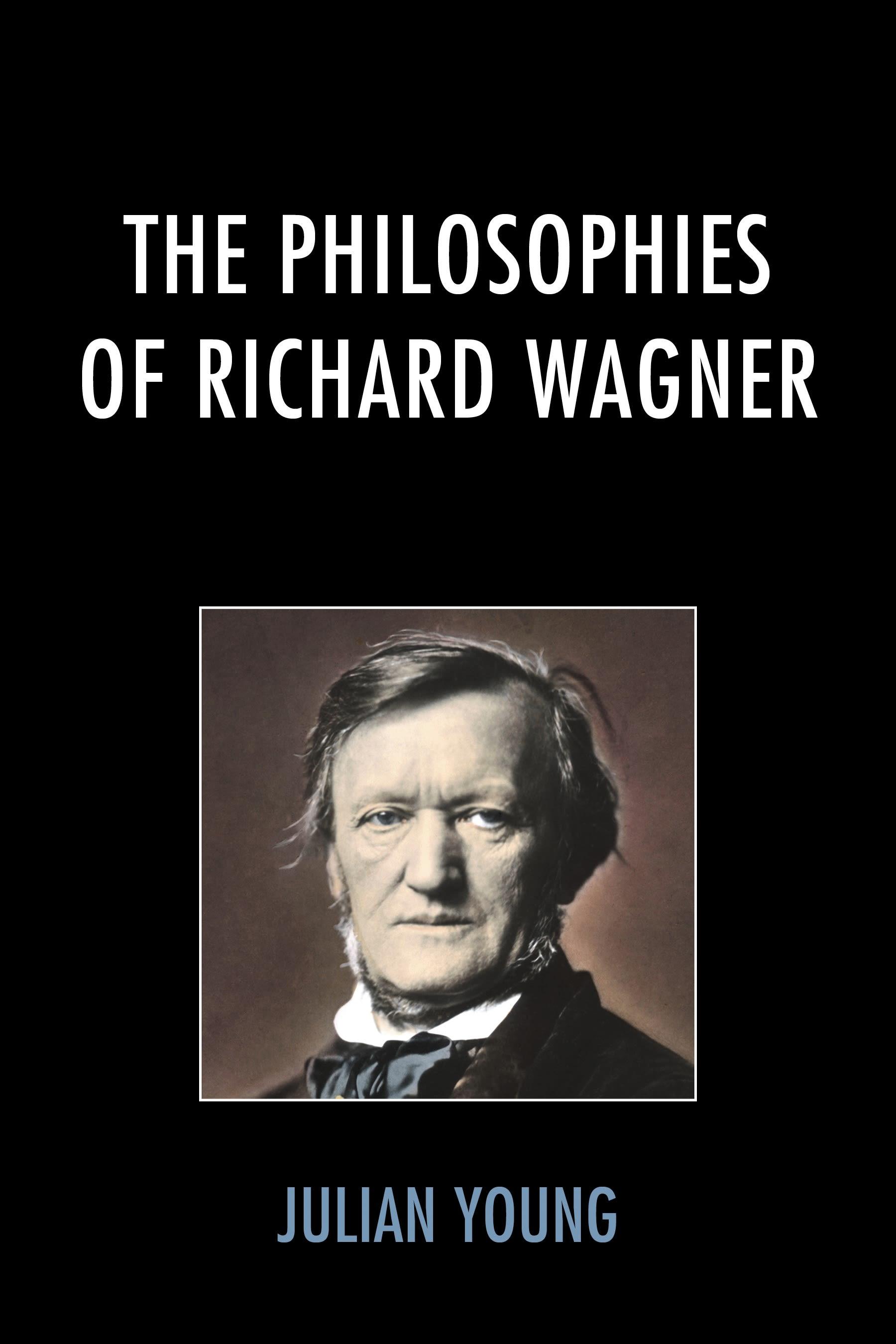
In addition to being a great composer, Richard Wagner was also an important philosopher. Julian Young begins by examining the philosophy of art and society Wagner constructs during his time as a revolutionary anarchist-communist. Modernity, Wagner argued, is to be rescued from its current anomie through the rebirth of Greek tragedy (the original Gesamtkunstwerk) in the form of the “artwork of the future," an artwork of which his own operas are the prototype.
Young then examines the entirely different philosophy Wagner constructs after his 1854 conversion from Hegelian optimism to Schopenhauerian pessimism. “Redemption” now becomes, not a future utopia in this world, but rather “transfigured” existence in another world, attainable only through death. Viewing Wagner’s operas through the lens of his philosophy, the book offers often novel interpretations of Lohengrin, The Ring cycle, Tristan und Isolde, Die Meistersinger, and Parsifal.
Finally, Young dresses the cause of Friedrich Nietzsche’s transformation from Wagner’s intimate friend and disciple into his most savage critic. Nietzsche’s fundamental accusation, it is argued, is one of betrayal: that Wagner betrayed his early, “life affirming” philosophy of art and life in favor of “life-denial." Nietzsche’s assertion and the final conclusion of the book is that our task, now, is to “become better Wagnerians than Wagner.”
Young then examines the entirely different philosophy Wagner constructs after his 1854 conversion from Hegelian optimism to Schopenhauerian pessimism. “Redemption” now becomes, not a future utopia in this world, but rather “transfigured” existence in another world, attainable only through death. Viewing Wagner’s operas through the lens of his philosophy, the book offers often novel interpretations of Lohengrin, The Ring cycle, Tristan und Isolde, Die Meistersinger, and Parsifal.
Finally, Young dresses the cause of Friedrich Nietzsche’s transformation from Wagner’s intimate friend and disciple into his most savage critic. Nietzsche’s fundamental accusation, it is argued, is one of betrayal: that Wagner betrayed his early, “life affirming” philosophy of art and life in favor of “life-denial." Nietzsche’s assertion and the final conclusion of the book is that our task, now, is to “become better Wagnerians than Wagner.”
Paga fácilmente con tarjeta, Klarna, Apple Pay o Google Pay. ¿No estás contento? Siempre tienes 14 días de garantía de devolución. Lee más en nuestros términos. Si tienes preguntas, escríbenos a hello@memmo.org.
Memmo hace que estudiar sea más fácil, estés donde estés. Aquí tienes tus libros de texto y herramientas de estudio inteligentes en un solo lugar: resúmenes, quizzes, podcasts y flashcards. Y también a Ted, tu compañero de estudio que responde a todo lo que te preguntes. Más de 50 000 estudiantes ya estudian aquí. Está hecho para que aprendas más rápido y te estreses menos.