
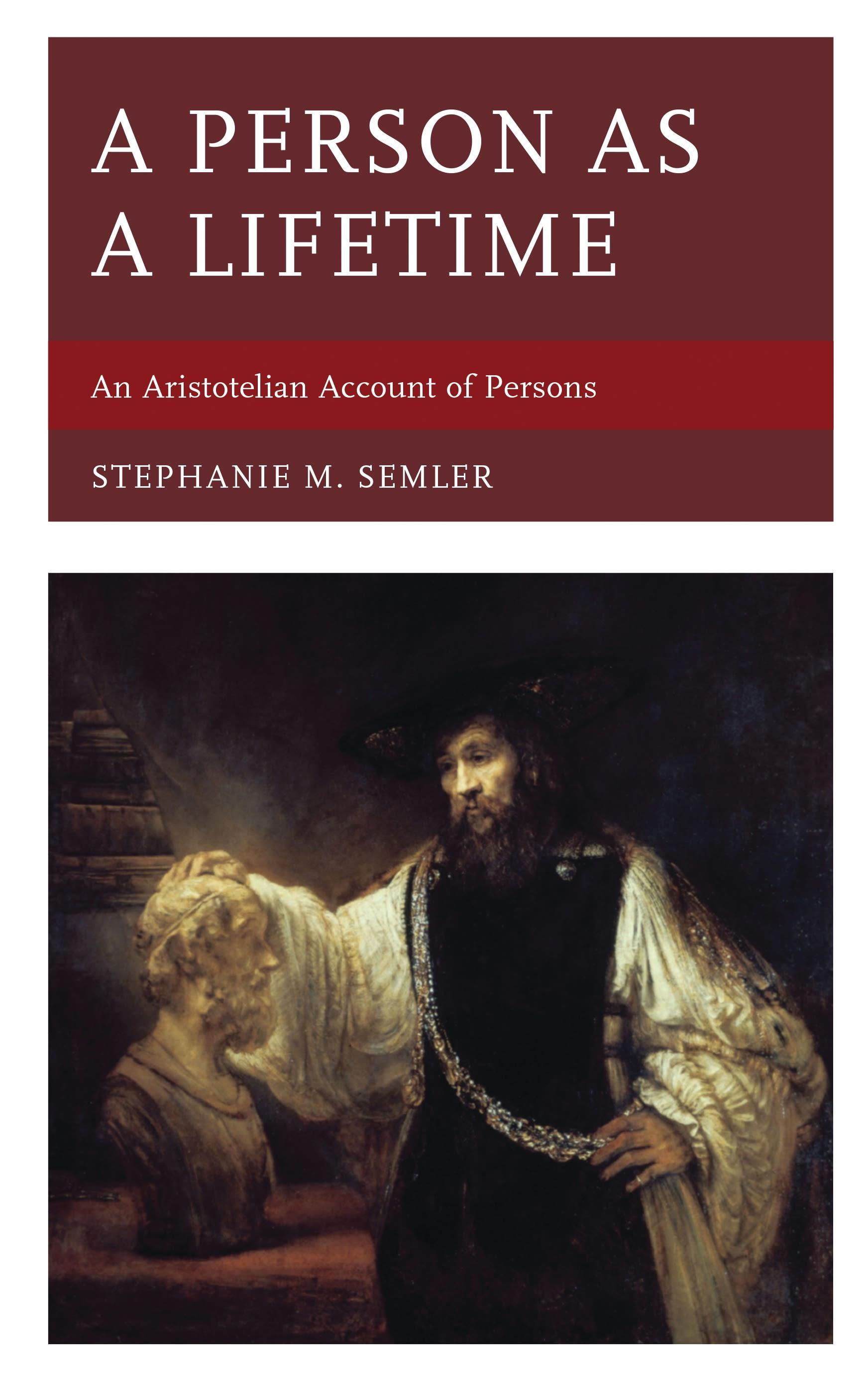
Is it possible to derive a viable definition of persons from Aristotle’s work? In A Person as a Lifetime: An Aristotelian Account of Persons, Stephanie M. Semler argues that we can. She finds the component parts of this definition in his writing on ethics and metaphysics, and the structure of this working definition is that of an entire lifetime. If J.O. Urmson is right that “[t]o call somebody a eudaimon is to judge his life as a whole,” then a Greek, and by extension an Aristotelian account of personhood would be a description of an entire human life. Likewise, the evaluation of that life would have to be done at its termination.
The concept of persons is at least as much a moral one as it is a metaphysical one. For this reason, Semler contends that an important insight about persons is to be found in Aristotle’s ethical works. The significance of judging one to be a eudaimon is in understanding that the life is complete—that is, it has a beginning, middle, and an end, with the same person at the helm for the duration. If we know what Aristotle’s requirements are for a human lifetime is to have all of these features, it follows that we can derive an Aristotelian concept of persons from it. We find the benefit of such an investigation when the difficulties with issues surrounding personal identity seem to indicate that either personal identity must inhere in the physical body of a person, or that, on pain of a view that resembles dualism, it simply doesn’t exist.
A Person as a Lifetime will be of particular interest to students and scholars of philosophy, history, classics, and psychology, and to anyone with an interest in Aristotle.
The concept of persons is at least as much a moral one as it is a metaphysical one. For this reason, Semler contends that an important insight about persons is to be found in Aristotle’s ethical works. The significance of judging one to be a eudaimon is in understanding that the life is complete—that is, it has a beginning, middle, and an end, with the same person at the helm for the duration. If we know what Aristotle’s requirements are for a human lifetime is to have all of these features, it follows that we can derive an Aristotelian concept of persons from it. We find the benefit of such an investigation when the difficulties with issues surrounding personal identity seem to indicate that either personal identity must inhere in the physical body of a person, or that, on pain of a view that resembles dualism, it simply doesn’t exist.
A Person as a Lifetime will be of particular interest to students and scholars of philosophy, history, classics, and psychology, and to anyone with an interest in Aristotle.
Paga fácilmente con tarjeta, Klarna, Apple Pay o Google Pay. ¿No estás contento? Siempre tienes 14 días de garantía de devolución. Lee más en nuestros términos. Si tienes preguntas, escríbenos a hello@memmo.org.
Memmo hace que estudiar sea más fácil, estés donde estés. Aquí tienes tus libros de texto y herramientas de estudio inteligentes en un solo lugar: resúmenes, quizzes, podcasts y flashcards. Y también a Ted, tu compañero de estudio que responde a todo lo que te preguntes. Más de 50 000 estudiantes ya estudian aquí. Está hecho para que aprendas más rápido y te estreses menos.