
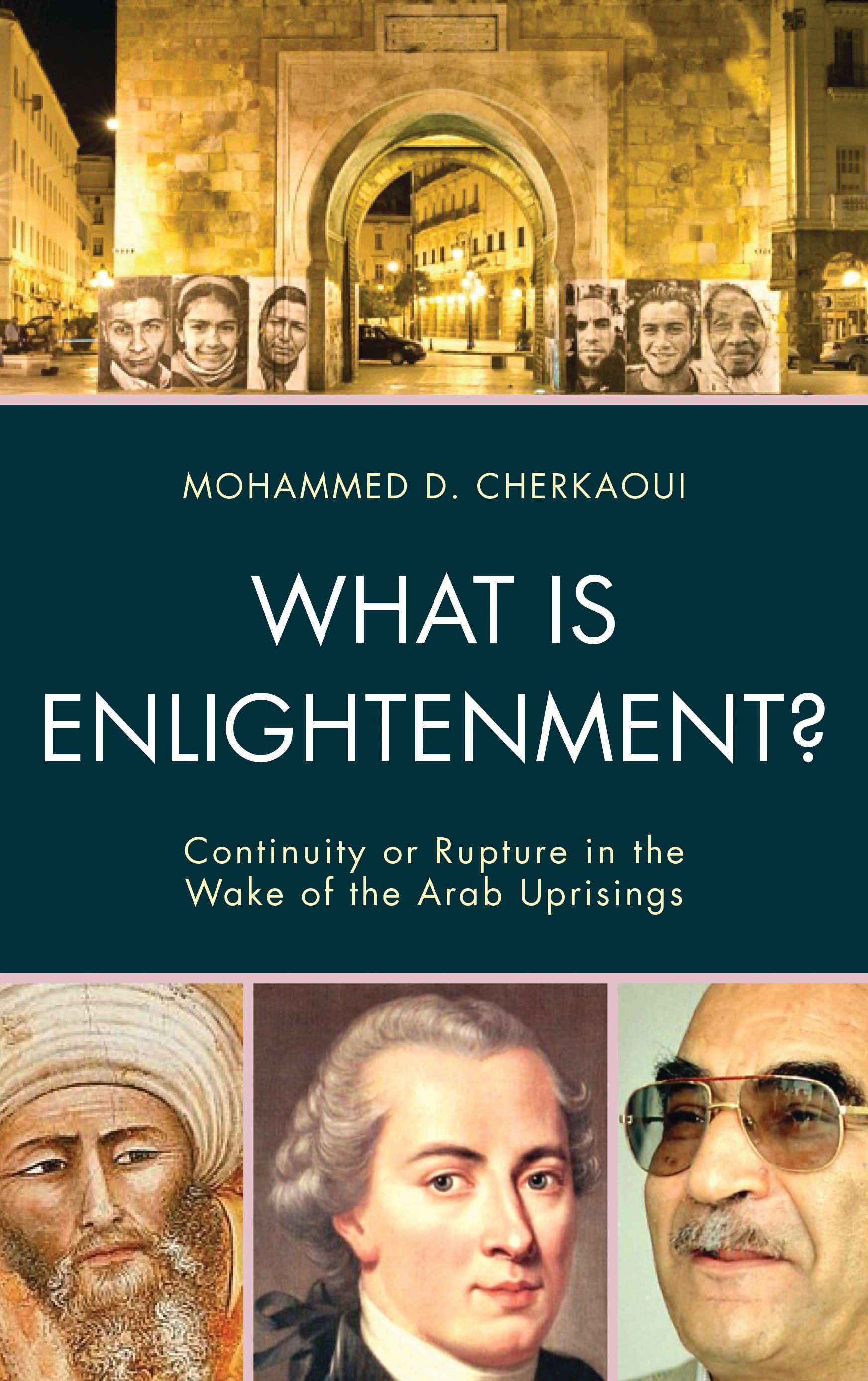
Political sociology has struggled with predicting the next turn of transformation in the MENA countries after the 2011 Uprisings. Arab activists did not articulate explicitly any modalities of their desired system, although their slogans ushered to a fully-democratic society. These unguided Uprisings showcase an open-ended freedom-to question after Arabs underwent their freedom-from struggle from authoritarianism. The new conflicts in Egypt, Syria, Yemen, and Libya have fragmented shar’iya (legitimacy) into distinct conceptualizations: “revolutionary legitimacy,” “electoral legitimacy,” “legitimacy of the street,” and “consensual legitimacy.” This volume examines whether the Uprisings would introduce a replica of the European Enlightenment or rather stimulate an Arab/Islamic awakening with its own cultural specificity and political philosophy. By placing Immanuel Kant in Tahrir Square, this book adopts a comparative analysis of two enlightenment projects: one Arab, still under construction, with possible progression toward modernity or regression toward neo-authoritarianism, and one European, shaped by the past two centuries.
Mohammed D. Cherkaoui and the contributing authors use a hybrid theoretical framework drawing on three tanwiri (enlightenment) philosophers from different eras: Ibn Rushd, known in the west as Averroes (the twelfth century), Immanuel Kant (the eighteenth century), and Mohamed Abed Al-Jabri (the twentieth century). The authors propose a few projections about the outcome of the competition between an Islamocracy vision and what Cherkaoui terms as a Demoslamic vision, since it implies the Islamist movements’ flexibility to reconcile their religious absolutism with the prerequisites of liberal democracy. This book also traces the patterns of change which point to a possible Arab Axial Age. It ends with the trials of modernity and tradition in Tunisia and an imaginary speech Kant would deliver at the Tunisian Parliament after those vibrant debates of the new constitution in 2014.
Mohammed D. Cherkaoui and the contributing authors use a hybrid theoretical framework drawing on three tanwiri (enlightenment) philosophers from different eras: Ibn Rushd, known in the west as Averroes (the twelfth century), Immanuel Kant (the eighteenth century), and Mohamed Abed Al-Jabri (the twentieth century). The authors propose a few projections about the outcome of the competition between an Islamocracy vision and what Cherkaoui terms as a Demoslamic vision, since it implies the Islamist movements’ flexibility to reconcile their religious absolutism with the prerequisites of liberal democracy. This book also traces the patterns of change which point to a possible Arab Axial Age. It ends with the trials of modernity and tradition in Tunisia and an imaginary speech Kant would deliver at the Tunisian Parliament after those vibrant debates of the new constitution in 2014.
Paga fácilmente con tarjeta, Klarna, Apple Pay o Google Pay. ¿No estás contento? Siempre tienes 14 días de garantía de devolución. Lee más en nuestros términos. Si tienes preguntas, escríbenos a hello@memmo.org.
Memmo hace que estudiar sea más fácil, estés donde estés. Aquí tienes tus libros de texto y herramientas de estudio inteligentes en un solo lugar: resúmenes, quizzes, podcasts y flashcards. Y también a Ted, tu compañero de estudio que responde a todo lo que te preguntes. Más de 50 000 estudiantes ya estudian aquí. Está hecho para que aprendas más rápido y te estreses menos.