
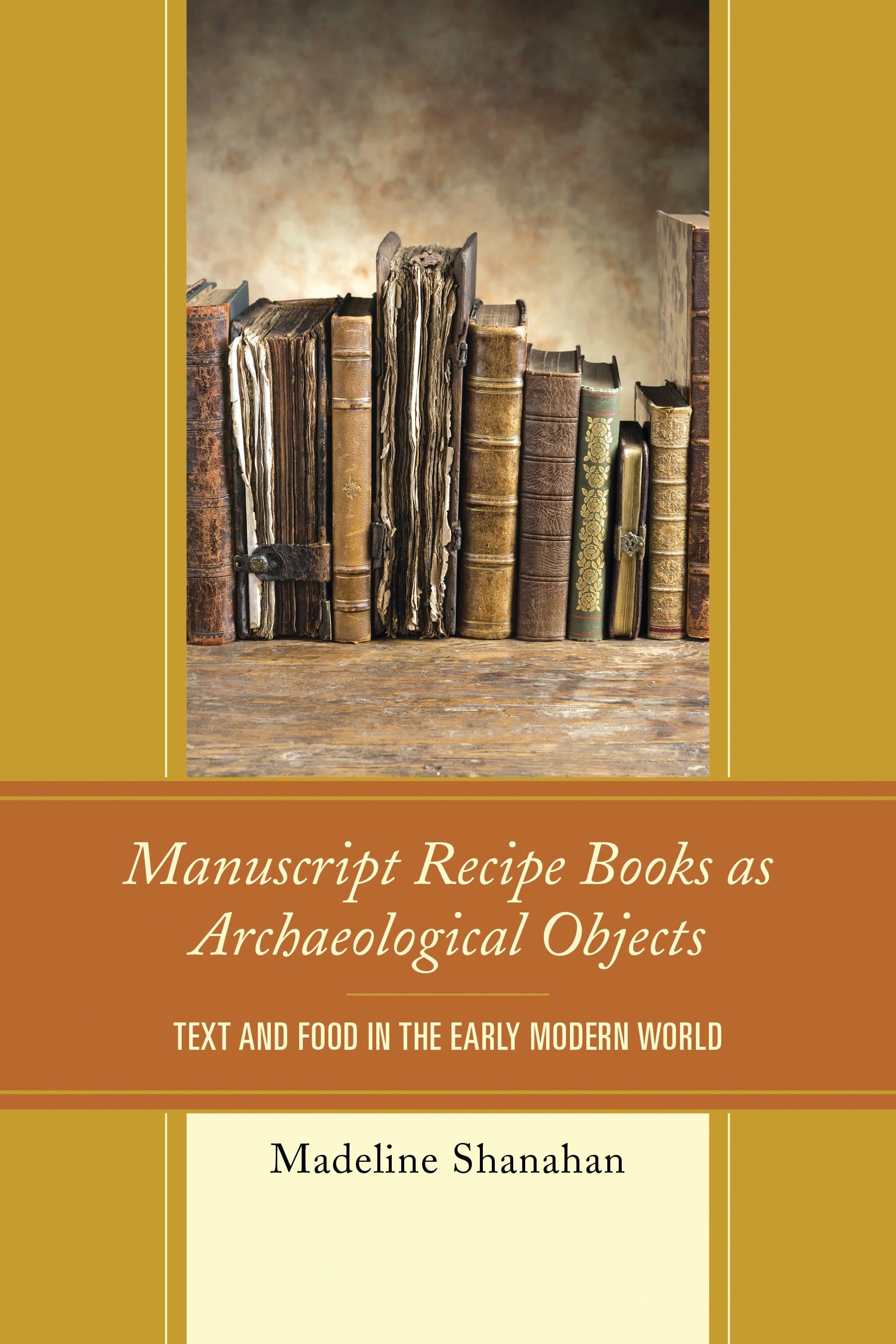
During the mid- to late seventeenth century, women in Irish houses from elite backgrounds started to collect recipes, which they recorded in domestic manuscripts. While these manuscripts were made elsewhere at an earlier date, they were an almost entirely new arrival to Ireland in this period, and their sudden proliferation said much about changes taking place in society at large. This book is a detailed study of such manuscripts from the perspective of historical archaeology, which will argue that they are artifacts which clearly demonstrate that a profound series of changes was taking place. The written word penetrated people’s daily lives and homes to a degree that it had not in previous periods, and it had a profound influence on how they related to their world, objects, and each other.
While this book will address how we can use them as sources for the study of food history and material culture, it is ultimately concerned with the meanings of manuscript recipe books, and specifically, what they say about the individuals and society that made them. The proliferation of these manuscripts signaled a profound change not just in cuisine, but also in the way people thought about and related to food as a form of material culture. Ultimately, this book will argue that these manuscripts are not simply excellent records which can tell us about "material culture" within the early modern house, but that they are a profoundly important type of artifact in their own right. Undertaking research that situates textual objects such as recipe books at the very core of historical archaeology is critical to understanding some of the most significant changes that took place in the early modern world.
While this book will address how we can use them as sources for the study of food history and material culture, it is ultimately concerned with the meanings of manuscript recipe books, and specifically, what they say about the individuals and society that made them. The proliferation of these manuscripts signaled a profound change not just in cuisine, but also in the way people thought about and related to food as a form of material culture. Ultimately, this book will argue that these manuscripts are not simply excellent records which can tell us about "material culture" within the early modern house, but that they are a profoundly important type of artifact in their own right. Undertaking research that situates textual objects such as recipe books at the very core of historical archaeology is critical to understanding some of the most significant changes that took place in the early modern world.
Paga fácilmente con tarjeta, Klarna, Apple Pay o Google Pay. ¿No estás contento? Siempre tienes 14 días de garantía de devolución. Lee más en nuestros términos. Si tienes preguntas, escríbenos a hello@memmo.org.
Memmo hace que estudiar sea más fácil, estés donde estés. Aquí tienes tus libros de texto y herramientas de estudio inteligentes en un solo lugar: resúmenes, quizzes, podcasts y flashcards. Y también a Ted, tu compañero de estudio que responde a todo lo que te preguntes. Más de 50 000 estudiantes ya estudian aquí. Está hecho para que aprendas más rápido y te estreses menos.