
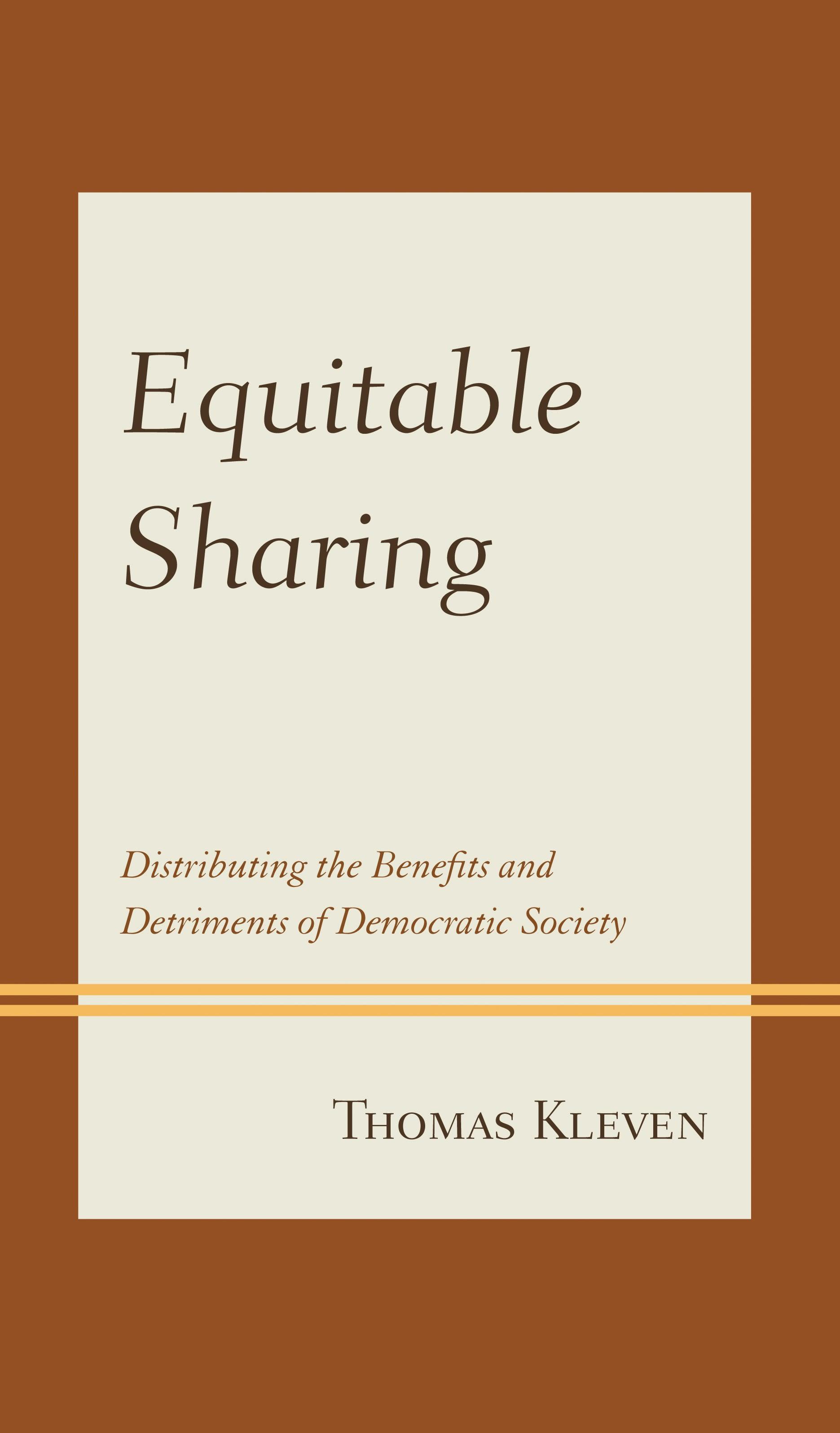
Equitable Sharing: Distributing the Benefits and Detriments of Democratic Society argues that a principle of equitable sharing—one that requires the benefits and detriments of social life to be fairly distributed among all members of society—is fundamental to the concept of democracy and is implicit in the founding documents of the democratic society the United State purports to be. To illustrate the centrality of equitable sharing to democracy, this book examines the political philosophies of John Locke, John Stuart Mill, and John Rawls. Locke’s libertarianism, Mill’s utilitarianism, and Rawls’ egalitarianism represent major strains of Western democratic theory, and all contain a principle of equitable sharing in some form. To illustrate the centrality of equitable sharing to U.S. society, the book examines the Declaration of Independence and the Constitution. While these documents do not set forth a particular version of equitable sharing, they contain elements of all of Locke’s, Mill’s and Rawls’ philosophies and evidence a commitment to equitable sharing as fundamental to the democratic society they contemplate.
The task of U.S. society throughout its existence has been to engage in an on-going dialogue that gives life to the commitment to equitable sharing set forth in its founding documents. As the elected representatives of the people and the repository of the powers through which to implement much of what equitable sharing requires, the primary responsibility for implementation rests with the legislative branch. This book argues that the Supreme Court, interacting with the public and the legislature, also has a meaningful role to play in the dialogue over the requirements of equitable sharing and can play this role in a manner consistent with democratic principles. This point is illustrated through a discussion of several contemporary issues: same sex marriage, racial integration in public schools, health care, and the regulation of the electoral process.
The task of U.S. society throughout its existence has been to engage in an on-going dialogue that gives life to the commitment to equitable sharing set forth in its founding documents. As the elected representatives of the people and the repository of the powers through which to implement much of what equitable sharing requires, the primary responsibility for implementation rests with the legislative branch. This book argues that the Supreme Court, interacting with the public and the legislature, also has a meaningful role to play in the dialogue over the requirements of equitable sharing and can play this role in a manner consistent with democratic principles. This point is illustrated through a discussion of several contemporary issues: same sex marriage, racial integration in public schools, health care, and the regulation of the electoral process.
Paga fácilmente con tarjeta, Klarna, Apple Pay o Google Pay. ¿No estás contento? Siempre tienes 14 días de garantía de devolución. Lee más en nuestros términos. Si tienes preguntas, escríbenos a hello@memmo.org.
Memmo hace que estudiar sea más fácil, estés donde estés. Aquí tienes tus libros de texto y herramientas de estudio inteligentes en un solo lugar: resúmenes, quizzes, podcasts y flashcards. Y también a Ted, tu compañero de estudio que responde a todo lo que te preguntes. Más de 50 000 estudiantes ya estudian aquí. Está hecho para que aprendas más rápido y te estreses menos.