
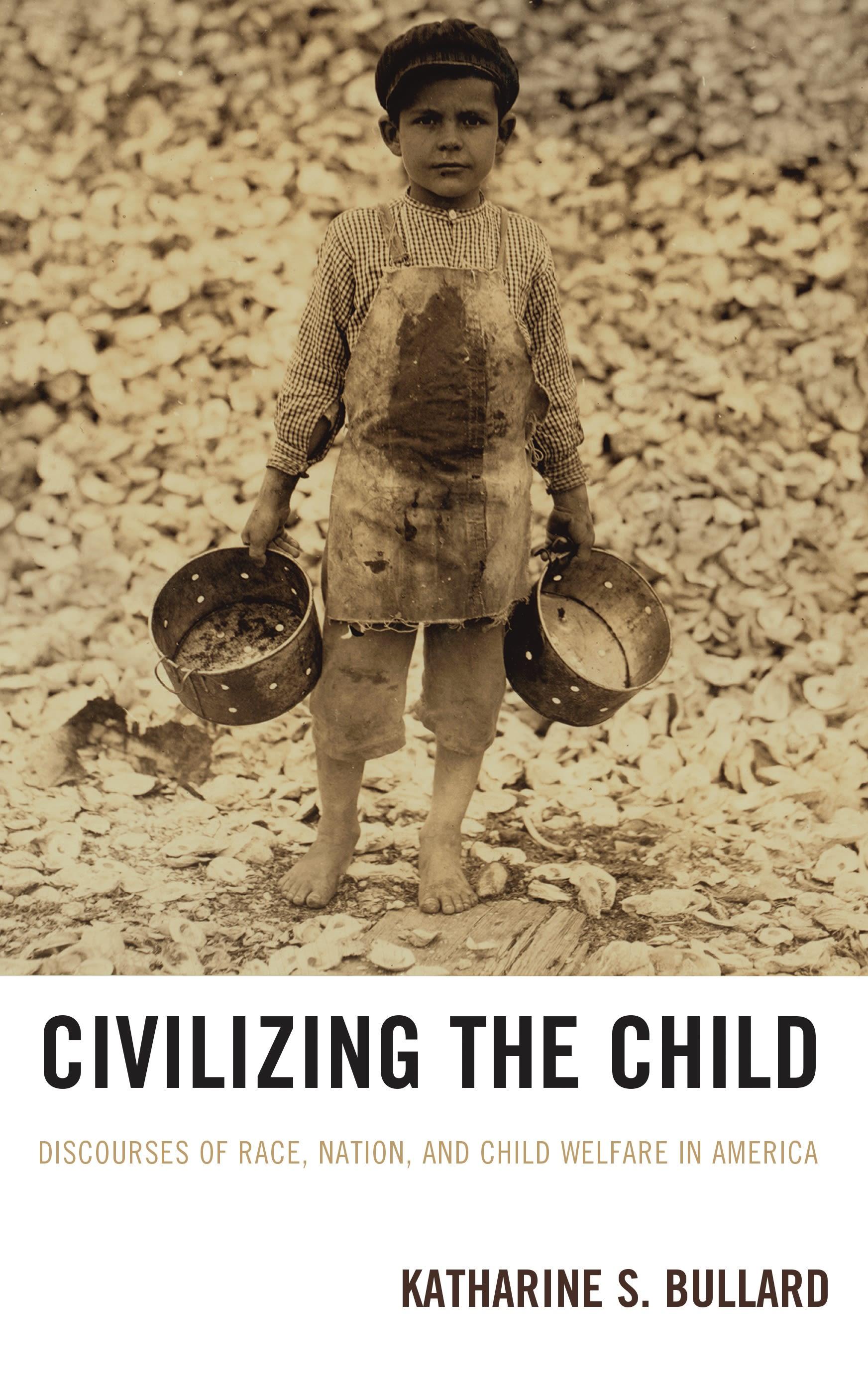
In Civilizing the Child: Discourses of Race, Nation, and Child Welfare in America, Katherine S. Bullard analyzes the discourse of child welfare advocates who argued for the notion of a racialized ideal child. This ideal child, limited to white, often native-born children, was at the center of arguments for material support to children and education for their parents. This book illuminates important limitations in the Progressive approach to social welfare and helps to explain the current dearth of support for poor children.
Civilizing the Child tracks the growing social concern with children in the nineteenth and early-twentieth centuries. The author uses seminal figures and institutions to look at the origins of the welfare state. Chapters focus on Charles Loring Brace, Jacob Riis, residents of the Hull House Settlement, and the staff of U.S. Children’s Bureau, analyzing their work to unpack the assumptions about American identity that made certain children belong and others remain outsiders. Bullard traces the ways in which child welfare advocates used racialized language and emphasized the “civilizing mission” to argue for support of white native-born children. This language focused on the future citizenship of some children as an argument for their support and protection.
Civilizing the Child tracks the growing social concern with children in the nineteenth and early-twentieth centuries. The author uses seminal figures and institutions to look at the origins of the welfare state. Chapters focus on Charles Loring Brace, Jacob Riis, residents of the Hull House Settlement, and the staff of U.S. Children’s Bureau, analyzing their work to unpack the assumptions about American identity that made certain children belong and others remain outsiders. Bullard traces the ways in which child welfare advocates used racialized language and emphasized the “civilizing mission” to argue for support of white native-born children. This language focused on the future citizenship of some children as an argument for their support and protection.
Paga fácilmente con tarjeta, Klarna, Apple Pay o Google Pay. ¿No estás contento? Siempre tienes 14 días de garantía de devolución. Lee más en nuestros términos. Si tienes preguntas, escríbenos a hello@memmo.org.
Memmo hace que estudiar sea más fácil, estés donde estés. Aquí tienes tus libros de texto y herramientas de estudio inteligentes en un solo lugar: resúmenes, quizzes, podcasts y flashcards. Y también a Ted, tu compañero de estudio que responde a todo lo que te preguntes. Más de 50 000 estudiantes ya estudian aquí. Está hecho para que aprendas más rápido y te estreses menos.