
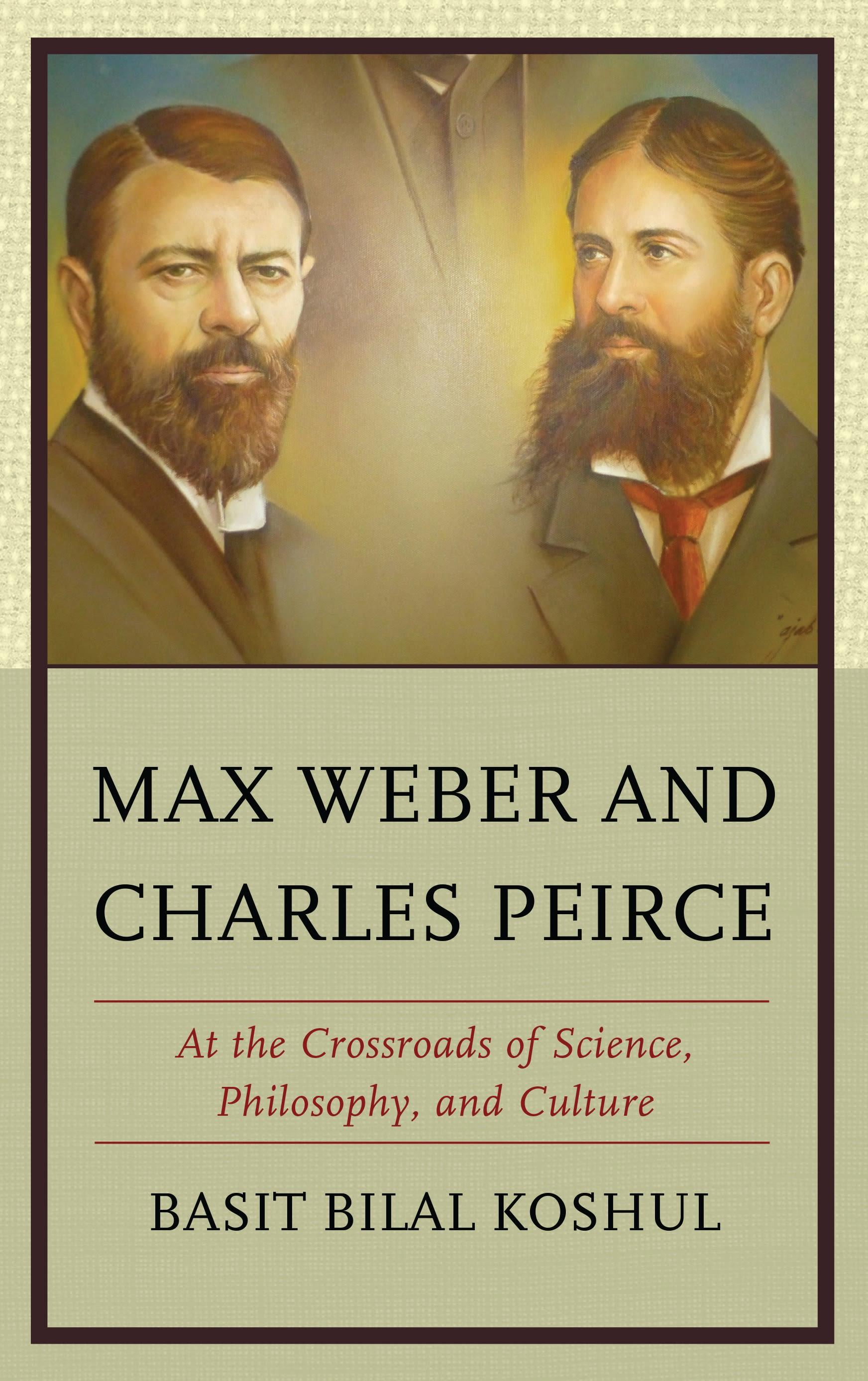
Max Weber and Charles Peirce: At the Crossroads of Science, Philosophy, and Culture shows that a relational conception of science is implicit in Max Weber’s reflections on scientific inquiry as a bridge between the Geisteswissenschaften (soft sciences) and Naturwissenschaften (hard sciences). Because he is not a trained philosopher, Weber does not have the precise philosophical language in which to articulate his ideas clearly. Consequently, his relational vision of science remains obscure. Basit Bilal Koshul brings clarity and precision to Weber’s insights using the pragmaticist philosophy of Charles Peirce. He makes explicit the phenomenology, semiotics, and logic that are implicit in Weber’s methodological writings and translates them into Peircean terms. Since Peirce explicitly offers his philosophy of science as a critique of the modern divide between the humanistic and natural sciences and of the divide between religion and science, this translation has a double effect. It clarifies Weber’s insights on the methodology of scientific inquiry, and it extends the reparative force of these insights into the larger culture of which science is one part. The reconstruction of Weber’s relational conception of science along the lines of Peirce’s pragmaticism, in turn, reveals that Weber’s work points toward deep affinities between religion and science. Given the fact that the same phenomenology, semiotics, and logic that underpin Peirce’s philosophy of science are also at the root of his philosophy of religion, we can begin to appreciate the fact that Weber’s work makes an important contribution to bridging the divide between religion and science. In providing models that bridge divides and move towards complementary relationships, Weber and Peirce not only help us to better understand disenchantment as the fate of our times, but also offer uniquely valuable resources to reach for cultural horizons that lie beyond it.
Paga fácilmente con tarjeta, Klarna, Apple Pay o Google Pay. ¿No estás contento? Siempre tienes 14 días de garantía de devolución. Lee más en nuestros términos. Si tienes preguntas, escríbenos a hello@memmo.org.
Memmo hace que estudiar sea más fácil, estés donde estés. Aquí tienes tus libros de texto y herramientas de estudio inteligentes en un solo lugar: resúmenes, quizzes, podcasts y flashcards. Y también a Ted, tu compañero de estudio que responde a todo lo que te preguntes. Más de 50 000 estudiantes ya estudian aquí. Está hecho para que aprendas más rápido y te estreses menos.