
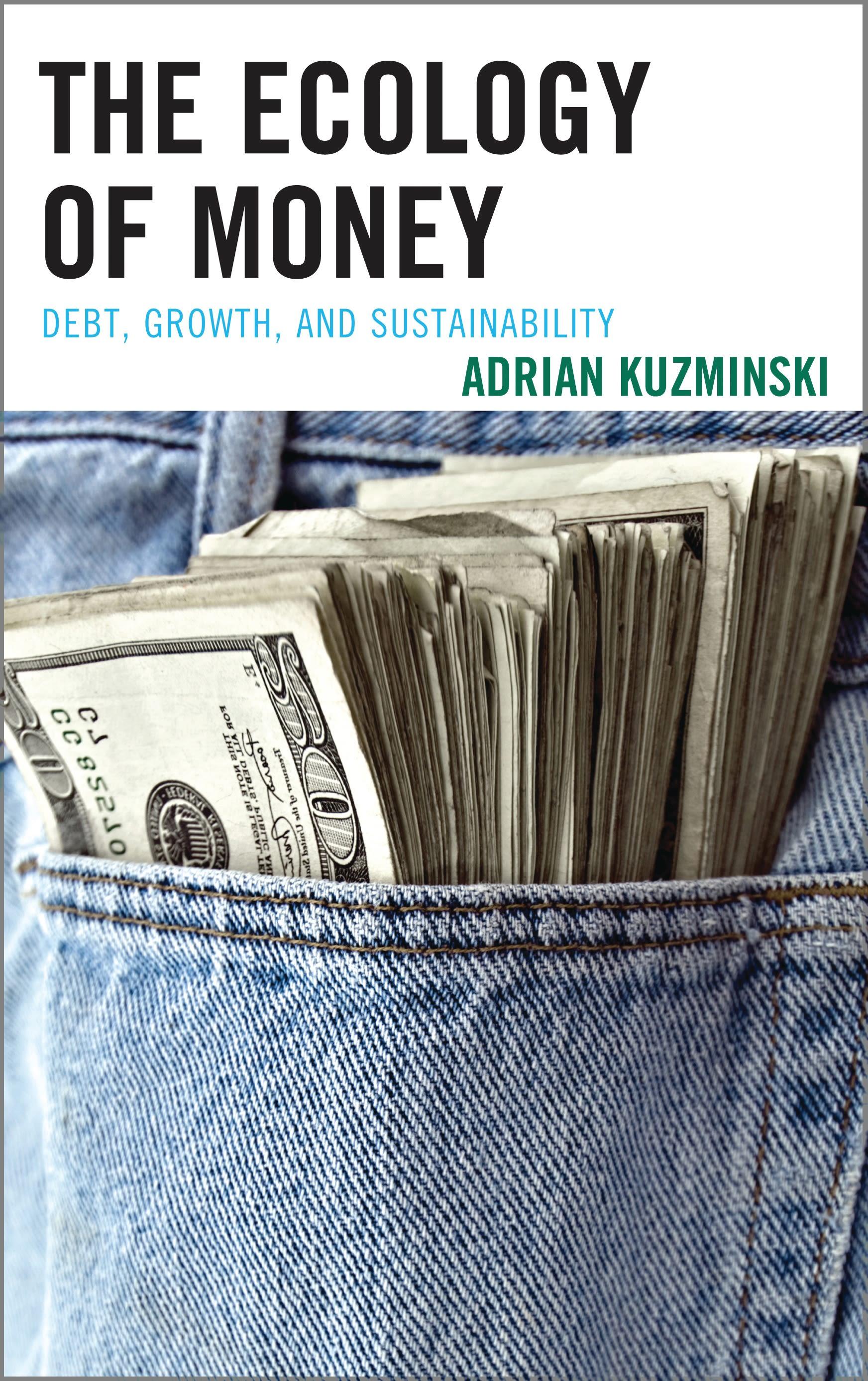
Modern economies must "grow" because money borrowed for investment can be repaid only by expanding production and consumption to meet the burden of usurious rates of interest.
The roots of this dynamic between debt and growth lay in the financial revolution of the late seventeenth and early eighteenth centuries in Britain which established a new usurious monetary system.
For the first time in history credit was made widely available, but only on condition of an exponentially increasing debt burden. To pay back debts production had to increase correspondingly, leading to the industrial revolution, economic "growth", and modernity itself.
Though private creditors gained a monopoly over the creation of credit, and were disproportionately enriched, the resulting economic growth for a time was great enough to benefit most debtors as well as creditors, ensuring widespread prosperity.
That is no longer the case. With today's eco-crisis we have reached the limits of growth. We no longer have the natural resources to grow fast enough to pay our debts. This is the real root of our current financial crisis.
If we are to live sustainably, our system of money and credit must be transformed. We need a non-usurious monetary system appropriate to a steady-state economy, with capital broadly distributed at non-usurious rates of interest.
Such a system was developed by an early nineteenth century American thinker, Edward Kellogg, and is explored here in depth. His work inspired the populist movement and remains more relevant than ever as a viable alternative to the a financial system we can no longer afford.
The roots of this dynamic between debt and growth lay in the financial revolution of the late seventeenth and early eighteenth centuries in Britain which established a new usurious monetary system.
For the first time in history credit was made widely available, but only on condition of an exponentially increasing debt burden. To pay back debts production had to increase correspondingly, leading to the industrial revolution, economic "growth", and modernity itself.
Though private creditors gained a monopoly over the creation of credit, and were disproportionately enriched, the resulting economic growth for a time was great enough to benefit most debtors as well as creditors, ensuring widespread prosperity.
That is no longer the case. With today's eco-crisis we have reached the limits of growth. We no longer have the natural resources to grow fast enough to pay our debts. This is the real root of our current financial crisis.
If we are to live sustainably, our system of money and credit must be transformed. We need a non-usurious monetary system appropriate to a steady-state economy, with capital broadly distributed at non-usurious rates of interest.
Such a system was developed by an early nineteenth century American thinker, Edward Kellogg, and is explored here in depth. His work inspired the populist movement and remains more relevant than ever as a viable alternative to the a financial system we can no longer afford.
Paga fácilmente con tarjeta, Klarna, Apple Pay o Google Pay. ¿No estás contento? Siempre tienes 14 días de garantía de devolución. Lee más en nuestros términos. Si tienes preguntas, escríbenos a hello@memmo.org.
Memmo hace que estudiar sea más fácil, estés donde estés. Aquí tienes tus libros de texto y herramientas de estudio inteligentes en un solo lugar: resúmenes, quizzes, podcasts y flashcards. Y también a Ted, tu compañero de estudio que responde a todo lo que te preguntes. Más de 50 000 estudiantes ya estudian aquí. Está hecho para que aprendas más rápido y te estreses menos.