
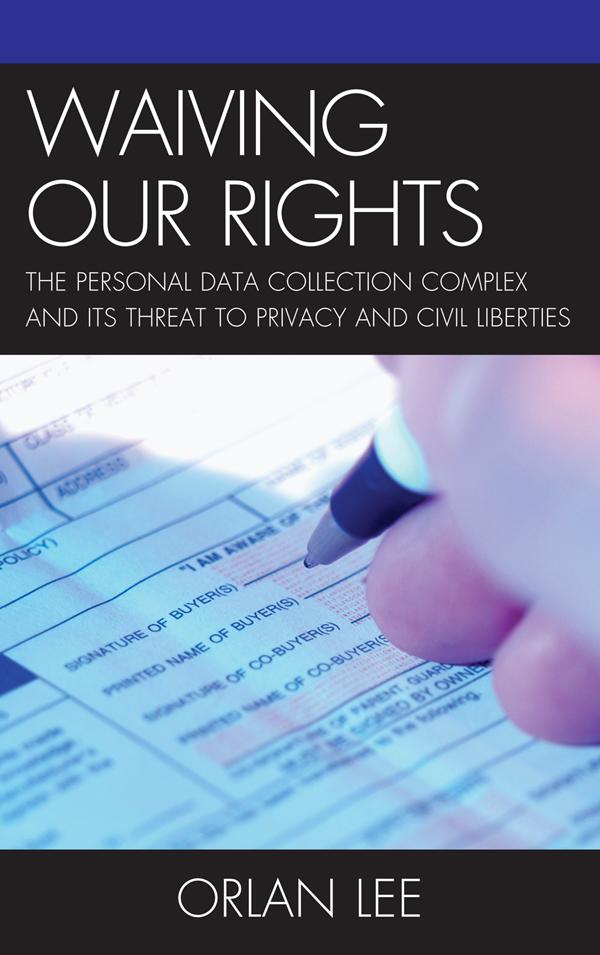
The United States is not a police state, but Congress is subject to special interests lobbying in pursuit of abusive commercial practices that leave a lot to be desired for transparency and accountability. It is illegal to data-mine personal files held by government agencies, schools and universities, or medical facilities. It is illegal to collect and publish defamatory gossip and hearsay about private citizens. But it is legal to oblige Americans to “waive” their rights to privacy and their right to sue for invasion of privacy for defamation by anonymous third-parties in order to receive essential services or apply for employment.
Americans are obliged to “waive” their rights in essentially all applications for employment, credit, housing, public utilities, telephone or mobile phone service, internet access, and even cable TV connection. The law requires “notice and consent” whenever such waivers are included in employment applications, but consumer reporting agencies have learned to use deceptive methods to avoid drawing the attention of applicants to the meaning and consequence of such language. Recent law dispenses with “notice and consent” for private-eye quasi-criminal investigations of “suspected misconduct” by an employee altogether. In effect, this bypasses "probable cause," "innocent until proven guilty," the "right to know the nature of an accusation," the "right to confront witnesses," the "rule against double jeopardy," and the "right to sue for defamation, and/or interference with employment." Orlan Lee questions the validity of any such "waivers," and seeks to alert Americans to the need to protect their fundamental rights.
Americans are obliged to “waive” their rights in essentially all applications for employment, credit, housing, public utilities, telephone or mobile phone service, internet access, and even cable TV connection. The law requires “notice and consent” whenever such waivers are included in employment applications, but consumer reporting agencies have learned to use deceptive methods to avoid drawing the attention of applicants to the meaning and consequence of such language. Recent law dispenses with “notice and consent” for private-eye quasi-criminal investigations of “suspected misconduct” by an employee altogether. In effect, this bypasses "probable cause," "innocent until proven guilty," the "right to know the nature of an accusation," the "right to confront witnesses," the "rule against double jeopardy," and the "right to sue for defamation, and/or interference with employment." Orlan Lee questions the validity of any such "waivers," and seeks to alert Americans to the need to protect their fundamental rights.
Paga fácilmente con tarjeta, Klarna, Apple Pay o Google Pay. ¿No estás contento? Siempre tienes 14 días de garantía de devolución. Lee más en nuestros términos. Si tienes preguntas, escríbenos a hello@memmo.org.
Memmo hace que estudiar sea más fácil, estés donde estés. Aquí tienes tus libros de texto y herramientas de estudio inteligentes en un solo lugar: resúmenes, quizzes, podcasts y flashcards. Y también a Ted, tu compañero de estudio que responde a todo lo que te preguntes. Más de 50 000 estudiantes ya estudian aquí. Está hecho para que aprendas más rápido y te estreses menos.