
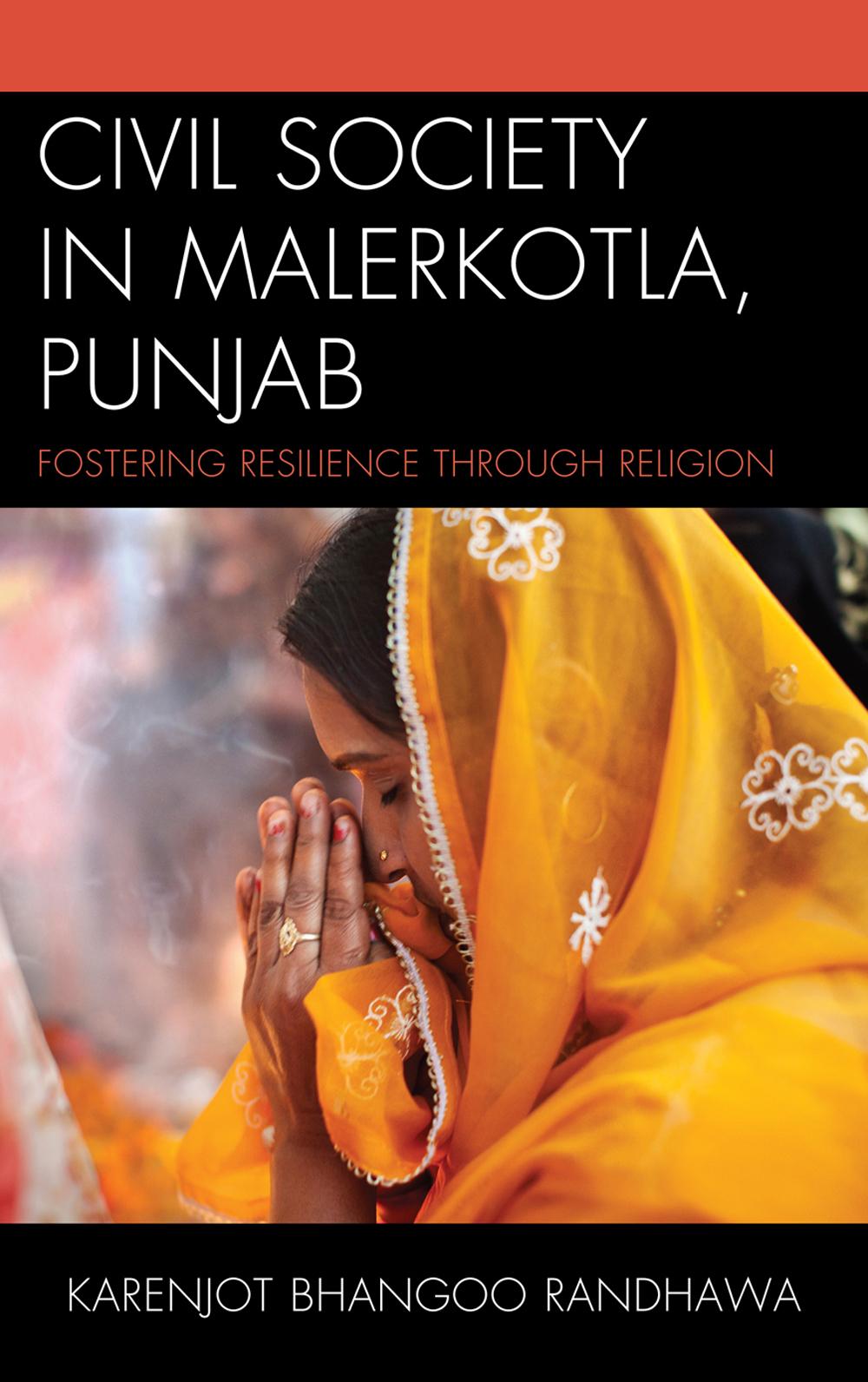
Civil Society in Malerkotla, Punjab: Fostering Resilience through Religion by Karenjot Bhangoo Randhawa explores the direct role that religion plays in conflict and peace that has often been difficult to isolate. This study extends previous work on peace and conflict resolution by looking at a town which has witnessed many outbreaks of violence in the past but still holds peace as the norm.
The former princely state of Malerkotla, Punjab is a place where riots did not occur during Partition. In this unique Muslim majority town, there are four distinct religious groups that live in close proximity to each other. Yet, the overall pattern of peaceful plurality in the town has resulted in the transcendence of violence even when the threat looms close by. The unique case of Malerkotla, Punjab provides an opportunity to look more closely and critically at Sikhs and their relationship with Muslims in India.
As a case study, this work captures the overall pattern of Sikh-Muslim interaction in a town that can transcend conflict and make peace the norm. Randhawa uncovers how religious associations, expressions and activities have helped to build social capital and stabilize peace. This book also emphasizes interreligious understanding, cross-cultural awareness, and conflict transformation, and discusses how interfaith communities can work together to bridge understanding in order to prevent violence.
The former princely state of Malerkotla, Punjab is a place where riots did not occur during Partition. In this unique Muslim majority town, there are four distinct religious groups that live in close proximity to each other. Yet, the overall pattern of peaceful plurality in the town has resulted in the transcendence of violence even when the threat looms close by. The unique case of Malerkotla, Punjab provides an opportunity to look more closely and critically at Sikhs and their relationship with Muslims in India.
As a case study, this work captures the overall pattern of Sikh-Muslim interaction in a town that can transcend conflict and make peace the norm. Randhawa uncovers how religious associations, expressions and activities have helped to build social capital and stabilize peace. This book also emphasizes interreligious understanding, cross-cultural awareness, and conflict transformation, and discusses how interfaith communities can work together to bridge understanding in order to prevent violence.
Páginas: 140
Categoría: Samhällsvetenskap
e-ISBN: 9780739167380
Peso de envío: 1.2 kg
Envío en: 1-2 días
Paga fácilmente con tarjeta, Klarna, Apple Pay o Google Pay. ¿No estás contento? Siempre tienes 14 días de garantía de devolución. Lee más en nuestros términos. Si tienes preguntas, escríbenos a hello@memmo.org.
Memmo hace que estudiar sea más fácil, estés donde estés. Aquí tienes tus libros de texto y herramientas de estudio inteligentes en un solo lugar: resúmenes, quizzes, podcasts y flashcards. Y también a Ted, tu compañero de estudio que responde a todo lo que te preguntes. Más de 50 000 estudiantes ya estudian aquí. Está hecho para que aprendas más rápido y te estreses menos.