
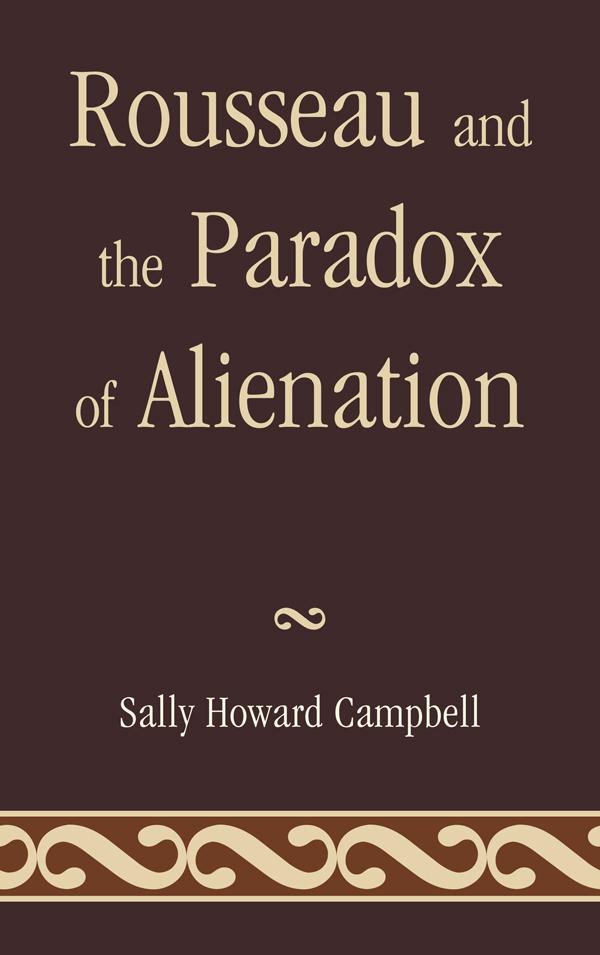
In the writings of Jean-Jacques Rousseau, Sally Howard Campbell finds the bridge between the now-dominant psycho-social conception of alienation and the legal-political conception that prevailed prior to Rousseau. She discusses Rousseau’s transformation of the concept of alienation and how it laid much of the groundwork for Marx’s later, more explicit discussions of man’s alienation. Using Discourse on the Origin and Foundations of Inequality, Campbell shows how Rousseau depicts the development of man’s awareness of himself as a conscious and moral being, illustrating man’s journey from a natural state of self-sufficiency to one of dependence and alienation. Paradoxically, she describes Rousseau’s belief that a state of wholeness can only be achieved through a man’s total alienation of himself to the community, free from the alienating effects of civil society. She concludes that, like Marx, Rousseau believed that alienation can only be transcended through the merging of the individual and the community.
Paga fácilmente con tarjeta, Klarna, Apple Pay o Google Pay. ¿No estás contento? Siempre tienes 14 días de garantía de devolución. Lee más en nuestros términos. Si tienes preguntas, escríbenos a hello@memmo.org.
Memmo hace que estudiar sea más fácil, estés donde estés. Aquí tienes tus libros de texto y herramientas de estudio inteligentes en un solo lugar: resúmenes, quizzes, podcasts y flashcards. Y también a Ted, tu compañero de estudio que responde a todo lo que te preguntes. Más de 50 000 estudiantes ya estudian aquí. Está hecho para que aprendas más rápido y te estreses menos.